

Editor’s Notes
Total Results: 1697
Volume 110 : March 2025 Issue
Rubinite, Ca3Ti23+Si3O12, a new mineral in CV3 carbonaceous chondrites and a refractory garnet from the solar nebula
https://doi.org/10.2138/am-2024-9435
Ma et al. report on the discovery of new mineral rubinite, Ca3Ti3+2Si3O12, a refractory garnet phase in five refractory Ca,Al-rich inclusions from the CV3 Vigarano, Allende, and Efremovka carbonaceous chondrites, and discuss its origin and significance for understanding nebular processes in the early Solar System.
Volume 110 : February 2025 Issue
Gender in mineral names
https://doi.org/10.2138/am-2024-9327
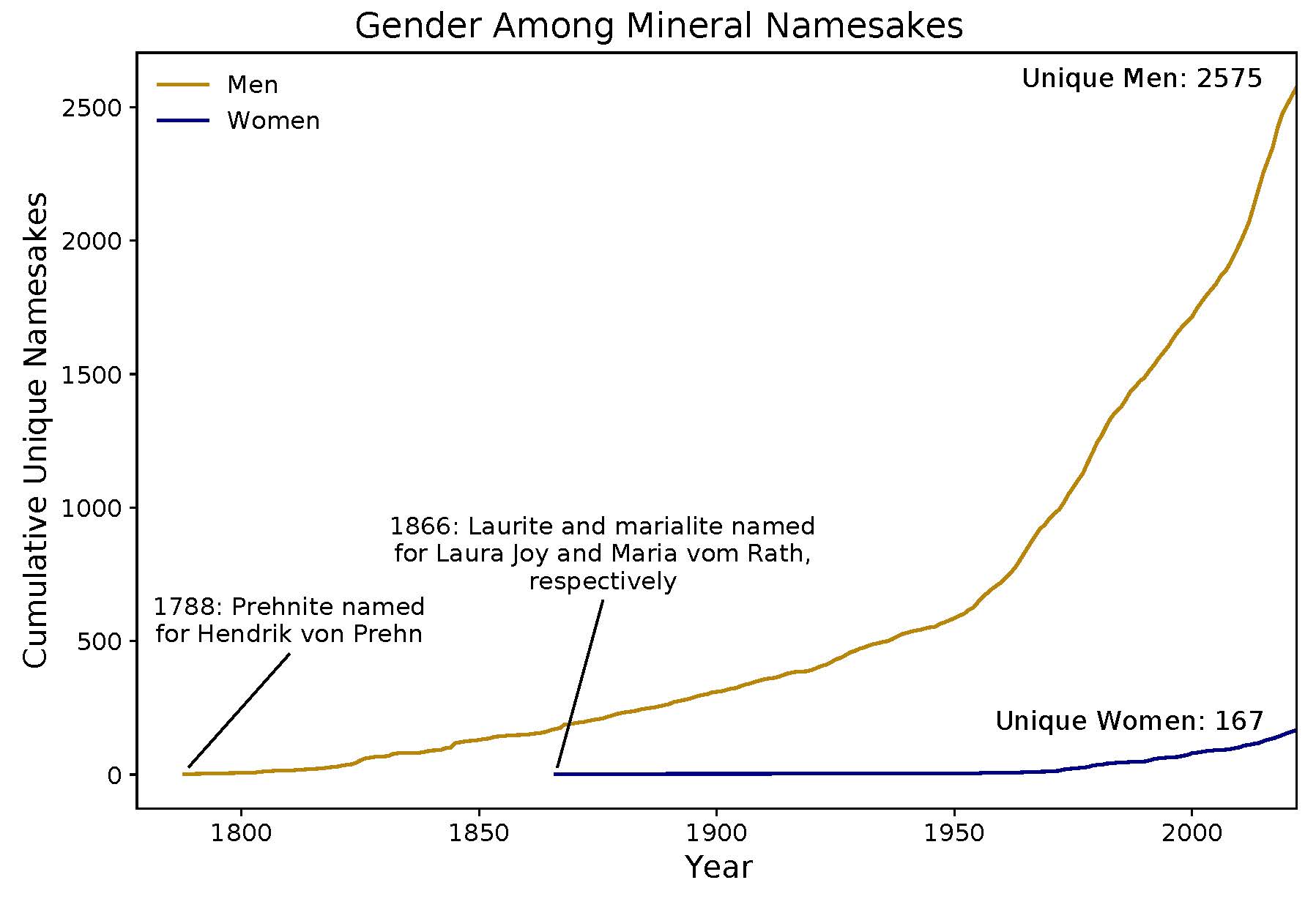
Emproto et al. compiled the name information for 5901 minerals to evaluate how mineral naming trends have changed over time, focusing on gender among people with minerals named for them. More than half of all minerals are named for people, roughly 94% of whom are men. Projections indicate that women will never be equally represented among new mineral namesakes. Additional analyses highlighted age and nationality discrepancies that enumerate the lack of women in the mineral sciences.
Role of impurities in the semiconducting properties of natural pyrite: Implications for the electrochemical accumulation of visible gold and formation of hydrothermal gold deposits
https://doi.org/10.2138/am-2023-9187
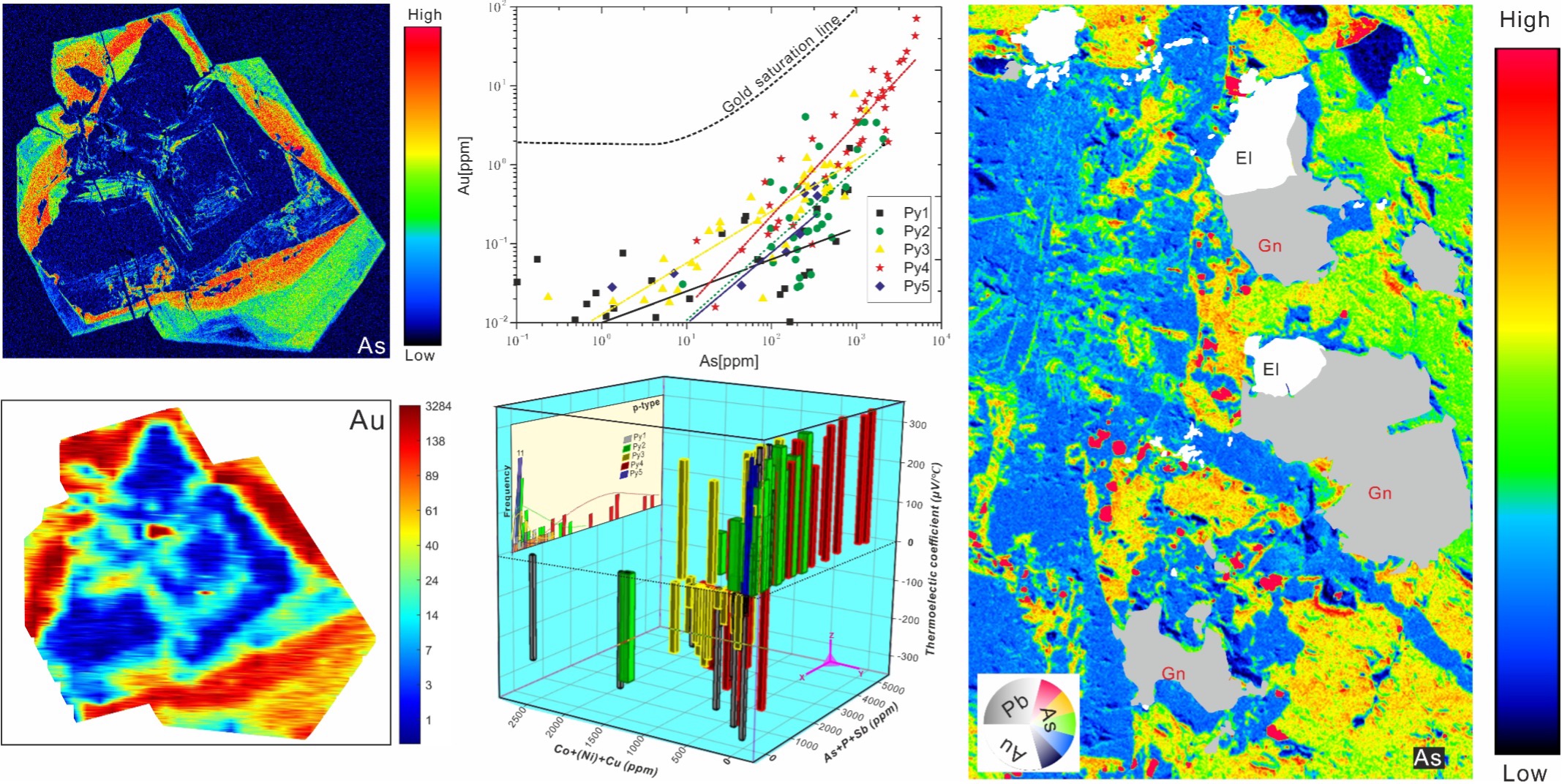
Du et al. used in situ Seebeck coefficient and thermoelectric measurements, as well as trace element geochemistry to investigate the enrichment mechanism of gold in pyrite. The compositional heterogeneity of impurities dissolved in pyrite affects the semiconducting properties of pyrite. Electrical p-n junctions can result in the electrochemical precipitation of visible gold. The electrochemical precipitation mechanism of gold may also account for the formation of other types of hydrothermal gold deposits.
Unraveling clay-mineral genesis and climate change on Earth and Mars using machine learning-based VNIR spectral modeling
https://doi.org/10.2138/am-2023-9299
Hydrated silicate minerals are common in martian geological units and are globally widespread. Understanding the formation and evolution of clay minerals is pivotal in uncovering the environmental conditions of early Mars. Zhao et al. collected soil/sediment samples from five different climatic zones to elucidate the degree of crystallinity and clay-mineral alteration process related to climatic conditions. The results show that VNIR spectral modeling has the potential to unveil genetic and climatic information at both field and regional scales. This study has significant implications for space exploration, notably for missions to Mars.
Characteristics of the distribution of minerals among the space groups
https://doi.org/10.2138/am-2024-9381
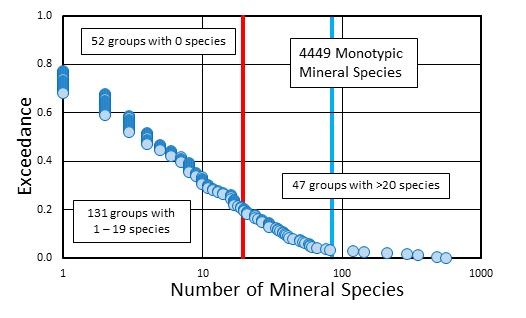
It is recognized that minerals are non-uniformly distributed among the space groups and their corresponding point groups and crystal systems. This non-uniformity is not non-systematic. A series of relationships that collectively characterize crystallographic controls on and resultant distributions of mineral occurrence among the crystallographic space groups has been identified
Al3+ and H+ substitutions in TiO2 polymorphs: Structural and vibrational investigations
https://doi.org/10.2138/am-2024-9316
The coupled substitution of Ti4+ = Al3+ + H+ is identified in the _-PbO2 type TiO2 polymorph, and its water solubility is much higher than those in CaCl2- or rutile-type phases, making it an important water carrier in the mantle transition zone and lower mantle, when coexisting with trivalent cations. A negative linear correlation is drawn between the measured OH stretching frequencies and the theoretically calculated local M3+O6 quadratic elongation among TiO2 and SiO2 polymorphs.
Oriented triphylite rods in apatite from an LCT pegmatite in the Stankuvatske Li-ore deposit, Ukraine: Implications for Li mobility
https://doi.org/10.2138/am-2023-9172
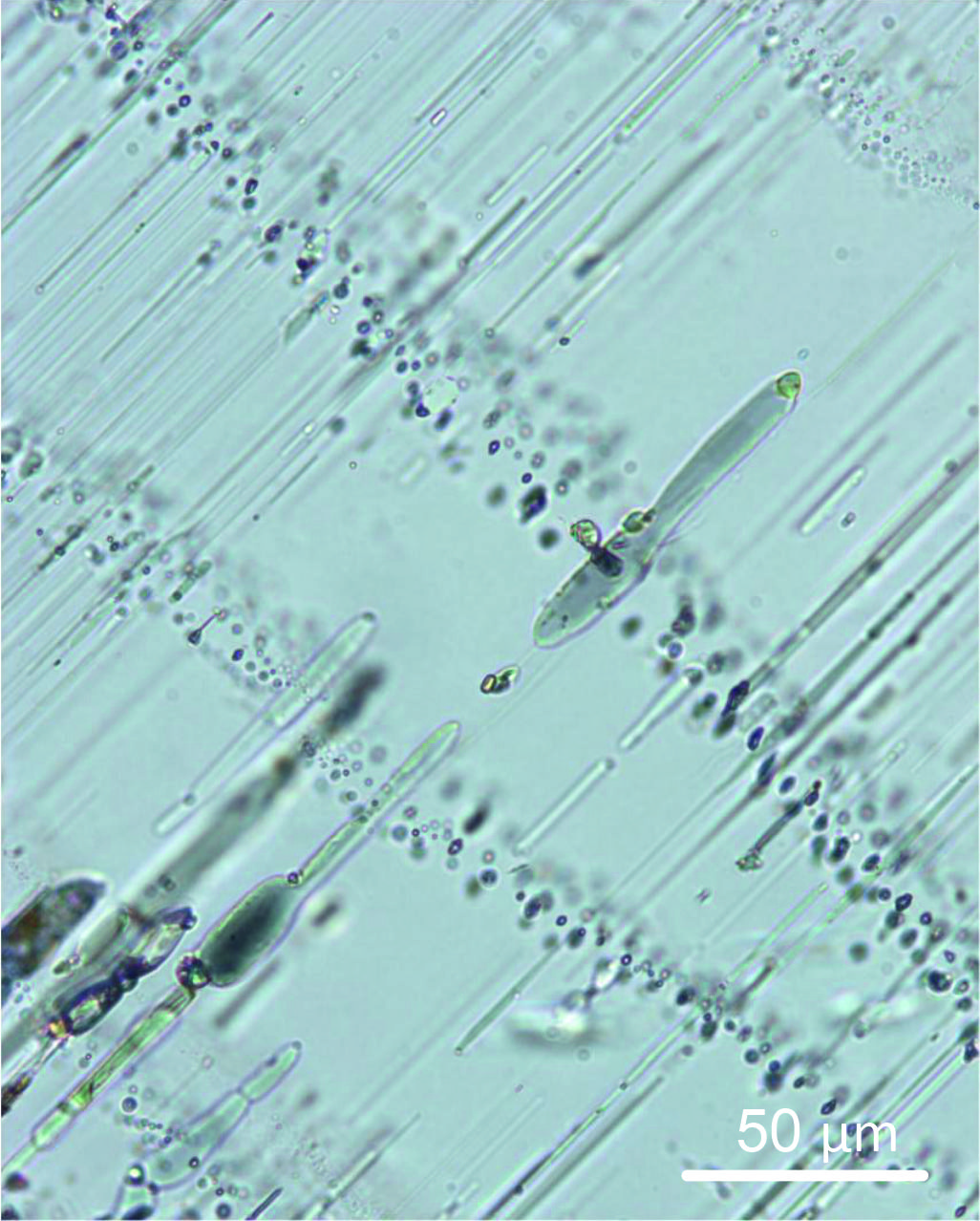
Kurylo et al. report the first finding of oriented triphylite rods in greenish-blue fluorapatite in the apatite zone of the contact between a metamorphosed rare-metal pegmatite and its amphibolite wall rock at the Stankuvatske Li-ore deposit (Ukrainian Shield). The needle-shaped triphylite inclusions are oriented parallel to structural nanochannels along the c-axis in apatite. The inclusions were formed within apatite due to the interaction between pegmatite-derived Li-rich fluids and components derived from the wall-rock amphibolite. The apatite zone in the endocontact acts as a geochemical barrier to the further escape of Li from the pegmatite and thus might have been responsible for the accumulation of important rare metals, such as Li, Rb, Cs, Nb, Ta, and Sn. Therefore, the presence of an apatite geochemical barrier may even be used as a prospecting tool for rare metals in other pegmatites around the world.
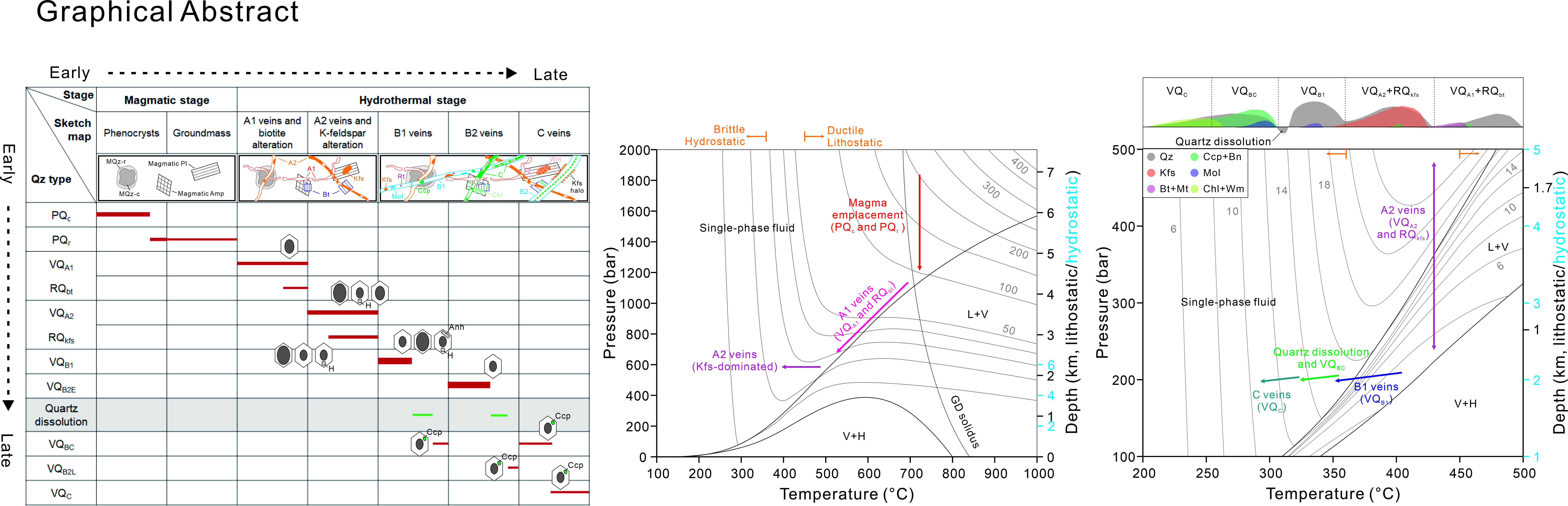
Quartz textures, trace elements, fluid inclusions, and in situ oxygen isotopes from Aktogai porphyry Cu deposit, Kazakhstan
https://doi.org/10.2138/am-2023-8931
Two types of magmatic quartz and nine types of hydrothermal quartz are identified in the Aktogai porphyry Cu deposit. Mineralizing fluids at Aktogai underwent fluid immiscibility, mixing, and cooling. Copper precipitation at Aktogai is caused by fluid cooling and water-rock reactions. This work demonstrates that Ti-in-quartz thermobarometry is a useful tool for estimating the emplacement depths of ore-related intrusions.
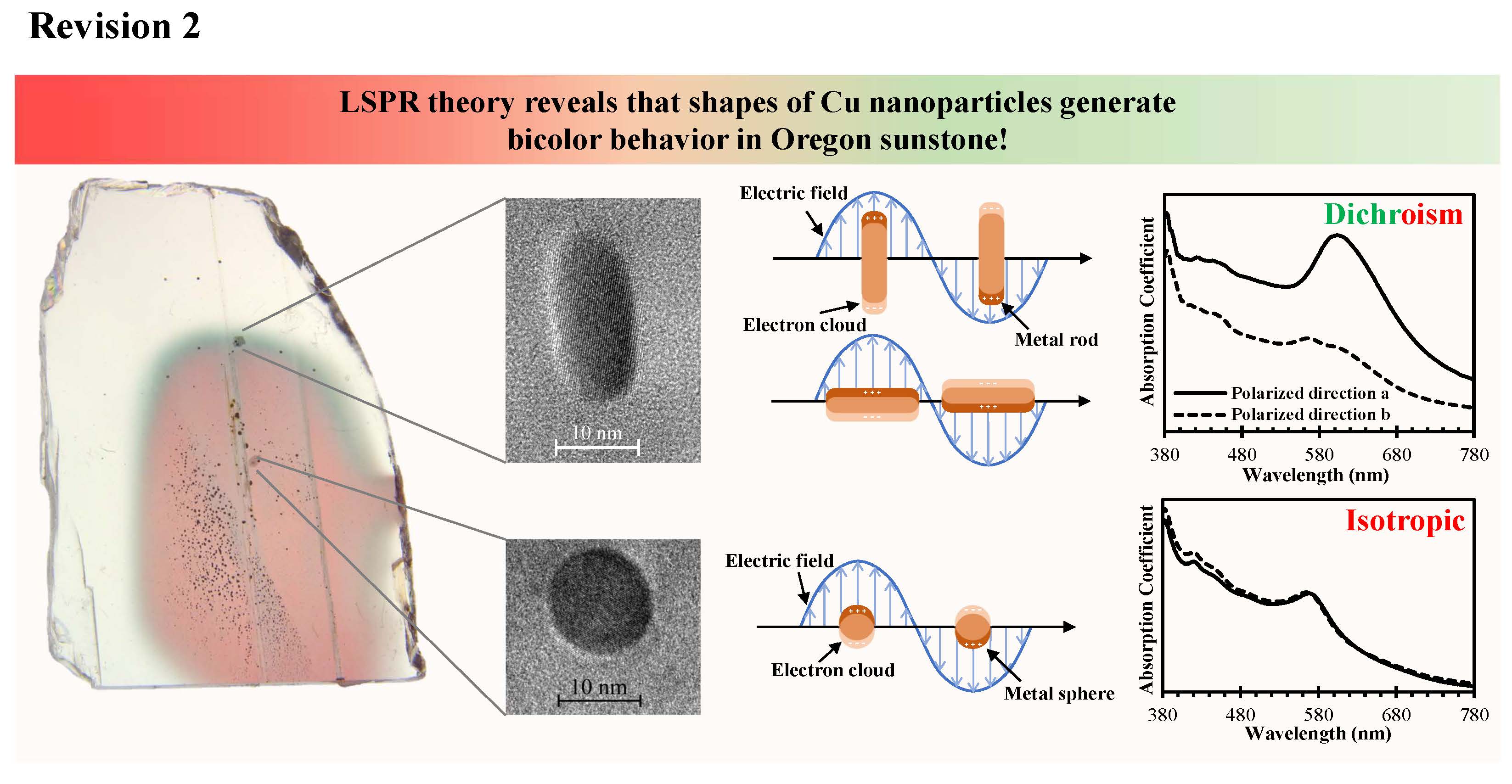
Cu nanoparticle geometry as the key to bicolor behavior in Oregon sunstones: An application of LSPR theory in nanomineralogy
https://doi.org/10.2138/am-2023-9141
Oregon sunstone is a well-known gem whose color mechanism cannot be explained by classical mineral coloration theories. Wang et al. employed focused ion beam extraction and high-angle annular dark-field scanning transmission electron microscopy to document the presence of Cu nanoparticles in Oregon sunstones. The nanoparticles occurred as two distinct morphological populations. Spherical nanoparticles measuring ~10 nm in diameter were associated with red isotropic zones. Nanorods up to ~20 nm in length occurred in anisotropic zones that exhibited green and red coloration. This study successfully applied localized surface plasmon resonance (LSPR) theory to simulate absorption spectra for the isotropic and anisotropic zones of Oregon sunstones, confirming that variably shaped Cu-nanoparticles in feldspar crystals control the optical behavior of these gems.
Gowerite, Ca[B5O8(OH)][B(OH)3]·3H2O: Revisiting the crystal structure and exploring its formation context
https://doi.org/10.2138/am-2024-9367
Kyono and Yamaguchi investigated the structural characteristics and formation environment of gowerite. Hydrothermal experiments resulted in the successful synthesis of gowerite. The study delves into the molecular orbitals, highlighting the spatial distribution and strong covalent bonds within the unique fundamental building blocks, and examines the structural inheritance of FBBs during phase changes. This work enhances our understanding of borate mineral formation and characteristics, contributing valuable insights to borate mineralization studies.
Zhonghongite, Cu29(As,Sb)12S33, a new mineral from the high-sulfidation vein of Jiama porphyry system, Tibet, China
https://doi.org/10.2138/am-2024-9338
Zheng et al. report the discovery of zhonghongite, Cu29(As,Sb)12S33, a new mineral from the later high-sulfidation vein of the Jiama mine. They determined its optical characteristics, chemical composition, and crystal structure. Zhonghongite, watanabeite, and tennantite-tetrahedrite are closely intergrown and share the same major elements: Cu, As, Sb, and S. The authors compare the structural characteristics of zhonghongite to tennantite, which exhibits a similar crystal structure, but zhonghongite is more complex, with five As(Sb) sites in the structure.
Uramphite, (NH4)(UO2)(PO4)·3H2O, from the second world occurrence, Beshtau uranium deposit, Northern Caucasus, Russia: Crystal-structure refinement, infrared spectroscopy, and relation to uramarsite
https://doi.org/10.2138/am-2024-9313
Gurzhiy et al. report the discovery of uramphite, (NH4)(UO2)(PO4) · 3H2O, at Beshtau uranium deposit, Northern Caucasus, Russia. They conducted structural refinement using single-crystal X-ray diffraction data and proposed a model for the distribution of H2O and NH4+ molecules in the interlayer space. IR spectrum shows the splitting of the band of H–N–H bending vibrations into four components, which is explained by the resonance splitting of a group of NH4+ cations occurring around the four-fold axis at close distances from each other. Although uramphite is related to uramarsite, (NH4)(UO2)(AsO4)·3H2O, they are not isostructural. Uramarsite is triclinic, contains a significant amount of P in arsenate sites, and significantly differs from uramphite by the arrangement of H2O and NH4+ molecules in the interlayer space. Bacterial activity might be crucial for the formation of both uramphite and uramarsite at Beshtau uranium deposit.
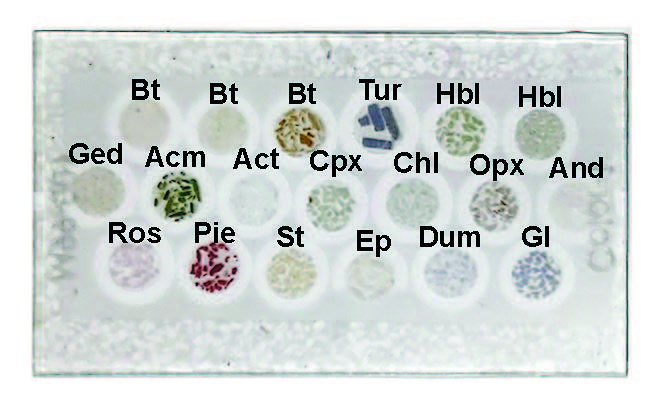
A simple method to create mineral mounts in thin section for teaching optical mineralogy
https://doi.org/10.2138/am-2023-9285
Kohn provides step-by-step instructions for creating grain mounts in thin sections. This method teaches the optical properties of minerals, specifically color/pleochroism, relief, and birefringence. It also allows the mounting of fragile materials.
Volume 110 : January 2025 Issue
Thermoelasticity of phase D and implications for low-velocity anomalies and local discontinuities at the uppermost lower mantle
https://doi.org/10.2138/am-2024-9305
Water can be transported into the deep mantle through dense hydrous minerals by subduction, some of which could be detected through geophysical observations because of their distinct physical properties, such as low seismic velocity and high electrical conductivity. Phase D is one of the important hydrous minerals in the uppermost lower mantle (ULM), but its elastic properties under these conditions still need to be clarified. In this study, Hao et al. obtain the elasticity and density of phase D under the conditions of the ULM. The velocities of phase D are comparable to those of major minerals in the ULM, so the enrichment of phase D is not likely to generate seismically detectable low-velocity anomalies, but the strong elastic anisotropy of phase D may explain some seismic anisotropy observations. The results also show that the dehydration of phase D into bridgmanite and stishovite in the ULM produces negligible velocity contrasts but a prominent density increase, which could account for some seismic discontinuities.
Plastic deformation of dry, fine-grained olivine aggregates under high pressures
https://doi.org/10.2138/am-2023-9223
Dynamics in the Earth's upper mantle mineral assemblages are sensitive to pressure. For example, pressure strongly modulates deformation by dislocation creep in the upper mantle. However, the diffusion creep dependence on pressure in the upper mantle is not well constrained. To investigate the effect of pressure on diffusion creep, ultrafine-grained synthetic and natural olivine were deformed at conditions corresponding to the upper mantle. The study was conducted at the Advanced Photon Source at the Argonne National Laboratory using a D-DIA apparatus. The results show that the pressure effect, generally expressed through the value of activation volume in the diffusion creep equation, is small relative to dislocation creep. The measured activation volume for diffusion creep in dry synthetic and natural ultrafine-grained olivine samples is V*= 7 ± 2.4 cm3/mol. This study also shows that water has a moderate effect on enhancing diffusion creep in the upper mantle.
Raman Match: Application for automated identification of minerals from Raman spectroscopy data
https://doi.org/10.2138/am-2023-9227
Raman spectroscopy is a powerful, non-destructive analytical tool widely used in various scientific fields, such as chemistry, materials science, and biology. However, this process can be intricate and time consuming, primarily because of the extensive database of Raman spectra. Berrada et al. present the Raman Match application to streamline and automate the sample identification process. This innovative tool simplifies the analysis of Raman spectra through a search-and-match method using the established RRUFF Raman database in the Python programming language. It further offers a user-friendly graphical interface, allowing users to load Raman spectra, identify and fit spectral peaks, match them to reference libraries, visualize the results, and generate publication-ready figures. The implications are significant, particularly for the geoscience and materials science communities, offering a practical solution for scientists and researchers in geoscience and materials science, simplifying and expediting the process of mineral identification with Raman spectroscopy, and ultimately contributing to more efficient and effective scientific investigations and exploration efforts.
Estimating modal mineralogy using Raman spectroscopy: Multivariate analysis models and Raman cross-section proxies
https://doi.org/10.2138/am-2023-9224
This work provides fundamental groundwork for using Raman spectroscopy to quantify modal mineralogy. Two techniques are presented in this work for quantifying common rock-forming minerals: partial least-squares multivariate analysis and a novel approach called Raman cross-section proxies (numerical metrics associated with specific Raman features). Situationally, one or the other method may be best applicable. The methods can be applied to the unmixing of common rock-forming minerals present on terrestrial planets, including Earth and Mars, and mixtures of non-geological materials.
The olivine-spinel-ameltSiO2 (OSaS) oxybarometer: A new method for evaluating magmatic oxygen fugacity in olivine-phyric basalts
https://doi.org/10.2138/am-2023-9021
This paper describes the calibration and implementation of a new method for conducting magmatic f(O2) studies. The new approach, based on olivine-spinel-melt equilibrium, only requires access to an electron microprobe and the identification of cotectic olivine and spinel pairs in mafic rocks. The new oxybarometer generates f(O2) values with comparable accuracy to magmatic redox studies that use XANES or Mšssbauer measurements of Fe2+/Fe3+ in quenched glasses.
The transition of the magma plumbing system of Tianchi shield-forming basalts, Changbaishan Volcanic Field, NE China: Constraints from dynamic Fe-Mg diffusion modeling in olivine
https://doi.org/10.2138/am-2023-9296
Tian et al. present a model to perform diffusion modeling with changing and moving boundary conditions during mineral cooling history. This approach is useful in case pyroclastic rocks are lacking and only lava samples are available. It could be successfully applied to other lava samples to improve the accuracy of obtained diffusion timescales. The study combined the Fe-Mg (olivine) diffusion modeling timescales with chemical (bulk-rock geochemistry, mineral chemistry) and textural data (petrography, zoning patterns of olivine) to elucidate the storage and transport conditions of the basaltic magmas of the Tianchi volcano. The results suggest the Tianchi basaltic plumbing system experienced a structural transition from multi-level stalling and subsequent ascent for the TD and BS units to direct ascent from a mid-crust reservoir to the surface for the LFZ unit.
Arsenic in pyrite acts as a catalyst for dissolution-reprecipitation reaction and gold remobilization
https://doi.org/10.2138/am-2023-9034
This manuscript presents evidence of a direct link between low-angle boundaries between chemically distinct zones in pyrite and the distribution of native gold and arsenopyrite. The link between these boundaries and Au occurrence (disseminated and free native grains) in pyrite demonstrates that As and Au within the pyrite lattice are sensitive to permeation of hydrothermal fluids along low-angle boundaries. Coupled dissolution-reprecipitation of pyrite along the low-angle boundaries creates native gold in an As-depleted domain.
« ‹ 1 … 8 9 10 11 12 … 85 › »ADDITIONAL RESOURCES