
Editor’s Notes
Total Results: 1697
Volume 109 : June 2024 Issue
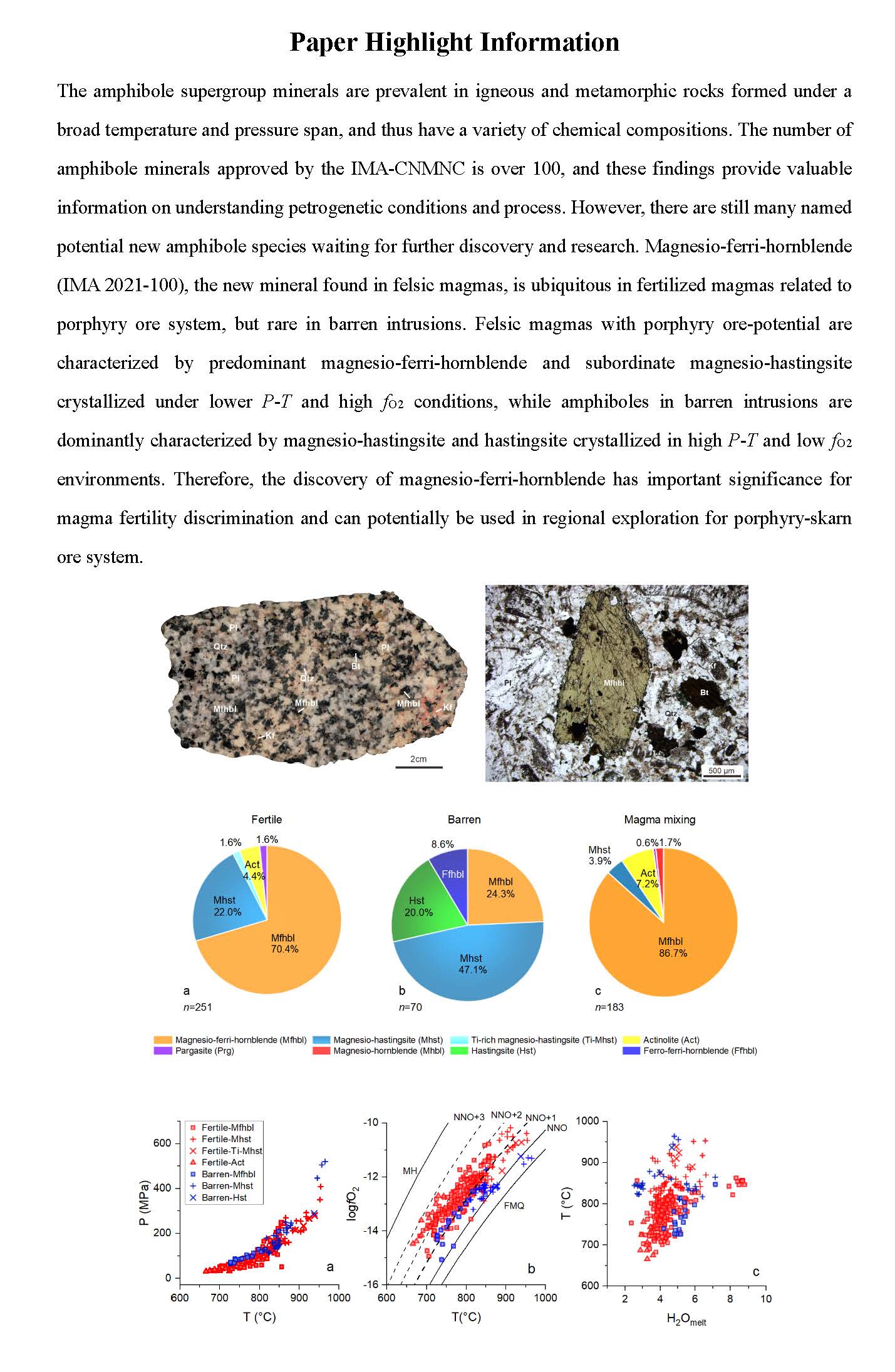
Magnesio-ferri-hornblende, □Ca2(Mg4Fe3+)[(Si7Al)O22] (OH)2, a new member of the amphibole supergroup
https://doi.org/10.2138/am-2023-8922
Zhang et al. report a magnesio-ferri-hornblende (IMA 2021-100), a new member of the amphibole supergroup. This new mineral, found in felsic magmas, is ubiquitous in fertilized magmas related to porphyry ore system, but rare in barren intrusions. Felsic magmas with porphyry ore-potential are characterized by predominant magnesio-ferri-hornblende and subordinate magnesio-hastingsite crystallized under lower P-T and high fO2 conditions, while amphiboles in barren intrusions are dominantly characterized by magnesio-hastingsite and hastingsite crystallized in high P-T and low fO2 environments. The discovery of magnesio-ferri-hornblende has important significance for magma fertility discrimination and can potentially be used in regional exploration for porphyry-skarn ore system.
A multivariate statistical approach for mineral geographic provenance determination using laser-induced breakdown spectroscopy and electron microprobe chemical data: A case study of copper-bearing tourmalines
https://doi.org/10.2138/am-2023-9164
Dutrow et al. summarize the use of two complementary techniques for determining mineral provenance; LIBS = a qualitative technique, and EMP = a quantitative technique. Data from both techniques were subjected to multivariate statistical analyses to highlight correlations among elements that uniquely identified the geographic locality of copper-bearing tourmalines. These tourmalines have highly similar compositions and environment of formation, yet are geographically separated. Using a combination of PCA and PLSR multivariate statistics on compositional data, the four geographical localities of Paraiba tourmaline could be separated with about 95% success. This study is the first to demonstrate the use of multivariate statistical analyses of EMP data for determining the provenance of tourmaline supergroup minerals with remarkably similar compositions. Specifying the provenance of minerals has widespread applications to geoscience problems. While this study focuses on a specific mineral species, it demonstrates that the approach is wide applicably to other mineral groups.
Characteristics of congruent dissolution of silicate minerals enhanced by chelating ligand under ambient conditions
https://doi.org/10.2138/am-2023-9025
Wang et al. investigated the characteristics and mechanisms of silicate mineral dissolution in the presence of a chelating ligand, i.e., N,N-12 bis(carboxymethyl)-L-glutamic acid (GLDA), through batch dissolution experiments. The results showed that the dissolution of silicate minerals can be enhanced by up to two orders of magnitude at both pH 4 and 8. The chelating ligand particularly facilitated the dissolution of minerals with a higher Al content, such as tourmaline and anorthite. Furthermore, the presence of chelating ligands enhanced the leaching of not only metals but also Si from minerals. A possible mechanism is chelating ligand adsorbs and negatively charge the mineral surface, which attracts more H+ and polarizes Si-O and Mg-O bonds, thereby dissolving the minerals at a faster rate. These results have significant implications for understanding the dissolution of minerals in nature and for the application of chelating agents in geological developments.
Pyrite stability and chalcophile element mobility in a hot Eocene forearc of the Pacific Rim Terrane, Vancouver Island, Canada
https://doi.org/10.2138/am-2023-8973
Geen and Canil investigated the variables that affect the stability of pyrite in forearc metasediments of the Pacific Rim Terrane, which survives to up to 550 ¡C, co-existing with pyrrhotite over a much wider window of desulfidation than suggested by thermodynamic models. Bulk Fe and S widen the desulfidation window throughout greenschist and lower amphibolite facies. Pyrrhotite in porphyroblasts from the Pacific Rim Terrane shows mobilization of S, As, and Ni with increasing metamorphic grade, but this may have no connection to orogenic Au deposits in the region.
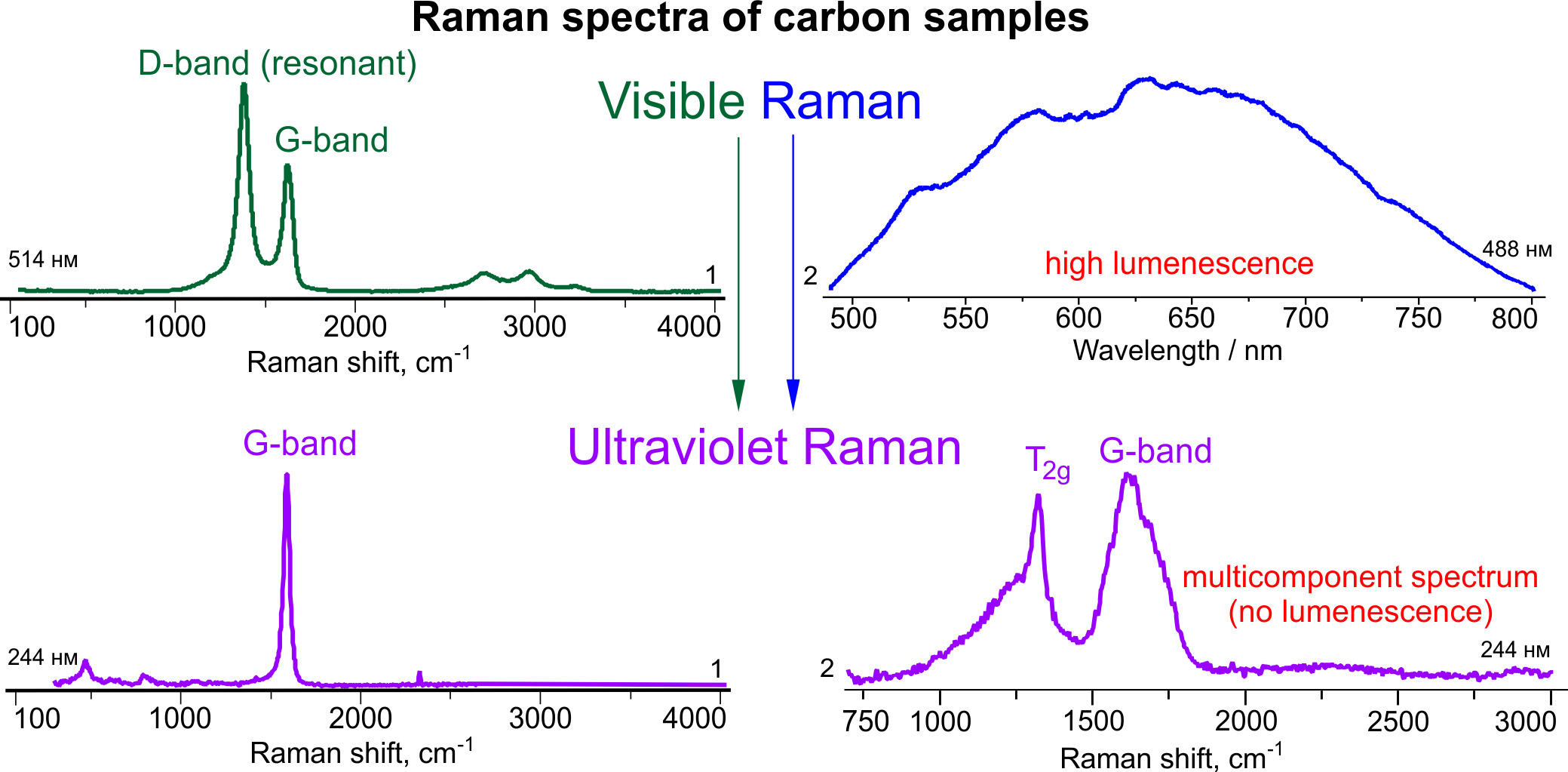
Multi-wavelength Raman spectroscopy of natural nanostructured carbons
https://doi.org/10.2138/am-2022-8912
Raman spectroscopy is an excellent tool for diagnostics and characterization of structural states of carbon materials, but it is complicated for polyphase nanostructured substances. Using multi-wavelength excitation, Isaenko et al. demonstrate that ultraviolet Raman spectroscopy can analyze polyphase composites distinguishing mixes of sp2 and sp3 nanostructured carbons. The described multi-wavelength approach can be useful for studies of shungite/glassy carbon, ultranocrystalline diamond, lonsdaleite, diamond-like carbon, amorphous sp3 and sp2 carbon components in natural and synthetic carbon nanocomposites.
A machine learning approach to discrimination of igneous rocks and ore deposits by zircon trace elements
https://doi.org/10.2138/am-2022-8899
Trace elements in zircon are effective for tracing the origin of both igneous rocks and ore deposits. With large compilations of trace element data in zircon, machine learning offers an attractive proposition for classifying igneous rocks and ore deposit sources based on grain chemistry. Wen et al. collected 7173 zircon chemical data from 11 different igneous rock types and 3831 analyses of 5 deposit types worldwide. Using machine learning, the authors identified the ten most important zircon trace elements that influence zircon classification in igneous rocks and ore deposits. They built classification models for both igneous rocks and ore deposits and validated their reliability. In addition, a web page portal (http://60.205.170.161:8001/) has been developed for the two classification models. The approach was applied to a case study of zircon from known rock types in 30 igneous plutons from Western Australia. Thus, classification models of igneous rocks and ore deposits using zircon chemical data are useful in tracing the provenance of detrital zircon grains and in reducing exploration risk by increasing the deposit halo in detrital zircon sampling surveys.
Volume 109 : May 2024 Issue
Characterizing basalt-atmosphere interactions on Venus: A review of thermodynamic and experimental result
https://doi.org/10.2138/am-2023-9015
The surface of Venus is in contact with a hot (~470 °C), high pressure (92 bars), and caustic (CO2 with S, but little H2O) atmosphere, which should cause progressive alteration of the crust in the form of sulfate and iron-oxide coatings; however, the exact rate of alteration and mineral species are not well constrained. Filiberto and McCanta review recent geochemical modeling and experimental studies to constrain the state of the art for alteration mineralogy, rate of alteration, open questions about the surface mineralogy of Venus, and what can be constrained before the fleet of missions arrive later this decade. Combining the new results confirm that basalt on the surface of Venus should react quickly and form coatings of sulfates and iron-oxides; however, the mineralogy and rate of alteration is dependent on physical properties of the protolith (including bulk composition, mineralogy, and crystallinity), as well as atmospheric composition, and surface temperature. Importantly, the geochemical modeling shows that the mineralogy is largely controlled by atmospheric oxygen fugacity, which is not well constrained for the near surface environment on Venus. Therefore, alteration experiments run over a range of oxygen and sulfur fugacities are needed across a wide range of Venus analog materials with varying mineralogy and crystallinity.
Using pyrite composition to track the multi-stage fluids superimposed on a porphyry Cu system
https://doi.org/10.2138/am-2022-8727
Wu et al. studied porphyry-type alteration, and widespread late Cu sulfide-bearing veins (stage IV) crosscutting porphyry-type alteration, plus a post-ore fault-controlled argillic alteration (stage V) in the Yulekenhalasu porphyry Cu deposit. Anomalous concentrations of trace elements in pyrite of different stages are clarified. The spatial variation of Se/S in pyrite were influenced by changes in the hydrothermal fluid composition and temperature, which may provide a potential vectoring tool to mineralization for pyrite geochemistry in porphyry deposits.
Geochemical discrimination of pyrite in diverse ore deposit types through statistical analysis and machine learning techniques
https://doi.org/10.2138/am-2023-8976
Li et al. used data on pyrite from iron oxide-apatite, iron oxide copper-gold, skarn Cu-(Fe), porphyry Cu-Mo, orogenic Au, volcanic-hosted massive sulfide, sedimentary exhalative deposits and barren sedimentary rocks for the application of machine learning techniques and construction of optimized discrimination diagrams. The calculated discriminant functions highlight distinct multi-element differences among pyrite from various types of deposit. Among the three machine learning algorithms, i.e., Artificial Neural Network, Support Vector Machine, and Random Forest, the accuracy demonstrates that pyrite trace element data combined with Support Vector Machine is a useful tool to discriminate between ore types.
Correlation between Si-Al disorder and hydrogen-bonding distance variation in ussingite (Na2AlSi3O8OH) revealed by one- and two-dimensional multi-nuclear NMR and first-principles calculation
https://doi.org/10.2138/am-2023-9008
Cation order/disorder (Si-Al in particular in silicates) and the strength of hydrogen bonding of OH groups are two structural factors that may significantly affect the stability and physical properties of minerals and inorganic materials. Not much attention has been paid to the correlation of the two factors. In this study, Xue and Kanzaki focused on the mineral ussingite, (Na2AlSi3O8OH), which is characterized by a unique interrupted framework structure and strong hydrogen bonding. Despite several previous studies of the mineral using single-crystal X-ray and neutron diffraction and 1H and 29Si NMR, the state of Si-Al disorder and how it affects the hydrogen bonding was uncertain. They were able to unambiguously clarify the issue via a comprehensive one- and two-dimensional multi-nuclear NMR and first-principles calculation. This powerful approach not only allowed the authors to unambiguously confirm the existence of ~3% Si-Al disorder, but also to clearly reveal its spatial relationship with OH sites that undergo large changes in hydrogen bonding distances. Correlation between Si-Al disorder with variation in hydrogen-bonding distance could be a universal phenomenon also applicable to other hydrous minerals that are indispensable to the understanding of water storage in the deep Earth and planetary interiors. This study also confirmed that Al prefers to partition into more polymerized structural units [Q4 = tetrahedral TO4 sites that share all four of its oxygen corners with other tetrahedral neighbors, rather than Q3 for which one oxygen is not shared with other tetrahedra, i.e., nonbridging oxygen (NBO)] to avoid the formation of Al-OH and Al-NBO, and provides insight into their behavior in partially depolymerized aluminosilicate melts/glasses and minerals.
Single-crystal X-ray diffraction on the structure of (Al,Fe)-bearing bridgmanite in the lower mantle
https://doi.org/10.2138/am-2023-8969
Fu et al. report high-quality structural refinements on single-crystal (Al,Fe)-bearing bridgmanite up to 64.6 GPa at 300 K. Their results show an increasing structural distortion of the sample with pressure, which is related to the A-site Fe2+ distortion. The local environmental changes of A-site Fe2+ in bridgmanite could help explain observed anomalies in some physical properties such as lattice thermal conductivity, which can greatly affect our understanding of the physics and dynamics of planets.
Multi-scale and multi-modal imaging study of mantle xenoliths and petrological implications
https://doi.org/10.2138/am-2022-8866
Venier et al. explored the application of 3D X-ray micro-computed tomography (conventional and synchrotron-based) to mantle xenoliths and the differences between 2D and 3D textural studies. The 3D models obtained allow the extraction of textural information that cannot be fully quantified from thin sections, such as spinel layering, silicic glass distribution and related vesicles. Recommendations are given for future 3D textural studies of mantle xenoliths, and it is shown quantitatively how 2D petrography can underestimate the modal composition of spinel peridotites.
Mineral and crystal chemical study of pseudo-C2/m non-metamict chevkinite-(Ce): An investigation into the intracrystalline distribution of LREE, HREE, and octahedral cations in samples from the Azores and Pakistan
https://doi.org/10.2138/am-2022-8658
X-ray structure refinements and consistent site occupancies data allowed Carbonin et al. to accurately calculate cation distribution in non-metamict chevkinite-(Ce). Crystal chemical studies help better understand the well-known ability of chevkinite to fractionate LREE from HREE and its importance in geochemical modeling (Macdonald and Belkin 2002). This study showed that heavier and smaller REE enter only the 8-coordinate A1 site. At the same time, however, particularly stretched bonds suggest the A1 polyhedron bond lengths are still too long for HREE.
Evolution of layering in a migmatite sample: Implications for the petrogenesis of multidomain monazite and zircon
https://doi.org/10.2138/am-2022-8679
Gneissic layering is common in partially melted rocks. Characterizing layer-forming processes is essential to interpreting the timing of melting and history of metamorphic rocks, especially in multiply deformed regions. Suarez et al. analyzed all layers of a single migmatitic rock to describe the evolution of gneissic layering and the texture and timing of datable minerals (monazite and zircon) developed during biotite dehydration melting. They interpreted the gneissic layers as a result of varying degrees of preservation of products and reactants in the biotite dehydration melting reaction. Notably, the complete tectonic history is preserved in monazite and zircon grains in the partially melted Ògrey gneissÓ layers, but not in the leucosome layers.
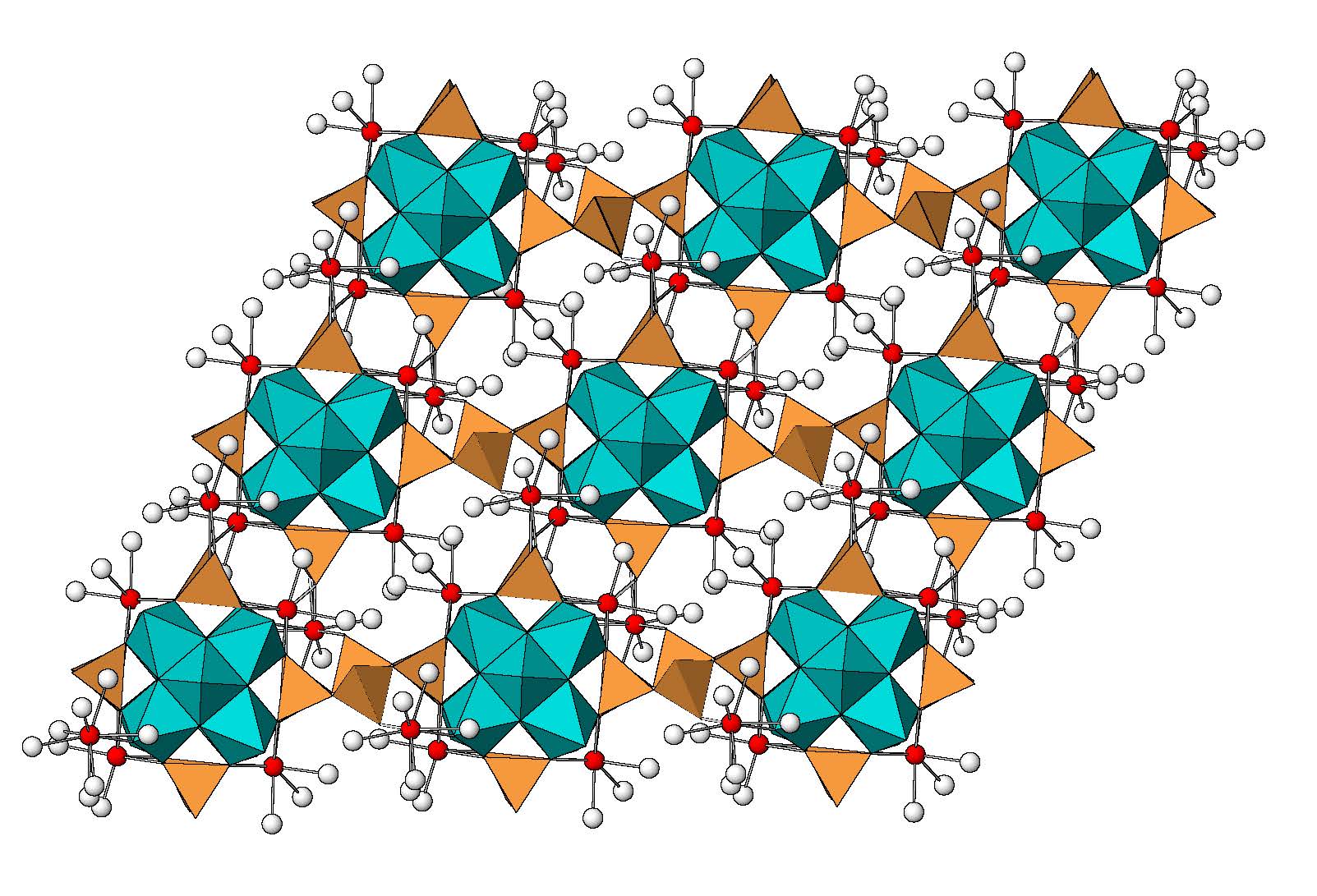
Waipouaite, Ca3(V4+4.5V5+0.5)O9[(Si2O5(OH)2][Si3O7.5(OH)1.5]·11H2O, a new polyoxovanadate mineral from the Aranga Quarry, New Zealand
https://doi.org/10.2138/am-2023-9048
Elliott and Kampf present the description of waipouaite from the Aranga Quarry, Northland Region, New Zealand. The new mineral is the first natural polyoxovanadosilicate and has a novel structure, based on [(V4+,V5+)5O17] polyoxovanadate units, which is unique in natural and synthetic phases. The synthesis of polyoxovanadates is a very fast-growing area of research in material chemistry driven by their structural versatility and potential applications that result from the flexible coordination chemistry of vanadium and its wide variety of valence states. Polyoxovanadosilicates have proved to be highly effective for making extended frameworks because of the absence of electron lone pairs, however, little progress has been made in the syntheses of these compounds. The discovery of waipouaite demonstrates that polyoxovanadosilicates can form under natural conditions and may open up new synthetic pathways for the preparation of these compounds.
Scandio-winchite, ideally □(NaCa)(Mg4Sc)(Si8O22)(OH)2: The first Sc-dominant amphibole-supergroup mineral from Jordanów Śląski, Lower Silesia, southwestern Poland
https://doi.org/10.2138/am-2023-8974
Pieczka et al. present scandio-winchite, o(NaCa)(Mg4Sc)(Si8O22)(OH)2, the first Sc-dominant amphibole-supergroup mineral. It was discovered in a contact zone of a granitic pegmatite and rodingite-like, calc-silicate rocks and metasomatized granitic bodies in a serpentinite quarry at Jordan—w _l_ski, Lower Silesia, Poland. Scandio-winchite occurs within chlorite aggregates that probably represent remnants of partly recrystallized xenoliths of blackwall chlorite schists and in adjoining portions of the pegmatite. The authors present crystallochemical and structural data of this new mineral as well as briefly speculate on formation conditions that could favor the crystallization of this amphibole. They consider scandio-winchite as a secondary metasomatic phase related to the evolution of the country rocks and partial alteration of the blackwall chlorite schists induced by the pegmatitic melt and associated fluids.
Znucalite, the only known zinc uranyl carbonate: Its crystal structure and environmental implications
https://doi.org/10.2138/am-2023-8956
Steciuk et al. present the first structure characterization of the zinc uranyl-carbonate mineral znucalite using 3-dimensional electron diffraction and X-ray powder diffraction. Znucalite is the only reported uranyl carbonate containing zinc as an essential constituent. It possesses a layered structure, with [Zn10(OH)14(CO3)2] double sheets connected to a thick interlayer where (UO2)(OH)2(CO3)2 and Ca(H2O)4 present imperfect ordering. A discussion on the environmental importance of znucalite is included, based on geochemical calculations with an estimate of the solubility product for this mineral. The authors document that znucalite could be a relevant agent in removing uranium from groundwater
Influence of crystallographic anisotropy on the electrical conductivity of apatite at high temperatures and high pressures
https://doi.org/10.2138/am-2022-8900
Hu et al. systematically investigated the orientation-related electrical conductivity of apatite single crystals along the [001], [100], and [010] crystallographic orientations at 973-1373 K and 1.0-3.0 GPa. The electrical conductivity shows a strong temperature-dependence, a weak pressure-dependence and a high sensitivity to the crystallographic orientation. The electrical conductivity of apatite single crystals with an extremely high anisotropic degree (T = ~9-16) value is much lower than those ofÊ phlogopite, lawsonite and amphibole at temperatures of 973-1373 K. All of these observations, including the relatively higher activation enthalpy (1.92-2.24 eV) and positive activation volume (9.31±0.98 cm3/mol), confirmed that the monovalent fluorine anion was the main charge carrier for apatite under the studied conditions. Furthermore,Ê the authors established the functional dependence for the volume percentages of apatite on the electrical conductivity of phlogopite-apatite-peridotite rock system.Ê For a given middle Hashin-Shtrikman upper bound model, the electrical conductivity-depth profile for peridotite containing 10.0 vol% apatite was successfully constructed on the basis of two different geothermal gradients for the lower boundary of 11.6 K/km and upper boundary of 27.6 K/km in western Junggar of the Xinjiang autonomous region. Although the presence of apatite in peridotite cannot explain the high conductivity anomalies beneath western Junggar of Xinjiang autonomous region, it can provide a reasonable constraint on those of apatite-rich areas with relativity high resistivity.
Volume 109 : April 2024 Issue
Interfacial interactions controlling adsorption of metal cations on montmorillonite
https://doi.org/10.2138/am-2022-8834
Adsorption is one of the most remarkable properties of montmorillonite. However, our understanding of the interfacial interactions between metal cations and montmorillonite remains elusive, which has limited the insights into the migration, enrichment, and cycling of metals on Earth, and the evolution of montmorillonite itself and the changes of associated soil, and sediments. This paper by Li et al. examines the interfacial interactions for the adsorption of metal cations on montmorillonite and reviews the status on this research.
Microstructural and compositional evolutions during transformation from biotite to berthierine: Implications for phyllosilicate alteration processes
https://doi.org/10.2138/am-2023-8984
Using high-angle annular dark-field scanning transmission electron microscopy (HAADF-STEM), energy-dispersive spectroscopy, and electron energy loss spectroscopy (EELS), Xi et al. identified a berthierine twin structure within weakly changed biotite in a rhyolite from Long Valley, California, USA. The nanoscale Fe-rich layers are composed of twinning berthierine layers rather than a single chlorite layer. The transformation of biotite to berthierine requires the dissolution of a tetrahedral (T) layer and the introduction of a new TO (O represents octahedral sheet) structure into the biotite stacking sequence, resulting in substituting one biotite layer (i.e., TOT) by two twinning berthierine layers (i.e., TO-OT). Morphological observations indicate that the transformation began at the biotite defect locations, concurrent with the rearrangement of metal cations. During the weak fluid reform of biotite, berthierine was produced via an interface-coupled dissolution-reprecipitation process. The EELS analyses further demonstrate that the Fe-rich biotite promotes the production of berthierine as the principal alteration product in low-temperature environments. This study also demonstrates that the combination of HAADF-STEM and EELS is effective for identifying nanominerals and elucidating their formation and alteration mechanisms.
« ‹ 1 … 14 15 16 17 18 … 85 › »ADDITIONAL RESOURCES