Editor’s Notes
Total Results: 1697
Volume 109 : March 2024 Issue
Predicting olivine formation environments using machine learning and implications for magmatic sulfide prospecting
https://doi.org/10.2138/am-2022-8893
The natural formation from various mantle melts at diverse environments makes olivine one of the most informative messengers from Earth's mantle and a recorder of the fate of magma related to important mineral resources. Here, Xue et al. train a machine-learning-based model using a global olivine dataset to discriminate between olivine-forming environments and evaluate the ore deposit potential of magmatic sulfide mineralization. Thisr study documents that this model is excellent in discriminating between olivine origins and provides a reliable prospecting indicator for global Ni-Cu-PGE exploration.
Reaction between volatile-bearing eclogite and harzburgite as a function of degree of interaction: Experimental constraints at 4 GPa
https://doi.org/10.2138/am-2022-8799
The mantle is known to be heterogeneous, mainly composed of peridotite and eclogite. Eclogite-derived hydrous melts may interact with harzburgite in subduction zones and in the sub-continental lithospheric mantle. Elazar and Kessel studied the interaction of volatile-bearing eclogite-derived melt and harzburgite as a function of the degree of interaction. They experimentally simulated such interaction by using a capsule containing an eclogite layer juxtaposed next to a harzburgite layer in the presence of H2O and CO2 at 4 GPa and 1200 �C. A diamond trap was placed between the two layers to trap the fluid or melt, allowing direct determination of its composition. The multi-anvil apparatus was rotated at different frequencies to examine the effect of the increasing degree of interaction on the melt composition as well as the mineral compositions. The interaction of eclogite-derived hydrous melt with harzburgite results in a Opx + garnet reaction layer at the interface between the two lithologies. The interaction of the melt with the harzburgite refertilizes it, forming a lherzolite rock containing olivine, Opx, Cpx, and garnet. Melt is formed during this interaction. Both the eclogitic and the peridotitic garnet compositions approach each other and become intermediate between the composition of the garnet in the eclogite+H2O+CO2 system and the garnet in the harzburgite+H2O+CO2 system at these conditions. The Mg# of the peridotitic olivine and Opx is reduced. The alkalinity of the melt increases with increasing degrees of interaction. With increasing interaction, the mode of the melt fraction, peridotitic Opx, Cpx and garnet increase on the expense of peridotitic olivine and the eclogitic garnet. These experiments demonstrate the influence of the degree of interaction on the range of melt compositions found in volcanic arcs as well as the degree of metasomatism in the mantle found in the sub-continental lithospheric mantle.
Thermal behavior of borax, Na2B4O5(OH)4·8H2O
https://doi.org/10.2138/am-2023-8970
Borate minerals display extensive structural complexity resulting from the great diversity of their fundamental building blocks (FBBs), which are similar to that of silicates. The FBB in borax is an isolated B4O5(OH)4 cluster consisting of two BO2(OH) triangles and two BO3(OH) tetrahedra linked by common oxygen atoms to form a double ring with two common tetrahedra. Nishiyasu and Kyono reveal that a large electron cloud shared on the two borate tetrahedra leads to an extremely rigid B4O5(OH)4 cluster. Thus, once the B4O5(OH)4 cluster is formed, it is very stable as long as it is not exposed to strong acidic environments. In conclusion, the existence of borate minerals containing the B4O5(OH)4 cluster should provide evidence of the existence of moderately acidic or alkaline water where the borate minerals were grown via the incorporation of B4O5(OH)4 clusters. These types of clusters, consisting of BO3 triangles and BO4 tetrahedra, in borate minerals can potentially be used as a paleoenvironmental indicator.
Multiple magmatic processes revealed by distinct clinopyroxene populations in the magma plumbing system: A case study from a Miocene volcano in West Qinling, Central China
https://doi.org/10.2138/am-2022-8744
Clinopyroxene (Cpx) with various origins (phenocryst, antecryst, xenocryst, etc.) and textures (e.g., zoning texture and spongy texture) in a basaltic plumbing system could provide information about the deep storage, mixing, migration, and physicochemical conditions of magmas. Zhang et al. carried out detailed petrographic, mineralogical, and whole-rock geochemical analyses to unravel the origins of various Cpx crystals and the reaction between Cpx xenocrysts/antecrysts and melts/fluids in the lithosphere. The detailed investigation of compositional and textural features of Cpx antecrysts/xenocrysts in this study suggests that the interactions between various interconnected magma reservoirs are widespread in the magmatic plumbing system. Their study emphasizes the importance of Cpx-melt/fluid reactions that can significantly modify the whole-rock compositions and lead to the formation of spongy textures without the need for fractures or cracks in minerals.
Genetic implications, composition, and structure of trioctahedral micas in xenoliths related to Plinian eruptions from the Somma-Vesuvius volcano (Italy)
https://doi.org/10.2138/am-2022-8782
Balassone et al. present a detailed, systematic mineralogical and petrographic study of mica-bearing xenoliths (mainly skarns and composite skarns-marbles, with minor cumulates and a syenite) from the Somma-Vesuvius volcano (Roman Magmatic Province, southern Italy), that are related to the Pompeii (AD 79) and Avellino (3945 � 10 cal yr BP) eruptions. The crystal-chemical and structural features of the Pompeii and Avellino micas are characterized, extending the known range of the other Vesuvian micas from literature. Genetic inferences are also given and provide valuable information for reconstructing the environmental conditions in similar geological systems. For example, the Ti-depletion and wide degree of dehydrogenation of phlogopites from skarns and composite skarns-marbles suggest that the studied samples originated under variable pressure conditions.
Magmatic and hydrothermal controls on diverse Nb mineralization associated with carbonatite-alkaline complexes in the southern Qinling orogenic belt, Central China
https://doi.org/10.2138/am-2022-8651
Few carbonatites and/or alkaline rocks contain significant amounts of Nb minerals for economic exploitation; pyrochlore-group minerals generally are the dominant primary Nb-rich minerals in these rocks. In some cases, the occurrence of diverse Nb mineralization, such as columbite and Nb-rutile, may impede beneficiation and metallurgy. Ma et al. provide strong evidence that late-stage external or authigenic hydrothermal fluids could not remobilize Nb on a large scale as is observed for REE. This could result in the decoupling of REE and Nb during magmatic evolution or hydrothermal overprinting, suggesting that hydrothermal veins are potential targets for REE exploration whereas the complex itself could be the target for Nb exploration. In particular, this indicates that more attention should be paid to the country rocks, especially those rich in U or reduced, that may contribute to U enrichment and columbitization during magma ascent and hydrothermal overprinting, respectively, which may result in the diversity of Nb mineralization.
Potassium isotope fractionation during silicate-carbonatite melt immiscibility and phlogopite fractional crystallization
https://doi.org/10.2138/am-2022-8898
Potassium (K) isotopes have been precisely measured since 2016 and explored in geochemistry and cosmochemistry. The available K isotope data reveal large _41K variations in igneous rocks, which were mostly attributed to control of source composition. Magma differentiation is considered to have an insignificant effect on K isotope fractionation, mainly because of lack of studies on more-evolved magmatic rocks. Su et al. measured K isotopic compositions of a magmatic suit of alkaline silicate-carbonatite affinity, which were formed from melt immiscibility and subsequent phlogopite fractionation. Significant K isotope fractionation (1�) induced by melt immiscibility and phlogopite fractionation span the _41K range of most igneous rocks. This reveals an alternate mechanism of K isotope fractionation, which is important to constrain K recycling and K isotope variation in geological processes. This paper highlights (1) K isotope fractionation during silicate-carbonatite melt immiscibility; (2) K isotope fractionation induced by phlogopite fractional crystallization; and (3) Distinct mechanisms of K recycling and K isotope variation in various tectonic settings.
Yuchuanite-(Y), Y2(CO3)3·H2O, a new hydrous yttrium carbonate mineral from the Yushui Cu deposit, South China
https://doi.org/10.2138/am-2023-8971
Yao et al. report a new hydrous yttrium carbonate mineral, yuchuanite-(Y), Y2(CO3)�H2O. Yuchuanite-(Y) has been approved by the International Mineralogical Association Commission on New Minerals, Nomenclature and Classification (IMA2022-120). Moreover, this new mineral has important implications for heavy rare earth mineralization in Yushui and other sediment-hosted Cu deposits.
Nature and timing of Sn mineralization in southern Hunan, South China: Constraints from LA-ICP-MS cassiterite U-Pb geochronology and trace element composition
https://doi.org/10.2138/am-2022-8823
Ren et al. present three points of interest related to Sn mineralization the rocks they studied: (1) The chronology of cassiterite defines three stages of magmatic mineralization in tin deposits in southern Hunan; (2) Cassiterite compositions are a physicochemical pathfinder of magmatic-hydrothermal processes; and (3) Multiple types of cassiterite need to be studied to establish an idealized tin mineralization model.
A simple method for obtaining heat capacity coefficients of minerals
https://doi.org/10.2138/am-2023-9109
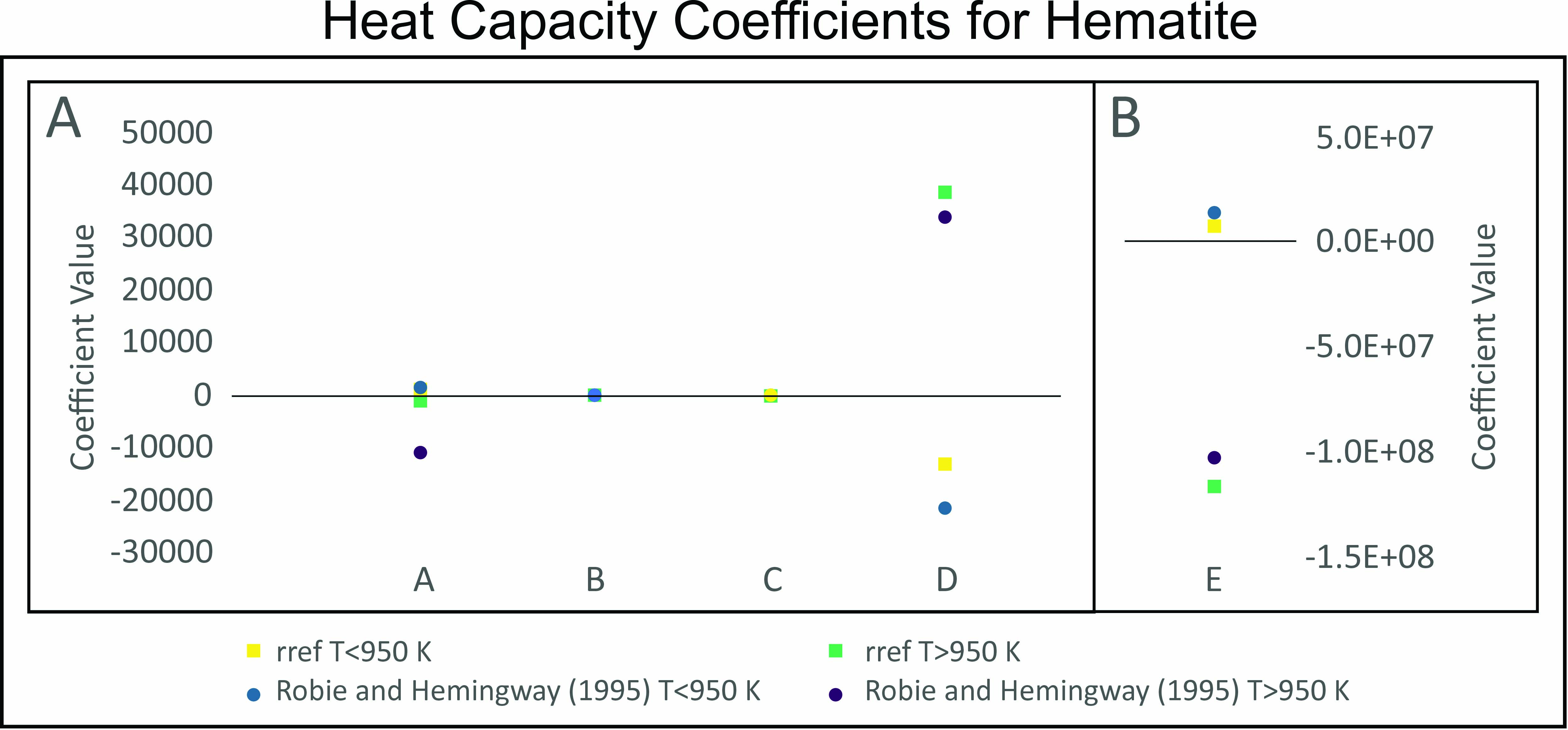
Bowman et al. developed a simple method for obtaining the heat capacity coefficients of minerals. Determination of heat capacity coefficients through this direct calculation yields comparable results to those obtained from conventional methods. Accurate heat capacity measurements can be utilized to calculate geothermal gradients in active basins, geothermometry, and study geodynamic transformations in tectonically active regions.
Molybdenum isotopic fractionation in the Panzhihua mafic layered intrusion in the Emeishan large igneous province, southwest China
https://doi.org/10.2138/am-2023-9154
The large Mo isotopic fractionations between different geological reservoirs make this isotopic system a potential useful tool for constraining the origins of magmatism. However, the effect of magmatic differentiation on Mo isotopes is still controversial. Zhang et al. focused on the effect of the fractional crystallization of Fe-Ti oxides on Mo isotope fractionation. They obtained Mo isotope data for the Panzhihua gabbroic intrusion and mineral separates, which exhibit large Mo isotopic fractionations with _98/95Mo values as follows: magnetite < clinopyroxene < ilmenite < plagioclase. Iron-Ti oxides have Mo contents that are one order of magnitude higher than those of clinopyroxene and plagioclase. Rayleigh fractionation modeling shows that the removal of magnetite and ilmenite results in significant Mo isotopic fractionation in the residual magma. Due to the low Mo contents of clinopyroxene and plagioclase, Mo isotopes are not significantly fractionated by the removal of these minerals. Their study highlights that fractionation of Fe-Ti oxides can cause considerable Mo isotopic fractionation; consequently, caution is needed when using Mo isotopes to infer magma origins.
Volume 109 : February 2024 Issue
Crystal chemistry and thermodynamic properties of zircon structure-type materials
https://doi.org/10.2138/am-2022-8632
Strzelecki et al. evaluated recent advances in the crystal chemistry and thermodynamic properties of zircon structure-type materials, identifying several knowledge gaps. The review will help researchers develop a fundamental understanding of zircon-type minerals and promote using zircon-type materials for such applications as actinide waste forms and environmental barrier coatings in aeronautical engineering.
Thermal and combined high-temperature and high-pressure behavior of a natural intermediate scapolite
https://doi.org/10.2138/am-2023-8962
Scapolites, which are intermediate between the marialite and meionite end members, usually show a primitive symmetry. Lotti et al. reported an intermediate scapolite with an unusual I4/m symmetry, and they investigated it at high-T and combined high-T and high-P with in situ diffraction techniques. Elastic behavior and structural deformation mechanisms have been described, and a phase transition observed. Implications on the potential metastable preservation of I4/m scapolites are also discussed.
Crystal structure, hydrogen bonding, and high-pressure behavior of the hydroxide perovskite MgSi(OH)6: A phase relevant to deep subduction of hydrated oceanic crust
https://doi.org/10.2138/am-2022-8889
Welch et al. reported for the first time the full crystal structure, including hydrogen bonding, of the high-pressure synthetic hydroxide perovskite MgSi(OH)6. This phase is considered to likely play a significant role in the hosting and transfer of H2O in the Earth's deep mantle at cold subduction zones. Experiments to 8 GPa described here provide insights into the structural behavior of MgSi(OH)6 and provide an essential basis for future experimental and computational studies of its stability.
Equilibrium Sn isotope fractionation between aqueous Sn and Sn-bearing minerals: Constrained by first-principles calculations
https://doi.org/10.2138/am-2022-8804
Sun et al. performed first-principles calculations on the equilibrium Sn isotopic fractionation between aqueous Sn species and minerals. Major outcomes are: (1) The Sn isotope geothermometers of cassiterite-stannite and malayaite-stannite have been established; (2) The controlling factors of Sn isotope fractionation between different aqueous Sn complexes are revealed; (3) The precipitation of aqueous Sn complexes into various tin minerals (malayaite, cassiterite and stannite) lead to the fractionation of Sn isotope in different degrees and directions. The calculated results are essential for further application of Sn isotope in various Sn-involved geological processes.
Raman spectroscopic investigation of selected natural uranyl sulfate minerals
https://doi.org/10.2138/am-2023-8932
Spano et al. reported Raman spectra of 18 uranyl sulfate minerals. To better understand underlying structural and chemical features that give rise to spectroscopic observables, they related differences in structural topology, charge balancing cations, and locality of origin to features observed in the Raman spectra of selected natural uranyl sulfates.
Modified magnetite and hydrothermal apatite in banded iron-formations and implications for high-grade Fe mineralization during retrogressive metamorphism
https://doi.org/10.2138/am-2022-8525
Magnetite (an abundant and widespread oxide mineral) and apatite (a common tracer mineral) in banded iron-formations (BIFs) are ideal minerals to study the hydrothermal and metamorphic processes. Shi et al. investigated the geochemical composition of modified magnetite and hydrothermal apatite, and in situ U-Pb geochronology on apatite from the Huogezhuang BIF-hosted Fe deposit, northeastern China. The chemical compositions recorded in modified magnetite and hydrothermal apatite from BIFs provide essential insights into the supernormal enrichment of iron during retrogressive metamorphism of BIFs.
Apatite trace element composition as an indicator of ore deposit types: A machine learning approach
https://doi.org/10.2138/am-2022-8805
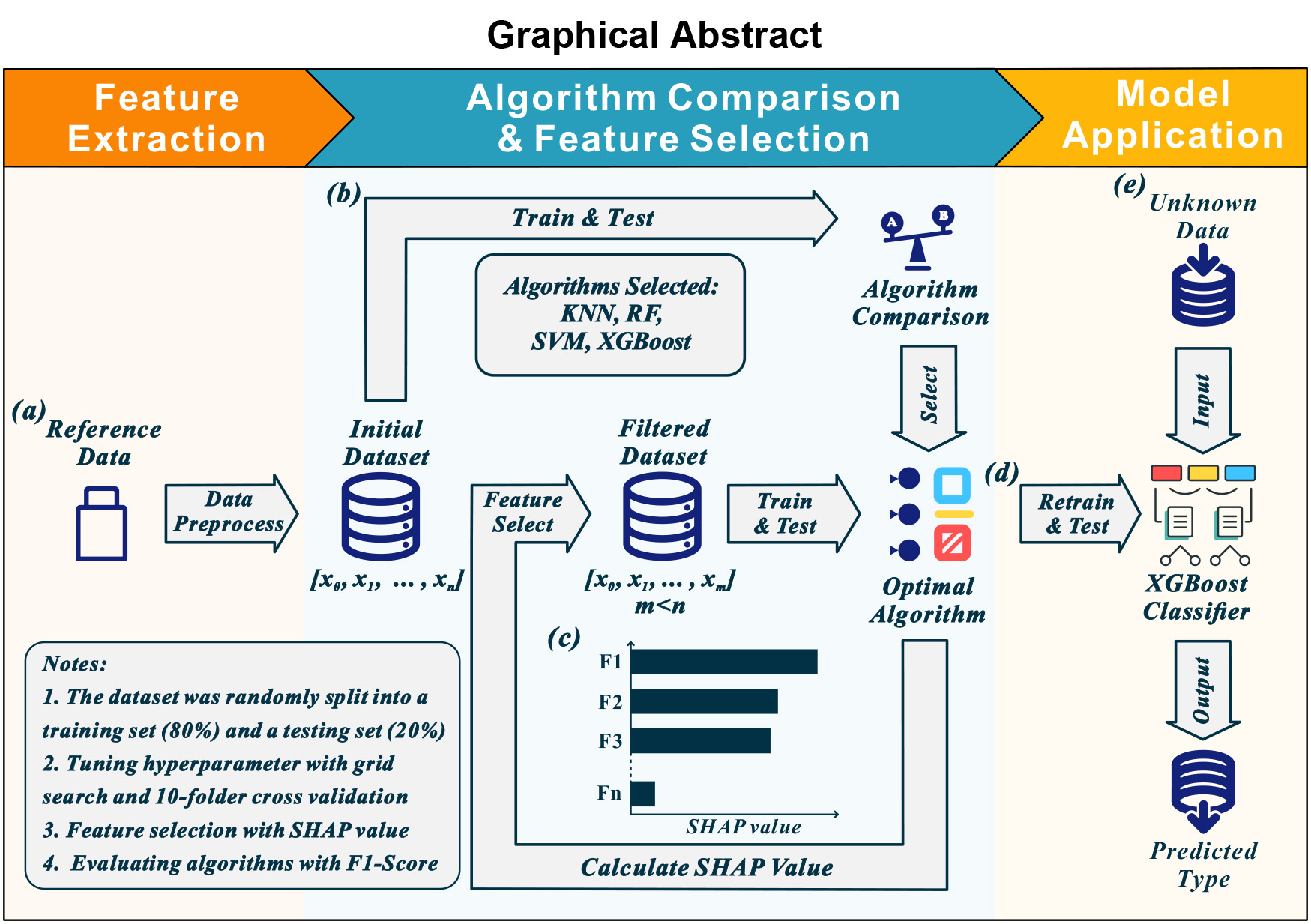
Qiu et al. used machine learning to link the concentration variability of trace elements in apatite to the five most important types of ore deposits. However, machine-learning approaches are often considered a black box in that they may be too complex to be easily interpretable by humans. Their application of the machine-learning model, however, revealed that the trace elements thorium, uranium, europium, and neodymium in apatite are the most distinctive elements for the discrimination of different types of ore deposits and, thus, the results are easily applicable.
Identifying serpentine minerals by their chemical compositions with machine learning
https://doi.org/10.2138/am-2022-8688
Ji et al. introduce machine-learning algorithms called XGBoost and k-means to classify and cluster serpentine minerals based on the analysis of chemical composition datasets. As a complement to traditional geochemical methods, the machine-learning models are more effective in determining serpentine minerals. They also use a k-means model to show that the tectonic environment in which serpentine minerals form correlates with their chemical composition. Their models can be used to constrain the mass transfer and surrounding environments during the subduction of hydrated oceanic crust.
Crystal habit (tracht) of groundmass pyroxene crystals recorded magma ascent paths during the 2011 Shinmoedake eruption
https://doi.org/10.2138/am-2022-8765
Okumura et al. analyzed the shape variations due to combination of crystallographic faces (i.e., tracht) of groundmass pyroxene crystals in pumices from the 2011 eruption of Shinmoedake volcano, Japan. They also acquired tracht-specific crystal size distributions (CSDs) by scanning electron microscopy to obtain a more comprehensive view of the crystallization kinetics. They discuss the mechanism of the pyroxene tracht change and conclude that the tracht change resulted from a large degree of effective undercooling due to rapid decompression in the shallow conduit. Syneruptive magma ascent paths affect eruptive style, and the crystallization kinetics of groundmass crystals as small as nanolites provide clues to the conduit mechanisms controlling transitions in eruptive style. The findings reveal magma dynamics from a different perspective than conventional textures such as crystal number density and crystallinity.
« ‹ 1 … 16 17 18 19 20 … 85 › »ADDITIONAL RESOURCES