
Editor’s Notes
Total Results: 1697
Volume 108 : October 2023 Issue
Witness to strain: Subdomain boundary length and the apparent subdomain boundary density in large strained olivine grains
https://doi.org/10.2138/am-2022-8441
Li et al. used the electron backscatter diffraction technique to examine shock-induced subdomains in olivine single grains. The apparent subdomain density is quantified by Unit Segment Length, which is a Matlab-based code program measuring unit subdomain boundary length over the area of the measured grain. An increasing trend of USL is observed with an increase of shock degree. When comparing with non-shocked Hawaiian xenolith, they observe a significant USL difference, suggesting that shock metamorphism induces pervasive disturbance as the result of its destructive effects.
Libyan Desert Glass: New evidence for an extremely highpressure-temperature impact event from nanostructural study
https://doi.org/10.2138/am-2022-8759
Kovaleva et al. confirm the high-pressure, high-temperature origin of the Lybian Desert Glass, which has been under question for many years. This means that the impact crater responsible for this glass�s origin is yet to be discovered. They also demonstrate that transmission electron microscopy is a very powerful yet insufficiently used tool for unraveling deformation features in accessory minerals, which provides information about the pressure, temperature, and cooling histories of the deformation process.
Crystal vs. melt compositional effects on the partitioning of the first-row transition and high field strength elements between clinopyroxene and silicic, alkaline, aluminous melts
https://doi.org/10.2138/am-2022-8586
He et al. demonstrate that trace element partitioning in silicic melts differs from that in basaltic melts, and they present a scheme for evaluating the specific influence of different crystal and melt compositional variables on the partitioning of FRTE and HFSE. The results have important implications for the partitioning behavior of trace elements in evolved silicic systems, particularly for trace element systematics relevant to mantle partial melting or metasomatic processes operated by highly silicic melts.
Microbially induced clay weathering: Smectite-to-kaolinite transformation
https://doi.org/10.2138/am-2022-8442
The occurrence of the microbe-induced clay transformation from 2:1 type smectite to 1:1 type kaolinite has lacked solid experimental evidence. Yang et al. provide a novel pathway to achieve microbial kaolinization of smectite by a silicophilic bacterium at a highly efficient transformation rate. Mineralogical change and kaolinization mechanism during the transformation process have been analyzed in detail, which attributes a previously unrevealed but efficient microbial pathway to the widespread clay weathering.
Hydrous wadsleyite crystal structure up to 32 GPa
https://doi.org/10.2138/am-2022-8380
Wang et al. used new ultrafast diffraction setups in single-crystal X-ray diffraction to determine the full structure of hydrous wadsleyite up to 35 GPa, with a focus on the hydrogen bonds. By using two different synthetic samples of mantle composition (~Fo90) olivine with different amounts of water (~2 wt% and ~0.25 wt%), they systematically compared the influence of water on the wadsleyite structure at elevated pressures. Both Fo90 wadsleyite samples became monoclinic at pressures above 9 GPa, and there is evidence that hydrogen bond becomes incompressible in wadsleyite at >25 GPa.
Multiple fluid sources in skarn systems: Oxygen isotopic evidence from the Haobugao Zn-Fe-Sn deposit in the southern Great Xing’an Range, NE China
https://doi.org/10.2138/am-2022-8523
Liu et al. investigated fluid sources and fluid evolution in skarn systems through a systematic study in petrology, composition, and in-situ oxygen isotope of Haobugao deposit. They found garnets at Haobugao deposited from aqueous fluids that were predominantly of magmatic and meteoric origin and mixtures thereof. Mixing of these components occurred at the start of the skarn stage. There are multiple stages of hydrothermal fluid at Haobugao, and episodic flux of magmatic fluid was recorded in the skarn minerals. The amount of meteoric water did not increase with decreasing depth, and the central exoskarn displays complex fluid mixing.
Crocobelonite, CaFe23+(PO4)2O, a new oxyphosphate mineral, the product of pyrolytic oxidation of natural phosphides
https://doi.org/10.2138/am-2022-8757
Britvin et al. report on a new phosphate mineral, which represents a specific, novel type of natural phosphate mineralization. The assemblages were formed by pyrolytic oxidation of phosphide minerals at temperatures above 1000 �C and near-atmospheric pressure. From a crystal chemical point of view, crocobelonite is a rare example of phosphate, which exhibits unit-cell twinning (chemical twinning) � the type of polymorphism that is more common for silicates.
Tetrahedrite-(Ni), Cu6(Cu4Ni2)Sb4S13, the first nickel member of tetrahedrite group mineral from Luobusa chromite deposits, Tibet, China
https://doi.org/10.2138/am-2022-8761
Wang et al. report on tetrahedrite-(Ni), ideally Cu6(Cu4Ni2)Sb4S13, the first natural Ni-member of tetrahedrite group mineral. The new species occurs with gersdorffite, vaesite, and chalcostibite, which are disseminated in a matrix of dolomite, magnesite, quartz, Cr-rich mica, and Cr-bearing clinochlore. Tetrahedrite-(Ni) may be the product of late-serpentinization at moderately high-temperature conditions (about 350 C). In this case, tetrahedrite-(Ni) and its mineral paragenesis record an entire geological process of nickel enrichment, migration, activation, precipitation, and alteration from deep mantle to shallow crust.
NEW MINERAL NAMES
https://doi.org/10.2138/am-2023-NMN108106
New Mineral Names: Heavy Metal and Minerals from China
Volume 108 : September 2023 Issue
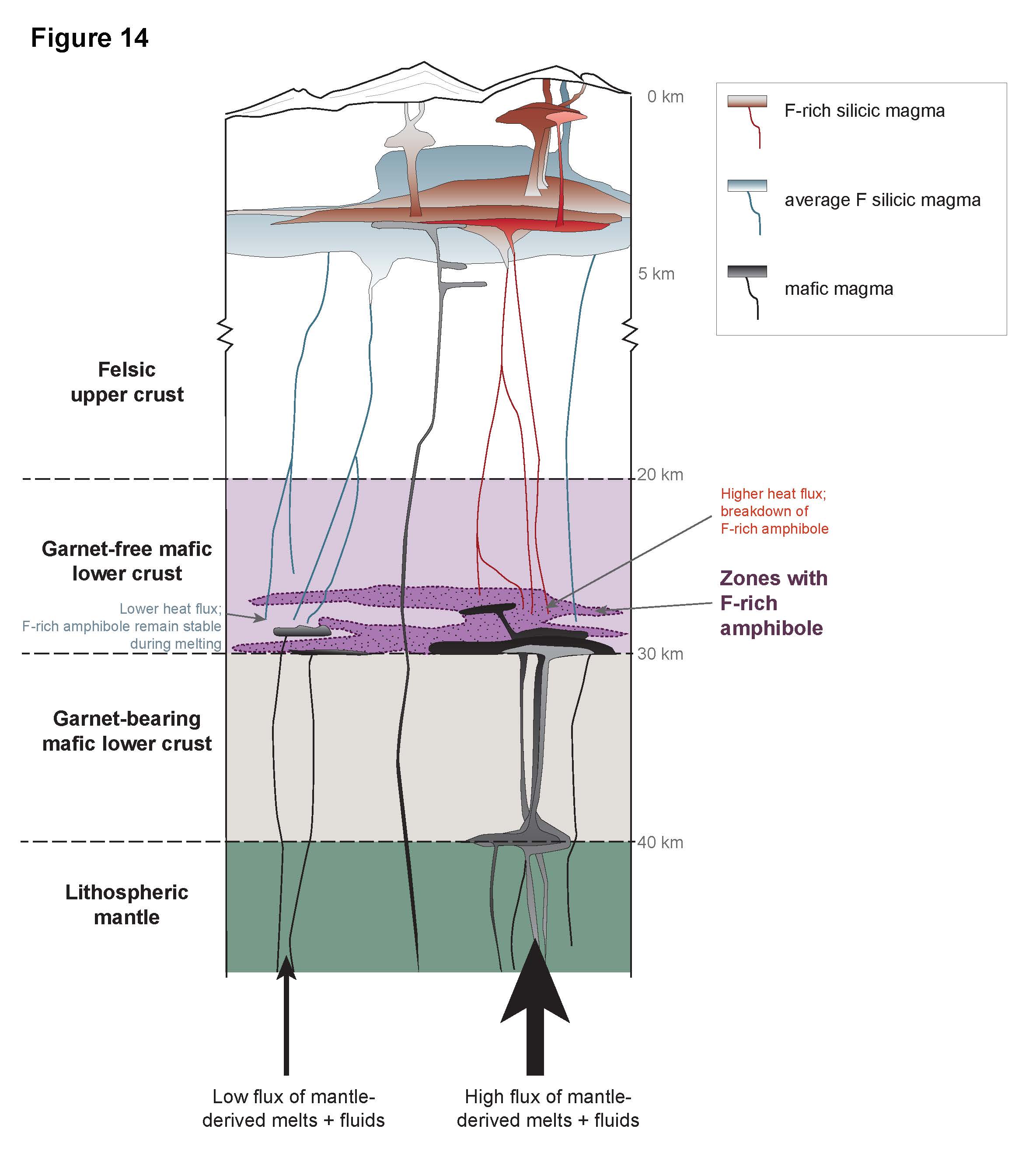
Fluorine-rich mafic lower crust in the southern Rocky Mountains: The role of pre-enrichment in generating fluorine-rich silicic magmas and porphyry Mo deposits
https://doi.org/10.2138/am-2022-8503
Amphiboles in the deep mafic crust of Colorado are enriched in fluorine (F). Numerical models and geochemical data support a mafic lower crustal source for F-rich shallow magmas in the region. Melts with greater mantle- or ancient felsic crustal-components lack F enrichment. The results of Rosera et al. suggest that ancient mafic lower crust in Colorado may have undergone multiple melting episodes in the Cenozoic, but F-rich magmas were only generated during periods of high heat flow that broke down F-rich amphibole.
Apatite in brachinites: Insights into thermal history and halogen evolution
https://doi.org/10.2138/am-2022-8712
Zhang et al. propose that intergranular apatite grains in brachinites have been replaced by merrillite. They find the presence of augite in pyroxene-troilite intergrowths, which are products of sulfidization of olivine. And they find that all apatite grains in brachinites have experienced chromite exsolution. They find the presence of a fluorapatite inclusion in NWA 4969 and propose that the apatite inclusions with, or without, subhedral-to-euhedral merrillite could be relicts of the precursor materials of brachinites.
A high-pressure structural transition of norsethite-type BaFe(CO3)2: Comparison with BaMg(CO3)2 and BaMn(CO3)2
https://doi.org/10.2138/am-2022-8722
This article by He et al. reported the effect of ionic radii on phase transition pressures of carbonates. The phase transition pressures of BaMg(CO3)2, BaFe(CO3)2, and BaMn(CO3)2 are 2.4(2), 2.7(5), and 3.9(2) GPa, respectively. The effective cation radii of Ba2+, Ca2+, Mn2+, Fe2+, and Mg2+ are 1.35, 1.00, 0.83, 0.78, and 0.72 Angstroms at ambient conditions, respectively. With the addition of the norsethite-type members, it is clear that a smaller metal cation tends to stabilize the trigonal structure to higher pressure in carbonates, and the phase transition pressures are much lower for norsethite-type carbonates than that of calcite- and dolomite-type carbonates. However, unlike the linear trend reported previously, the relationship tends to be nonlinear in the norsethite-type minerals. The onset of the phase transition pressures to high-pressure phases increases with cation radii for norsethite-type minerals, while the results are opposite for both calcite- and dolomite-type carbonates. This is attributed to the larger ratio between the radii of the Ba2+/(Mg2+, Mn2+, Fe2+) ions compared to that of Ca2+/(Mg2+, Mn2+, Fe2+). The effect of ionic radii on phase transition pressures has been found not only in carbonate minerals but also in other materials and can be applied to predict structural stability in isostructural materials.
An evolutionary system of mineralogy, Part VII: The evolution of the igneous minerals (>2500 Ma)
https://doi.org/10.2138/am-2022-8539
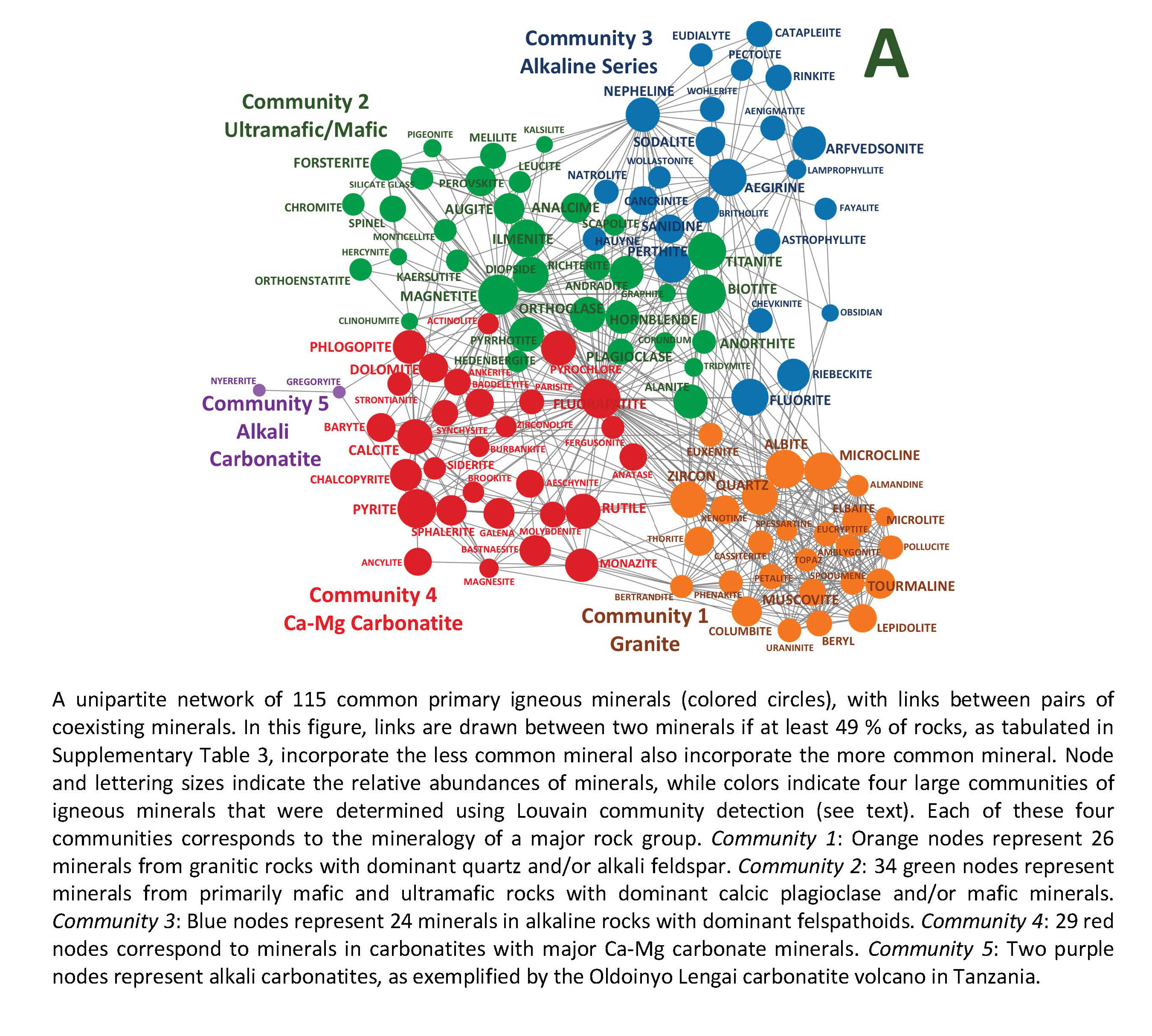
Part VII of the evolutionary system of mineralogy by Hazen et al. catalogs, analyzes, and visualizes relationships among 919 natural kinds of primary igneous minerals, which are associated with the wide range of igneous rock types through more than 4.5 billion years of Earth history. A systematic survey of the minerals in 1850 varied igneous rocks from around the world reveals that 115 of these mineral kinds are frequent major and/or accessory phases. Patterns of coexistence among these minerals, revealed by network, Louvain community detection, and agglomerative hierarchical clustering analyses, point to four major communities of igneous primary phases, corresponding in large part to different compositional regimes: (1) quartz- and/or alkali feldspar-dominant rocks, including rare-element granite pegmatites; (2) mafic/ultramafic rock series with major calcic plagioclase and/or mafic minerals; (3) rocks with major feldspathoids and/or analcime, including agpaitic rocks and their distinctive rare-element pegmatites; and (4) carbonatites and related carbonate-bearing rocks. Igneous rocks display characteristics of an evolving chemical system, with significant increases in their minerals' diversity and chemical complexity over the first two billion years of Earth history. Earth's first igneous rocks (>4.56 Ga) were ultramafic in composition with 122 different minerals, followed closely by mafic rocks that were generated in large measure by decompression melting of those ultramafic lithologies (4.6 Ga). Quartz-normative granitic rocks and their extrusive equivalents (>4.4 Ga), formed primarily by partial melting of wet basalt, were added to the mineral inventory, which reached 246 different mineral kinds. Subsequently, four groups of igneous rocks with diagnostic concentrations of rare element minerals � layered igneous intrusions, complex granite pegmatites, alkaline igneous complexes, and carbonatites � all appeared less than 3 billion years ago. These more recent varied kinds of igneous rocks hold more than 700 different minerals, 500 of which are unique to these lithologies. Network representations and heatmaps of primary igneous minerals illustrate Bowen's reaction series of igneous mineral evolution, as well as his concepts of mineral associations and antipathies. Furthermore, phase relationships and reaction series associated with the minerals of a dozen major elements, as well as minor elements, are embedded in these multi-dimensional visualizations.
Oriented secondary magnetite micro-inclusions in plagioclase from oceanic gabbro
https://doi.org/10.2138/am-2022-8784
In the paper by Bian et al., oriented needle-shaped magnetite micro-inclusions in plagioclase from oceanic gabbro occur in two generations. Primary inclusions are elongated perpendicular to seven important plagioclase lattice planes. During hydrothermal processing, they recrystallize into secondary magnetite needles aligned parallel to the plagioclase c-axis. This ensures a good match between the oxygen sublattices and a good linkage between crystal structure elements across magnetite-plagioclase boundaries.
A multi-methodological study of the bastnäsite-synchysite polysomatic series: Tips and tricks of polysome identification and the origin of syntactic intergrowths
https://doi.org/10.2138/am-2022-8678
Bastn�site-synchysite fluorcarbonates have been investigated by several techniques, including micro-Raman spectroscopy, electron backscattered diffraction (EBSD), and high-resolution transmission electron microscopy (HRTEM) in this contribution by Conconi et al. EBSD was effective in establishing the sample orientation and to ascertain the syntactic relationship among the detected fluorcarbonates but failed to distinguish among different polysomes. Raman spectroscopy, which offers the advantage of being a non-destructive technique, allowed the distinction of different polysomes, but it could not distinguish between ordered and disordered polysomes with the same composition. HRTEM was confirmed as the ultimate technique for polysome identification, but unfortunately, it is destructive. Several ordered polysomes were detected in addition to the basic ones, including a B2S and a long-range polytype with a 32 nm repeat distance along the c-axis. Overall, the detected microstructure is indicative of a growth mechanism in which fluorcarbonates crystallize from a fluid close to thermodynamic equilibrium, whose conditions quickly and repeatedly crossed the parisite-bastn�site stability boundary.
Petrogenesis of Chang’E-5 mare basalts: Clues from the trace elements in plagioclase
https://doi.org/10.2138/am-2022-8570
In this contribution by Tian et al., they found that (1) The melt inverted from the Chang'E-5 plagioclase has higher incompatible element concentrations than the Apollo samples but close to the KREEP-rich rocks. (2) The enrichment of trace elements reflects a high degree of fractional crystallization. (3) The parental melt�s TiO2 content estimated from the earliest crystallized plagioclase is ~3.3 wt%, suggesting a low-Ti origin for Chang'E-5 basalts.
Experimental investigation of trace element partitioning between amphibole and alkali basaltic melt: Toward a more general partitioning model with implications for amphibole fractionation at deep crustal levels
https://doi.org/10.2138/am-2022-8536
Bonechi et al. present an experimental study performed on a K-basalt at 0.8 GPa and 1030-1080 �C to provide new data on the partitioning of trace elements between amphibole and melt. Indeed, despite numerous investigations on the partitioning of trace elements between crystals and melts, there are still some mineral phases, including amphibole, for which data are limited or missing. These new data allowed them to estimate the ideal radius, the maximum partition coefficient, and the apparent Young's modulus of the A, M1-M2-M3, and M4-M4' sites of amphibole. Moreover, the influence of melt and amphibole composition, temperature, and pressure on the partition coefficients between amphiboles and glasses has also been investigated by comparing their data with a literature dataset spanning a wide range of pressures (0.6-2.5 GPa), temperatures (780-1100 �C), and compositions (from basanite to rhyolite). Finally, Bonechi et al. modeled a deep, fractional crystallization process using the amphibole-melt partition coefficients determined in this study, observing that significant amounts of amphibole crystallization (>30 wt%) well reproduce the composition of an andesitic melt similar to that of the calc-alkaline volcanic products found in Parete and Castelvolturno bore-holes (NW of Campi Flegrei, Italy).
Grain-scale zircon Hf isotope heterogeneity inherited from sediment-metasomatized mantle: Geochemical and Nd-Hf-Pb-O isotopic constraints on Early Cretaceous intrusions in central Lhasa Terrane, Tibetan Plateau
https://doi.org/10.2138/am-2022-8508
Combined zircon U-Pb, Hf, and O isotope investigations are widely used to address the contribution of mantle and sediment components in the source of igneous rocks. In particular, zircon Hf isotopic variabilities in a single sample beyond the analytical uncertainty are commonly interpreted as the mixing of magmas derived from two isotopically different reservoirs. However, subducted sediments may have profound impacts on the Hf budget of the mantle, theoretically adding complexity to interpreting zircon Hf data. Nevertheless, compared with granitoids, Hf isotopic variation is rarely observed in zircons of mafic rocks. In this study, Li et al. report integrated data of whole-rock geochemistry (major, trace elements, and Sr-Nd isotopes), zircon U-Pb, Hf and O isotopes and trace elements, and in situ clinopyroxene major and trace elements and Pb isotopes, for some newly recognized gabbro-diorite rocks in central Lhasa Terrane, Tibetan Plateau. The magmatic zircons present dramatically heterogeneous Hf isotopes (from +13 to -4) even in the same individual grain, yet their O isotopes are relatively uniform and are slightly higher than that of the mantle value. Combined with their relatively constant clinopyroxene Pb isotopes and whole-rock geochemistry, they contend that the zircon Hf isotope heterogeneities were inherited from a depleted asthenospheric mantle metasomatized by 1-4% terrestrial sediments. Their study, therefore, emphasizes caution when using zircon Hf isotopes as arguments of involvement of two end-member magmas at the crustal level without comprehensive mineral and geochemical investigations.
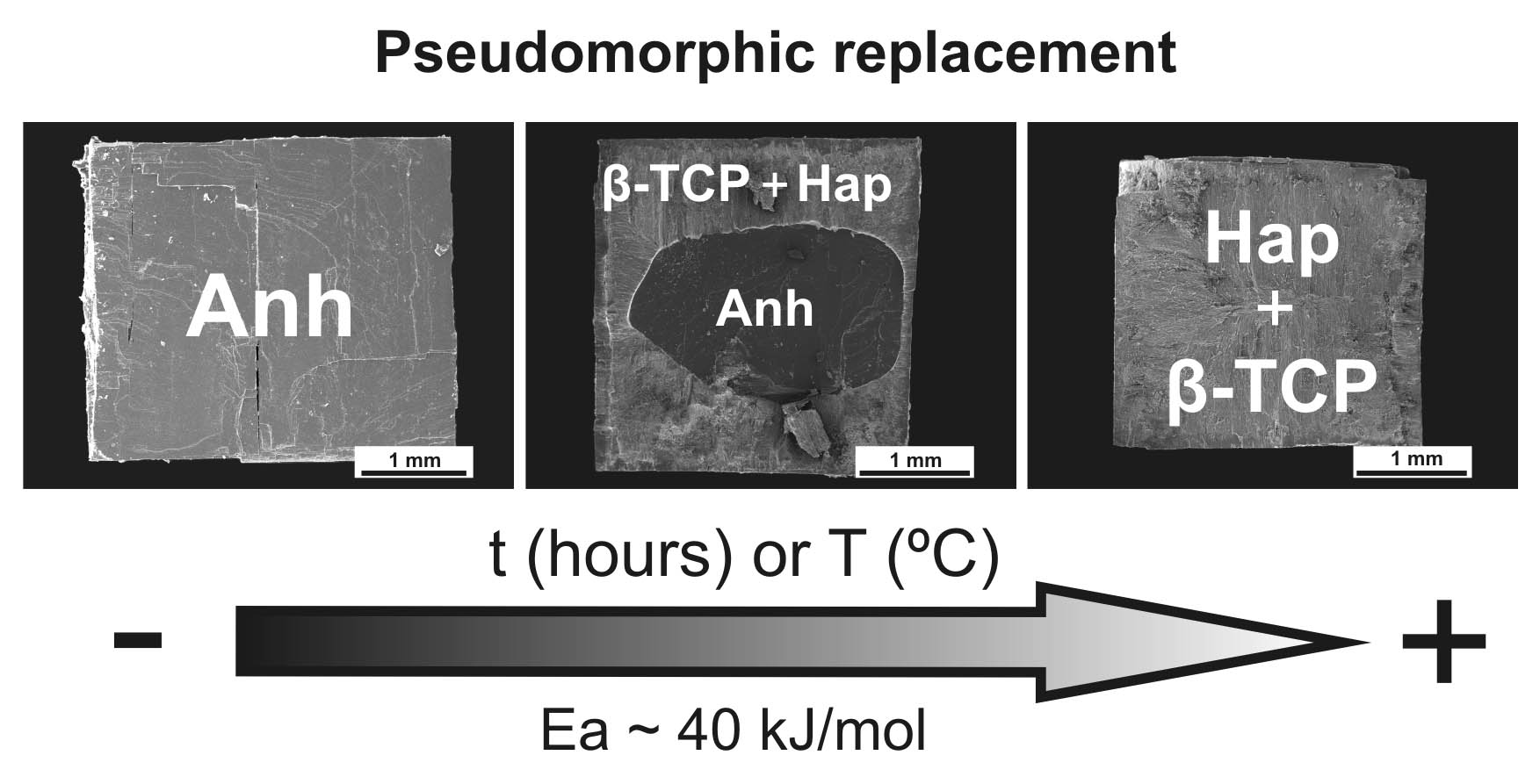
Mechanism and kinetics of the pseudomorphic replacement of anhydrite by calcium phosphate phases at hydrothermal conditions
https://doi.org/10.2138/am-2022-8592
This study by Roza-Llera et al. focuses on the kinetics of the replacement of anhydrite single crystals by mixtures of the calcium phosphate phases, beta-tricalcium phosphate, and hydroxyapatite via an interface-coupled dissolution-precipitation reaction in the temperature range between 120 to 200 �C. Both the Avrami and the iso-conversion methods yield an empirical activation energy Ea (kJ/mol) of about 40 kJ/mol for this replacement reaction. The dissolution of anhydrite appears to be the rate-limiting process, and the overall kinetics of the replacement reaction is controlled by the rate of diffusion of dissolved species through the pore network. These results open a window for the development of new strategies for the recovery of P, a scarce element in the Earth's crust, through the precipitation of phosphate phases through dissolution-crystallization reactions that involve a pre-existing mineral.
Vacancy infilling during the crystallization of Fe-deficient hematite: An in situ synchrotron X-ray diffraction study of non-classical crystal growth
https://doi.org/10.2138/am-2022-8379
The work by Chen et al. highlights a non-classical crystallization pathway involving vacancy infilling by cations during nanoparticle growth. Incipient hematite nanocrystals nucleated with Fe deficient concentrations as high as 40 mol%, and the Fe occupancy increased as Fe3+ cations replaced H+ during crystal growth until reaching a steady state. The steady-state vacancy concentration in the final product could be controlled by the reaction environment, including pH, temperature, and time.
« ‹ 1 … 20 21 22 23 24 … 85 › »ADDITIONAL RESOURCES