

Editor’s Notes
Total Results: 1697
Volume 108 : August 2023 Issue
High-pressure behavior of 3.65 Å phase: Insights from Raman spectroscopy
https://doi.org/10.2138/am-2022-8515
https://doi.org/10.2138/am-2022-8515
High-pressure phase transition and equation of state of hydrous Al-bearing silica
https://doi.org/10.2138/am-2022-8546
Criniti et al. investigated the high-pressure structural and vibrational properties of Al,H-bearing SiO2 stishovite and post-stishovite, the silica phases that are stable in subducted basaltic crust in Earth's lower mantle. They found that, in the Al,H-bearing samples, the soft optic mode that characterizes the transition in pure SiO2 is decoupled from the structural phase transition. This may explain some seismic anomalies observed in the proximity of subducted slabs in the topmost lower mantle.
Volume 108 : July 2023 Issue
On the origin of fluorine-poor apatite in chondrite parent bodies
https://doi.org/10.2138/am-2022-8623
In this contribution by McCubbin et al., they note that the phosphate mineral apatite exhibits F/Cl ratios in chondrite meteorites that are broadly reflective of the F/Cl ratio of the solar system. Moreover, the halogen geochemistry of extra-terrestrial apatite can provide important constraints on the thermochemical evolution of its parent body. In particular, the F/Cl ratio of apatite can be used as a diagnostic tool to assess whether a parent body has undergone processes such as planetary differentiation or volatile depletion.
Fluorine behavior during experimental muscovite dehydration melting and natural partitioning between micas: Implications for the petrogenesis of peraluminous leucogranites and pegmatites
https://doi.org/10.2138/am-2022-8663
Sallet et al. determined experimentally F partitioning between biotite and melt and the natural F partitioning between biotite and muscovite. Along with published F partitioning between fluid and peraluminous melt by Webster and Holloway (1990), they modeled the F behavior during the anatexis of aluminous metapelites and the F distribution between muscovite, biotite, and peraluminous melts. The results indicate that peraluminous melts may be generated by anatexis at the muscovite dehydration isograd, 725-750 °C and 0.4 to 0.6 GPa. The measured melting fractions are below 20 wt%, compatible with the formation of metatexite migmatites. The F behavior deduced for the muscovite dehydration melting of two-mica protoliths show that the more Fe-rich the anatectic residual biotite -- reequilibrated or neoformed -- the more F-rich is the generated peraluminous leucosome. Such compositional control on the partition coefficient is due to the MgO content of residual biotite for biotite/melt partitioning and by the initial F content of the melted rock on the fluid/melt F partitioning. The results of this study show that detailed F in biotite systematics in migmatitic terrains could be a useful tool for the petrogenesis and rare metal potential assessment of peraluminous granites and pegmatites.
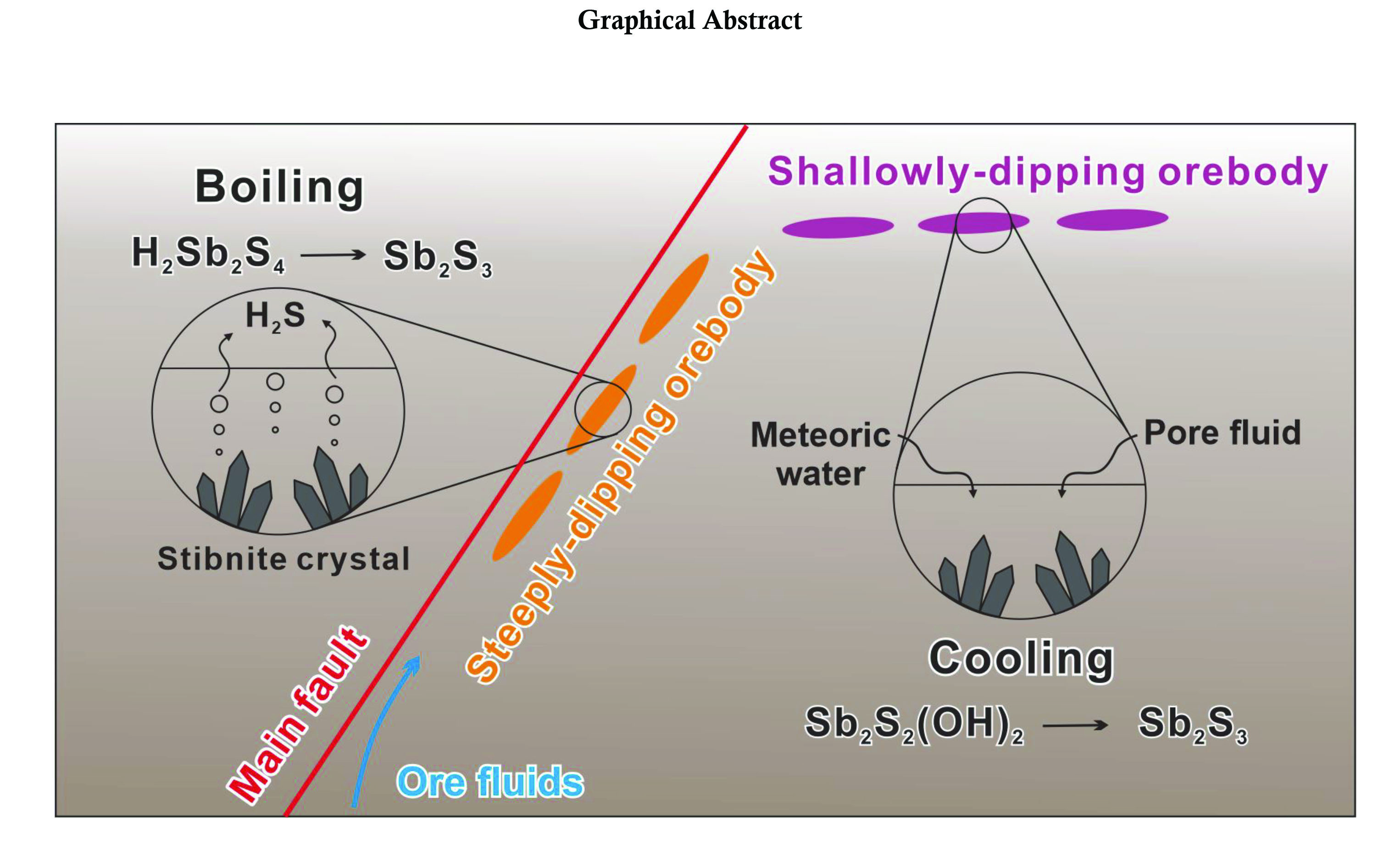
Telescoped boiling and cooling mechanisms triggered hydrothermal stibnite precipitation: Insights from the world’s largest antimony deposit in Xikuangshan China
https://doi.org/10.2138/am-2022-8490
Whether the transition of Sb complexes occurs in hydrothermal systems and its role in stibnite precipitation are unknown. In this work by Yu et al., δ123Sb for stibnite from the Xikuangshan deposit shows a trend of first decreasing and then increasing from proximal to distal ore bodies. The opposite trends are induced by the transition of Sb complexes. Different stable Sb complexes result in different precipitation mechanisms (fluid boiling and fluid cooling). This study highlights that metal complexes in hydrothermal fluids may change and affect metal precipitation mechanisms.
Correlations between cathodoluminescence intensity and aluminum concentration in low-temperature hydrothermal quartz
https://doi.org/10.2138/am-2022-8471
Yuan et al. have integrated scanning electron microscope cathodoluminescence (SEM-CL), electron microprobe (EMP), electron backscatter diffraction (EBSD), X-ray single crystal diffraction (XRD), fourier transform infrared spectroscopy (FTIR), and transmission electron microscope (TEM) data of quartz from the auriferous quartz-sulfide vein type Shihu and Rushan Au deposits in the North China Craton (NCC) to evaluate the genesis of CL-aluminum zoning in low-temperature hydrothermal quartz and the implications for the evolution of auriferous hydrothermal system. Their results provide a new understanding of the genesis of CL-aluminum zoning in low-temperature hydrothermal quartz.
Behavior of hydrogen defect and framework of Fe-bearing wadsleyite and ringwoodite at high temperature and high pressure
https://doi.org/10.2138/am-2022-8544
Jin et al. performed experiments to assess hydrogen defect and framework behavior in Fe-bearing wadsleyite and ringwoodite using in situ infrared spectroscopic (IR) and Raman spectroscopic techniques at high temperatures and high pressures. The results provide new knowledge about hydrogen effects and framework of the two minerals.
What is mineral informatics?
https://doi.org/10.2138/am-2022-8613
Minerals store an enormous amount of information about the evolution of our planet and other planetary bodies in space. To better understand the evolution of our planet and beyond, we must extract and interpret the information in these minerals. The increased interest in the development and application of data science and informatics methods combined with the increase in mineral data resources implies that we are at a tipping point. In this paper by Prabhu et al., they introduce the concept of “Mineral Informatics,” which will help researchers utilize data science and informatics methods to study minerals and mineral data from various new perspectives and in combination with many other fields of study. The intention of this paper is not to create a new specific field or a sub-field as a separate silo but to create a path for researchers studying minerals to answer important inter-disciplinary scientific questions.
Geochemical processes and mechanisms for cesium enrichment in a hot-spring system
https://doi.org/10.2138/am-2022-8532
Wang et al. systematically investigated hot-spring Cs enrichment processes, including migration-precipitation-enrichment-dissolution in the Targejia geothermal system in southern Tibet, China. This system contains large-scale hot spring Cs-deposits with a Cs resource of 1.446 x 10⁴ t (ore grade up to 2.89 wt%). The investigation of the Cs distribution in ore in a micro-scale and ore-forming process models allowed investigation of the dominant mineralization mechanism controlling Cs enrichment, which still remains controversial. The main findings are (1) the observed Cs distribution is heterogeneous in the latest stage of ore (0-4 ka), and Cs is dominantly enriched in clay minerals (illite), which is different from those previous reports that Cs mainly exists in amorphous silica opal; (2) Computed model based on physical and chemical parameters of the present activity geothermal fluid indicate that illite forms at pH of around 7 and >50 °C. Amorphous silica likely precipitated by complex processes, like the formation of ice or directly precipitation; (3) at the early stages of mineralization, initially Cs during dissolution-precipitation can be reset, depending on the elemental supply and mineral dissolution rate, which is further related to climate change of Tibet (rainfall) in Holocene and Pleistocene. Meteoric water-rock interaction modeling implies that clay disappears and cannot re-form at the given physical and chemical conditions, whereas amorphous silica can precipitate again.
Identifying xenocrystic tourmaline in Himalayan leucogranites
https://doi.org/10.2138/am-2022-8615
Isotope geochronology and mineral chemistry may, in some cases, be incapable of discriminating inherited from autocrystic crystals. Electron backscatter diffraction (EBSD) analyses focusing on intracrystalline deformation and crystallographic relations can prove useful and provide critical information discriminating grains of different generations. The EBSD method is applied here by Han et al. on tourmaline and can be used in conjunction with, and in support of, in situ geochronology, and may also be used to discriminate inherited from autocrystic grains when geochronology data is not available or when the age differences are smaller than the related analytical uncertainties.
Contrasting alteration textures and geochemistry of allanite from uranium-fertile and barren granites: Insights into granite-related U and ion-adsorption REE mineralization
https://doi.org/10.2138/am-2022-8531
Zhang et al. report an attempt to systematically investigate the textures and compositions of allanite during alteration from uranium-fertile and barren granites. First, textures and compositions of the Changjiang allanites combined with the occurrence of abundant fluorite suggest the presence of the superposition of F- and CO2-bearing fluids with a relatively low temperature (≤300 °C) and oxidized nature. Second, U-Pb isotopes in allanite have been used to determine the ages of regional mineralization/hydrothermal events. In this study, in situ U-Pb dating on the darker (secondary) domains of the Changjiang allanite grains yielded a weighted mean U-Pb age of 141.4 +/- 5.6 Ma, consistent with the timing of a uranium mineralization event in the Changjiang uranium ore field (~140 Ma, Zhong et al. 2019) and the age of a crustal extension event (140-135 Ma) in South China. These results provide temporal evidence for the link between uranium release from source rocks and regional crustal extension events in South China. In addition, this study also emphasizes the role of the regional crustal extension in the formation of ion-adsorption REE deposits in South China. Third, this study helps understand the mobilization processes of REE and U from primary minerals during alteration, usually a key step in the formation of an ion-adsorption REE deposit or a uranium deposit.
Feiite: Synthesis, stability, and implications for its formation conditions in nature
https://doi.org/10.2138/am-2022-8633
The mineral feiite is a high-pressure Fe-Ti oxide that was recently discovered in a Martian meteorite. In synthesizing the mineral in the laboratory, Prissel et al. determined the pressures and compositions required to form feiite. These conditions can be related back to impact processes on Mars and suggest feiite might also form on Earth.
Thermal equation of state of Fe3O4 magnetite up to 16 GPa and 1100 K
https://doi.org/10.2138/am-2022-8571
Siersch et al. performed X-ray diffraction measurements on natural magnetite using resistive-heated diamond anvil cells up to 16 GPa and 1100 K. A thermal equation of state (EoS) was then fitted to the obtained data set. Moreover, it was possible to explore the structural evolution of magnetite in detail using single-crystal measurements. Over the studied pressure and temperature range, they found no evidence of a transformation from an inverse to a normal spinel structure. The EoS parameters obtained in this study will allow implementation into currently available databases for self-consistent thermodynamic modeling. In particular, the results are used to model and compare the sound wave velocities of a magnetite-bearing and magnetite-free Martian upper mantle assemblages. Siersch et al. observe that the incorporation of magnetite reduces the sound wave velocities, however, the magnitude of the effect is below the current seismic detection limit of the InSight mission on Mars at the low abundance of magnetite expected in the Martian mantle.
UHP eclogite from western Dabie records evidence of polycyclic burial during continental subduction
https://doi.org/10.2138/am-2022-8446
(1) Eclogites from western Dabie have garnets showing systematic variation in grossular end-members. Based on phase equilibrium modeling using compositional isopleth thermobarometry, Xia et al. show that P first increased from 23.0 to 28.5 kbar, then decreased to 24.0 kbar, before increasing again to a maximum of 30.5 kbar concomitant with a small increase in T from 580 to 605 °C at the late prograde stage. These data are interpreted to indicate polycyclic burial and partial exhumation of eclogite during ongoing continental subduction. Furthermore, fluid contributing to widespread retrogression of eclogite during exhumation could be both internally and/or externally sourced.
CO2 quantification in silicate glasses using μ-ATR FTIR spectroscopy
https://doi.org/10.2138/am-2022-8477
Schanofski et al. introduce a new and easy to use ATR-FTIR technique for the quantification of CO2 in silicate glasses. Clear linear dependencies of the normalized ATR peak heights of the CO2=related bands (carbonate as well as molecular CO2) on the CO2 content measured by independent methods (CSA, FTIR transmission spectroscopy) were found, and linear correlation coefficients for the quantitative determination of CO2 concentrations in leucititic and rhyolitic glasses were calculated. As previously demonstrated by Lowenstern and Pitcher (2013), μ-ATR FTIR is a convenient technique for measuring H2O (and now also CO2) concentrations in melt inclusions and partially crystallized samples due to the small penetration depth of the evanescent wave as well as the good spatial resolution.
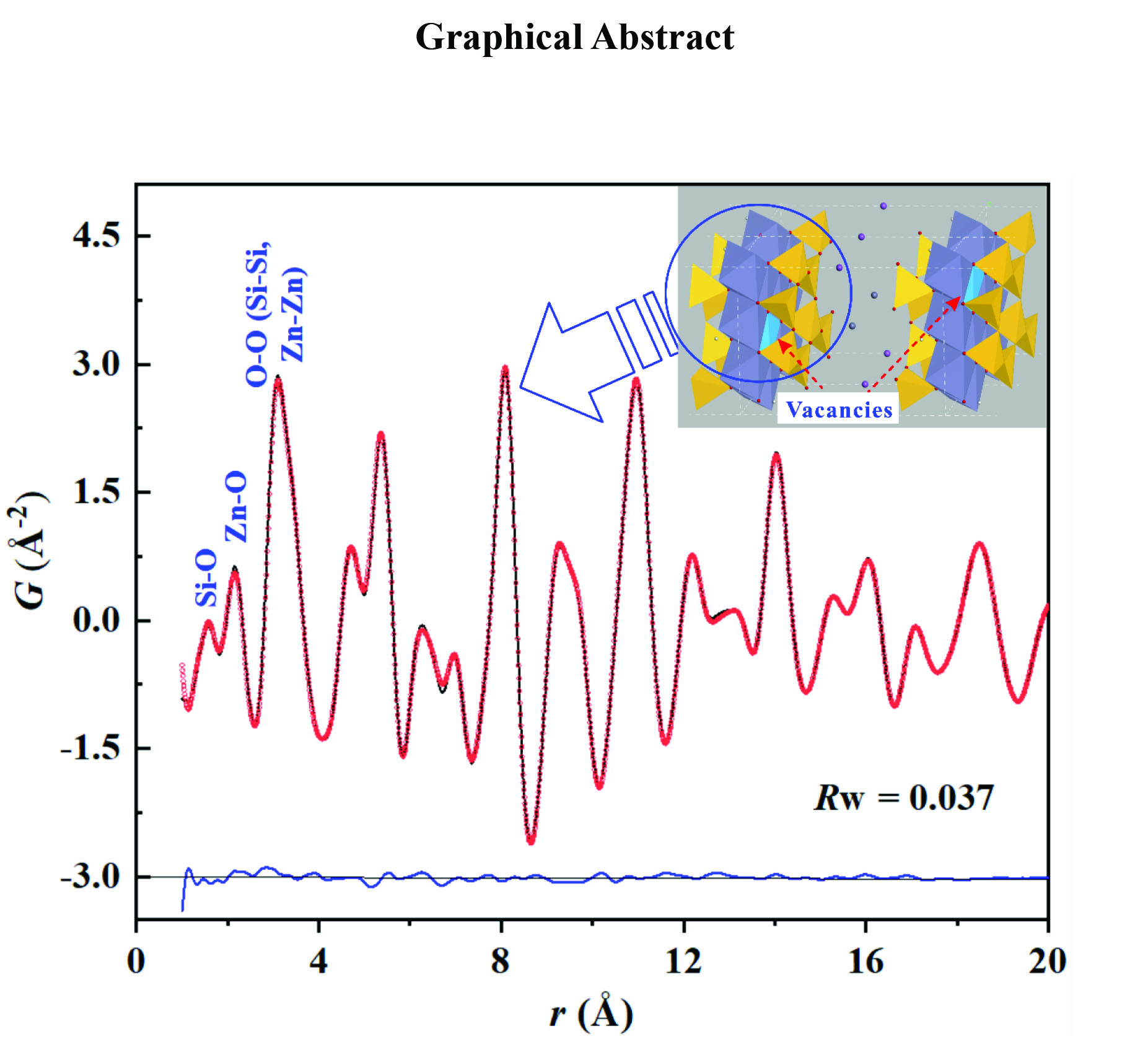
Local structure determination of Zn-smectite
https://doi.org/10.2138/am-2022-8591
The traditional XRD refinement method faces great challenges to obtain accurate crystal structures of smectites, due to their turbostratically disordered layers. In this study by Tao et al., a Zn-smectite (zincsilite) was synthesized under hydrothermal conditions. Its layer charge was generated by the octahedral Zn vacancies (defects), as shown by cationic exchange capacity and vacant site determination by Hofmann-Klemmen tests. Its intralayer structure was further determined by Pair Distribution Function (PDF) analysis. Based upon this, the whole crystal structure of Zn-smectite was built and optimized by Material Studio software and density functional theory (DFT) based calculations, respectively. This study shows that although turbostratic layers make building the 3-D crystal structure of smectites impossible, their local structure (such as intralayer structure) can be reliably determined by PDF methods.
A new UHP unit in the Western Alps: First occurrence of coesite from the Monviso Massif (Italy)
https://doi.org/10.2138/am-2022-8621
Ghignone et al. report the occurrence of coesite in the meta-ophiolitic Monviso Massif (Piedmont Zone, Western Alps). Previous authors have inferred metamorphic indications (mostly coming from thermodynamic modeling) of the probable occurrence of coesite on the Monviso. Ghignone et al.’s finding confirm such a hypothesis, supported by a detailed description of coesite inclusion features, μ-Raman characterization, and a thermodynamic modeling (pseudosection) of the coesite-related metamorphic P-peak. The results have been discussed within the wide literature present on the topic (UHPM) and on the Monviso Massif, proposing new observations and interpretations. This finding is of fundamental importance for constraining geodynamic models in subduction-accretion systems and on the exhumation processes that created the present day setting of the Western Alps.
Mineral evolution and mineral niches of ammonium sulfates: The case of Pastora mine, Aliseda, Spain
https://doi.org/10.2138/am-2022-8488
Ammoniojarosite, (NH4)Fe3(SO4)2(OH)6, and tschermigite, (NH4)Al(SO4)2·12H2O, have been identified in the abandoned Pastora iron mine, Aliseda (Cáceres, Spain). These minerals appear in association with other sulfates, and they form as a result of the oxidation of pyrite contained in slates and sandstone host rocks. Their formation in Pastora mine is the result of complex processes in which acid mine drainage plays an important role. In addition, the NH4+ ion required for the precipitation of ammonium sulfates seems to be supplied by a large colony of greater horseshoe bats (Rhinolophus ferrumequinum) which roosts in Pastora mine. López et al. show that the formation of ammonium jarosite, tschermigite, and associated sulfate minerals in Pastora mine is controlled by a series of dissolution-precipitation reactions responding to seasonal variations in ambient temperature and relative humidity. Accordingly, the observed association of ammonium sulfates can be considered as a stage of mineral evolution in which new minerals crystallize and “adapt” to spatiotemporal changes in physicochemical conditions. In this sense, the concept of “mineral ecology” introduced by Hazen et al. (2015) is adequate to interpret the diversity and distribution of sulfate minerals in Pastora mine. Furthermore, Pastora mine provides a unique opportunity to further investigate the formation of ammonium sulfates, a group of minerals, to the best of their knowledge, had not been found in an iron mine to date. This investigation of the formation of hydrated sulfates, and particularly of ammonium sulfates, might be relevant to identify potential conditions for the existence of life.
Discrete late Jurassic Sn mineralizing events in the Xianghualing Ore District, South China: Constraints from cassiterite and garnet U-Pb geochronology
https://doi.org/10.2138/am-2022-8412
The genetic relationships between the distal skarn and vein-type orebodies and the causative plutons are difficult to determine, which is compounded by the fact that the ages of distal skarns and their associated mineralization are rarely known to the required degree of accuracy. In this contribution by Wang et al., new cassiterite and garnet LA-ICP-MS U-Pb ages coupled with field observations and core-logging support the interpretation that there were two Sn mineralization events in the Xianghualing ore district, South China. The early event occurred between 160.3 +/- 1.1 and 158.1 +/- 1.2 Ma based on the cassiterite U-Pb geochronology, and was likely caused by a hidden granitic intrusion coeval with the nearby Jianfengling intrusion. This event only accounts for less than 5% of the total Sn resource. The main Sn mineralization event occurred between 154.1+/- 2.8 and 151.1 +/- 1.6 Ma based on cassiterite and garnet LA-ICP-MS U-Pb ages and is genetically related to the Laiziling granitic intrusion (zircon U-Pb age of 152.8 +/- 1.2 Ma). The main Sn mineralization event contributes approximately 95% of the total Sn resources. Our new geochronological results indicate a superimposed Sn mineralizing system in the Xianghualing ore district, which is of great significance to regional Sn exploration.
Ryabchikovite, CuMg(Si2O6), a new pyroxene group mineral, and some genetic features of natural anhydrous copper silicates
https://doi.org/10.2138/am-2022-8620
Ryabchikovite, CuMg(Si2O6), is the first natural pyroxene with species-defining copper. This find by Shchipalkina et al. shows that pyroxenes can be a principal silicate host of Cu2+ in special geological settings, characterized by high oxygen fugacity and gas transport of metals such as Cu, Zn, Pb, and Mo in a temperature range of 400 to 900 °C. Review of previous results and their new data reveals the formation of H-free, Cu-enriched silicates due to high oxygen fugacity coupled with relatively low pressures (close to atmospheric) and, presumably, Cu-halides as transport agents during silicate crystallization in post-volcanic systems where the sulfur is fixed mainly in the sulfate form, and local supersaturation in Cu occurs during the deposition of silicates.
« ‹ 1 … 22 23 24 25 26 … 85 › »ADDITIONAL RESOURCES