Editor’s Notes
Total Results: 1697
Volume 108 : September 2023 Issue
Simulated diagenesis of the iron-silica precipitates in banded iron formations
https://doi.org/10.2138/am-2022-8758
Iron-silica precipitates were once deposited across the ocean, but the legacy of this time now only lives on in iron and silica-rich minerals hosted in rocks known as Banded Iron Formations (BIFs). Hinz et al. developed a new experimental method to partially oxidize iron under ancient ocean-like conditions and initially formed a precursor iron silicate, similar to the mineral greenalite recently proposed as the original BIF sediment, as well as subsidiary iron oxides. After simulated post-depositional aging, they observed crystallization of Mg-rich greenalite and magnetite, a common BIF mineral, as well as some persistent iron oxides, suggesting new ways to identify alteration and extract primary information held in BIFs.
Wave vector and field vector orientation dependence of Fe K pre-edge X-ray absorption features in clinopyroxenes
https://doi.org/10.2138/am-2022-8547
The pre-edge energy range of X-ray absorption spectra is commonly used to quantify redox ratios of multivalent elements. In contrast with anisotropy observed as optical pleochroism in petrographic thin sections, pre-edge absorption is largely the product of quadrupole transitions. With this difference in mind, Steven et al. find that in different analytical geometries, the absorption anisotropy is as much a function of the propagation direction as is the polarization direction for the pre-edge absorption of clinopyroxenes.
Structure and compressibility of Fe-bearing Al-phase D
https://doi.org/10.2138/am-2022-8559
Criniti et al. studied the crystal structure and compressibility of Fe-bearing Al-phase D, a possible major water carrier in Earth's mantle transition zone and shallow lower mantle. They found that the symmetry and crystal structure of this phase are intermediate between those of pure Mg-phase D and Al-phase D, while its bulk modulus is in agreement with some previous studies on Mg-phase D. Additionally, no change in the compression behavior due to the symmetrization of H-bonds was found, suggesting the elasticity of phase D is relatively insensitive to the chemical composition and degree of order.
Synthesis of boehmite-type GaOOH: A new polymorph of Ga oxyhydroxide and geochemical implications
https://doi.org/10.2138/am-2022-8568
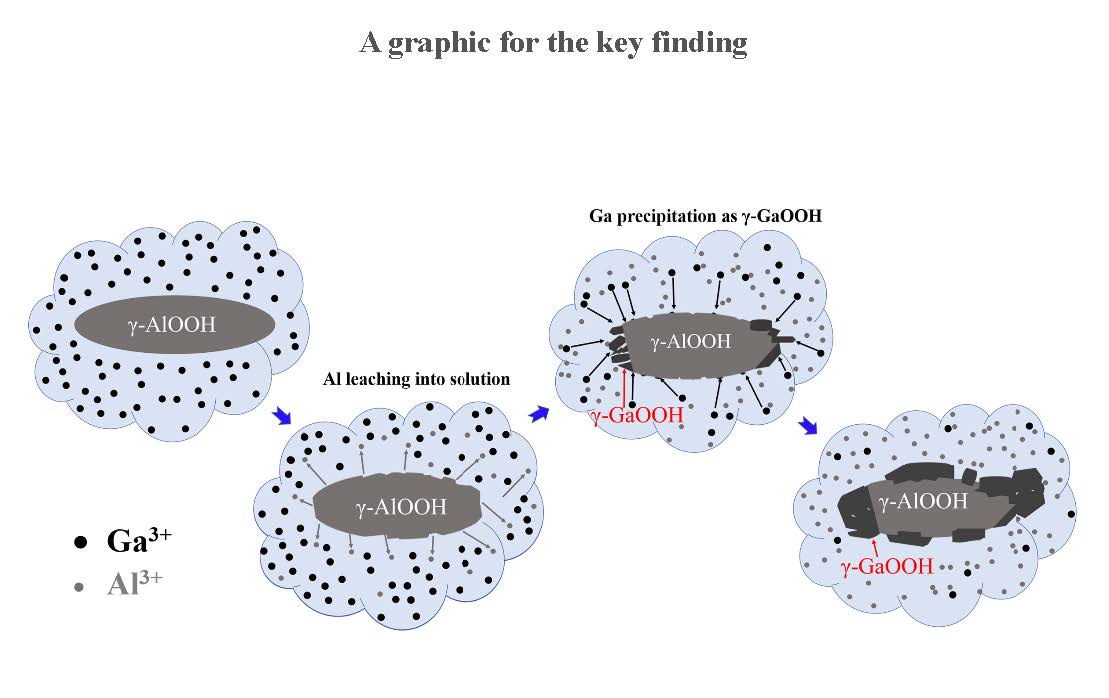
A new polymorph of GaOOH (?-GaOOH) was synthesized with boehmite as a structure template. The results provide insight into Ga in boehmite and indicate that boehmite can act as a template to enrich free Ga and epitaxially induce nucleation and growth of ?-GaOOH. This study by Liu et al. also provides a potential migration, enrichment, and mineralization mechanism of Ga, which will improve the understanding of the geochemical processes and occurrence of Ga in nature.
Scheelite U-Pb geochronology and trace element geochemistry fingerprint W mineralization in the giant Zhuxi W deposit, South China
https://doi.org/10.2138/am-2022-8495
Skarn-type tungsten deposits dominate the world's W supply, however, the temporal relation between the W mineralization, causative intrusions, and the sources of ore-forming fluids and metals is still a matter of great debate. In this contribution, Zhao et al. report in situ LA-ICP-MS U-Pb dating and trace element compositions of scheelite from the world's largest tungsten deposit to address the above issues. Their study highlights that, compared to other hydrothermal accessory minerals (such as molybdenite, muscovite, apatite, etc.), scheelite LA-ICP-MS U-Pb dating is a robust technique to determine the mineralization age of skarn W deposits. This study also discovered that the destruction of early-formed garnet could produce a high Y/Ho ratio for the subsequent ore-forming fluid and could provide metals such as W, Cu, and Sn to form skarn-type ore deposits. The new results from this study contribute to a better understanding of the metal source and fluid evolution for the skarn-type ore deposits.
A rare sekaninaite occurrence in the Nenana Coal Basin, Alaska Range, Alaska
https://doi.org/10.2138/am-2022-8698
In this contribution by Reidel and Ross, coal-seam fires represent an unusual and relatively unexplored natural environment of mineral formation in pyrometamorphic rocks. The Mystic Creek coals burned with an extremely high temperature and produced sekaninaite, a relatively rare mineral as well as a yet unidentified Al-Fe-TI opaque mineral. This coal-seam fire is a natural laboratory for observing low-pressure, high-temperature fractional crystallization paths in magmas. Thus, pyrometamorphic rocks like that at the Mystic Creek coal basin provide a valuable natural laboratory for exploring magmatic processes and new minerals for future mineralogical studies.
Slyudyankaite, Na28Ca4(Si24Al24O96)(SO4)6(S6)1/3(CO2)·2H2O, a new sodalite-group mineral from the Malo-Bystrinskoe lazurite deposit, Baikal Lake area, Russia
https://doi.org/10.2138/am-2022-8598
The article by Sapozhnikov et al. is a contribution to the crystal chemistry of sodalite-group minerals. It describes the new mineral slyudyankaite, approved by the IMA CNMNC. Slyudyankaite is a very unusual new member of the sodalite group containing S6 and CO2 molecules as species-defining components. This mineral is an example of the separation of extra-framework components in cages of two types. Cages of the first type contain cations (Na+ and Ca2+) and SO42- anions, whereas cages of the second type are occupied by neutral molecules (S6, S4, CO2, and H2O). Based on a multimethodic approach involving six spectroscopic methods, it was shown that the variable color of slyudyankaite is related to the presence of polysulfide chromophores (S6 molecules as well as trace amounts of S2-, S3-,�and S4�;- radical anions). Extra-framework components in slyudyankaite and other sodalite-group minerals are important markers of volatile species in the mineral-forming medium.
Ruizhongite, (Ag2□)Pb3Ge2S8, a thiogermanate mineral from the Wusihe Pb-Zn deposit, Sichuan Province, Southwest China
https://doi.org/10.2138/am-2023-9000
The discovery of ruizhongite has significant implications for the occurrence and enrichment mechanism of Ge in sphalerite and other metallic minerals. Ruizhongite, a thiogermanate mineral, was identified in the Wusihe Pb-Zn deposit in Sichuan Province, Southwest China, during an investigation of the mineralogy of this deposit. In the present study by Meng et al., polarized optical microscopy, scanning electron microscopy, electron microprobe, ?-X-ray diffraction, and Raman spectroscopy analyses were utilized to characterize the occurrence, optical property, chemical composition, and crystal structure of ruizhongite. Both the mineral and its name have been approved by the IMA-CNMNC (2022-066). Type specimens are preserved in the Geological Museum of China, Beijing, China (Catalog number M16138).
Volume 108 : August 2023 Issue
Experimental study of apatite-fluid interaction and partitioning of rare earth elements at 150 and 250 °C
https://doi.org/10.2138/am-2022-8589
Chappell et al. present new hydrothermal experiments at 150 and 250 �C and examine the role of pH, temperature, and NaCl on the solubility of apatite. The mobility of rare earth elements (REE) and formation of secondary REE phosphates have been investigated under acidic and mildly acidic conditions by studying the fluid chemistry and apatite alteration textures. These experiments indicate that apatite alteration is dissolution-controlled at low temperature, and NaCl plays a key role in mobilizing the REE. The experiments also highlight the necessity of appropriately screening igneous apatite grains using backscattered electron and cathodoluminescence imaging for signs of hydrothermal alteration textures as they show apatite is susceptible to a strong alteration overprint down to a temperature of 150 �C.
Assimilation of xenocrystic apatite in peraluminous granitic magmas
https://doi.org/10.2138/am-2022-8668
High-temperature, high-pressure experiments by Clarke et al., involving two or three different apatite compositions immersed in a synthetic granite melt, show that dissolution in, and diffusive chemical exchange through, the medium of the melt result in different rates of equilibrium. The halogens in the apatite equilibrate before either the rare-earth elements or the texture of the apatite grains. A natural example of two types of apatite in one granitic rock illustrates that physical and chemical equilibrium is also only partial.
Cathodoluminescence of iron oxides and oxyhydroxides
https://doi.org/10.2138/am-2022-8843
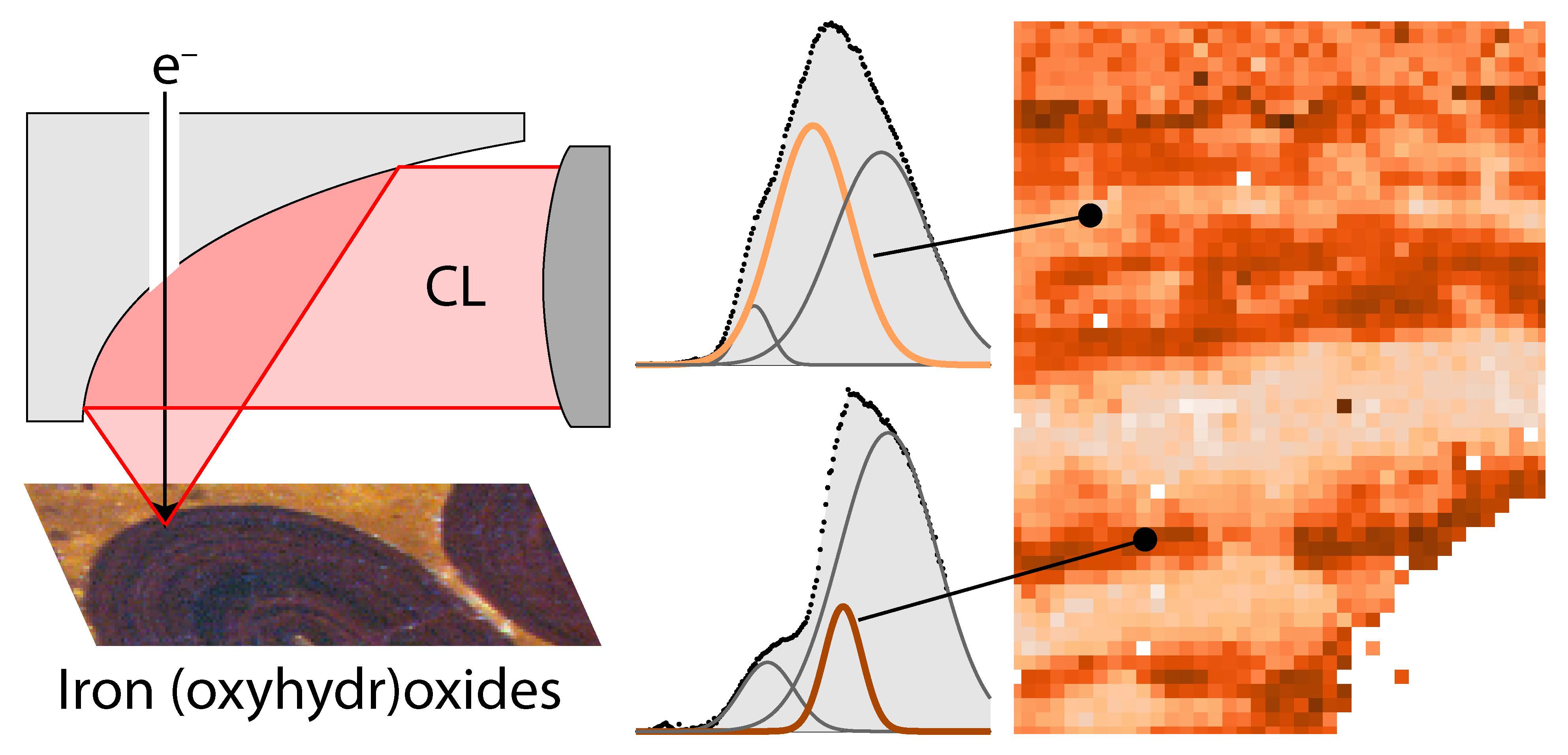
In this Open Access paper, Galili et al. used scanning electron microscope cathodoluminescence (SEM-CL) to study iron oxides and oxyhydroxides (goethite, hematite, and magnetite) and gained the following insights: (1) Iron oxides and oxyhydroxides display unique SEM-CL spectra; (2) Subtle variations in mineral-specific spectra reflect mineral formation conditions; (3) Mineral-specific spectra are affected by the substitution of various metals for iron; and (4) SEM-CL is a non-destructive, in-situ tool to characterize iron (oxyhydr)oxides.
The effect of elemental diffusion on the application of olivine-composition-based magmatic thermometry, oxybarometry, and hygrometry: A case study of olivine phenocrysts from the Jiagedaqi basalts, northeast China
https://doi.org/10.2138/am-2022-8567
Olivine compositions have been widely used to constrain magmatic thermodynamic conditions such as magmatic temperature, oxygen fugacity, and H2O content. Zhang et al. studied olivine phenocrysts and olivine-hosted spinel from the Jiagedaqi (JGD) alkaline basalts, and their results show that diffusions of Mg, Ca, Fe, Sc, and Y in the JGD olivines have a strong influence on magmatic temperature calculated using a Sc/Y-in-olivine thermometer, magmatic oxygen fugacity calculated using an olivine-spinel oxybarometer, and magmatic H2O content calculated using a hygrometer based on Ca partitioning between olivine and melt. The compositional plateaus in olivine cores, which were not influenced by elemental diffusion, can preserve the magmatic temperature, oxygen fugacity, and H2O content applied at the formation of the JGD olivines. This study clearly shows that the use of olivine geochemistry to investigate magmatic thermodynamic conditions must consider the effects of elemental diffusion.
Characterization of nano-minerals and nanoparticles in supergene rare earth element mineralization related to chemical weathering of granites
https://doi.org/10.2138/am-2022-8543
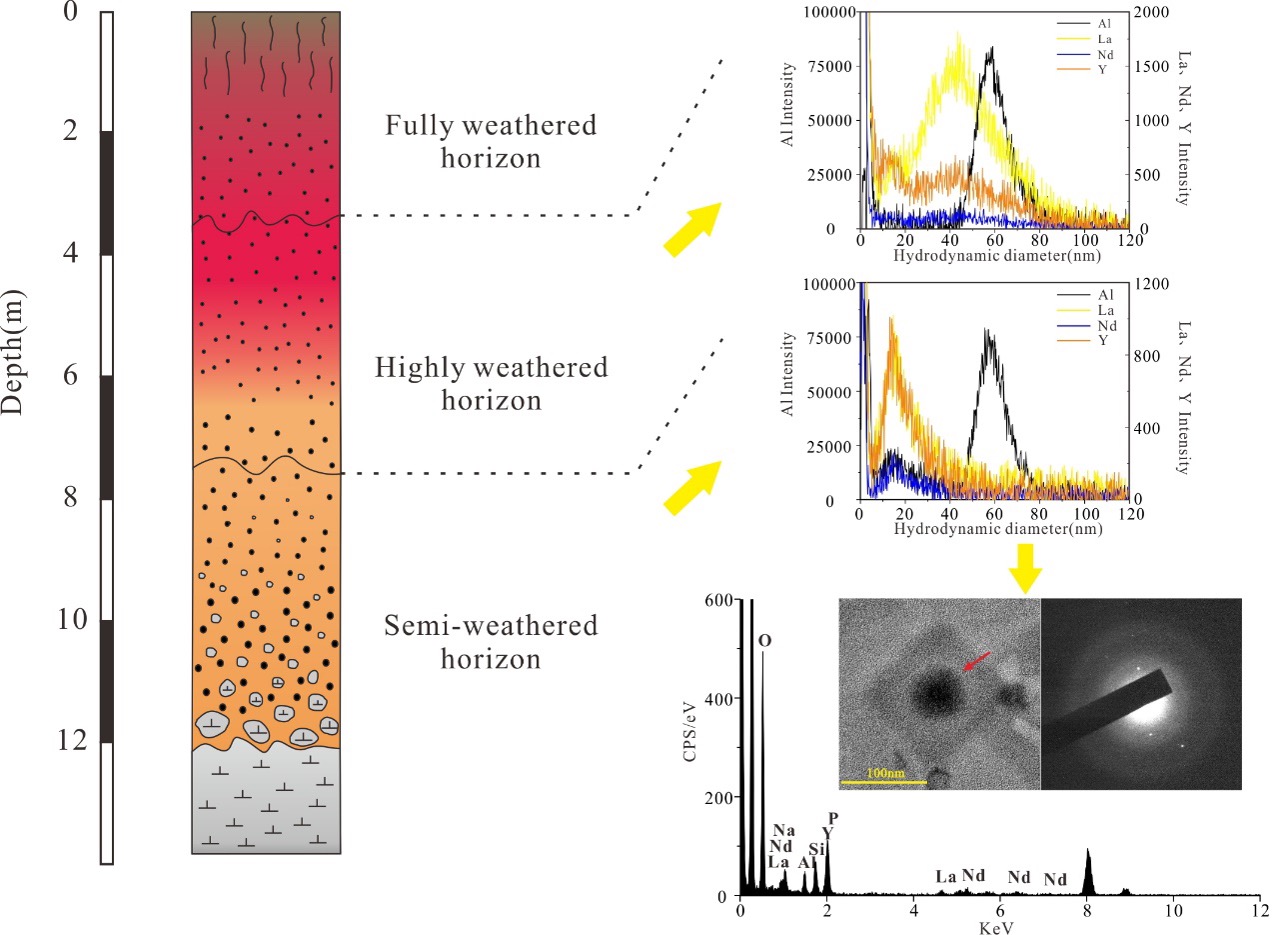
Yi et al. used hollow fiber flow field-flow fractionation and inductively coupled plasma-mass spectrometry, scanning, and transmission electron microscopy to characterize the REE nano-particles in different granite regolith horizons (?REEmax = 1201 ppm) and the association between REEs and clay minerals. Two different types of REE-bearing nano-particles were observed: Ce oxides which are mainly enriched in the upper horizon and occur as cerite, and amorphous La, Nd, and Y phosphates, which are mainly enriched in the lower horizons. These nano-particles are commonly attached to the surfaces of clay minerals. Compared with platy kaolinite, tubular halloysite occurs mainly in the lower horizons, has a higher adsorption capacity for the REEs, and thus is responsible for the REE enrichment in ion adsorption-type REE deposits. The findings indicate that there are various types of nano-minerals and -particles that affect REE enrichment and fractionation during granite weathering.
Atomic-scale interlayer friction of gibbsite is lower than brucite due to interactions of hydroxyls
https://doi.org/10.2138/am-2022-8561
Okuda et al. computed the atomic-scale shear stress to deform layers of gibbsite (Al(OH)3) on its [001] plane using the first-principles method based on density functional theory. They extended the atomic-scale properties to macroscopic shear properties using adhesion theory and then compared the result with previous theoretical and experimental studies on other layered structure minerals. They found that the interlayer deformation yielded a clearly lower friction coefficient compared with experimental values, highlighting the critical role of deformation between layers.
The spatial and temporal evolution of mineral discoveries and their impact on mineral rarity
https://doi.org/10.2138/am-2022-8491
Ponomar et al. developed a model to access the relationships between Nickel-Strunz classes, country of discovery, and locality counts at a time scale. According to the minerals discovery rate, three major periods were identified: the ancient period (up to 1800), the Sustainable development period (1800-1950), and the Modern period (1950-present). The bulk of rock-forming minerals was discovered until the 1980s, while the discovery rate of rare and endemic species still progresses.
The role of parent lithology in nanoscale clay-mineral transformations in a subtropical monsoonal climate
https://doi.org/10.2138/am-2022-8740
Zhao et al. investigated four soils developed on different rock types in subtropical China to determine the role of parent lithology in clay-mineral evolution at the atomic scale. High-resolution TEM images demonstrated solid-state transformations among clay minerals during weathering. Secondary clay-mineral assemblages depended strongly on the starting materials at weak to moderate degrees of weathering but were controlled mainly by climate under conditions of intense alteration. Thus, nanoscale analysis is critical to evaluation of mineralogic changes that can be obscured by bulk-rock analytical methods.
Discovery of terrestrial andreyivanovite, FeCrP, and the effect of Cr and V substitution on the low-pressure barringerite-allabogdanite transition
https://doi.org/10.2138/am-2022-8647
Galuskin et al. discovered iron phosphides with significant variations of Cr and V contents on the Earth, which had been known only in meteorites. Cr-V-bearing phosphides may form in the process of replacing fish bone remains. Investigations of the composition and structure of Fe2P phosphides showed that when V+Cr content is higher than 0.26 apfu, a transition from the hexagonal barringerite to the orthorhombic allabogdanite takes place at low pressure. The orthorhombic phosphide with the highest Cr and V contents belongs to andreyivanovite species with the FeCrP end-member formula.
Microstructural changes and Pb mobility during the zircon to reidite transformation: Implications for planetary impact chronology
https://doi.org/10.2138/am-2022-8604
Impact events modify and leave behind a complex history of rock metamorphism on terrestrial planets. Szumila et al. explore laboratory shock-induced physical and chemical changes to zircon and feldspar. The authors prepared a mixture of sanidine-zircon, 97-3% by weight percent, and shocked the mixture via a flat plate accelerator with an average peak pressure of ~35 GPa. Characterization of unshocked and shocked materials showed that the starting zircon material had abundant metamict regions and the conversion of the feldspar to glass in the post-shock material. Analyses of the shocked product also yielded multiple occurrences of the high-pressure ZrSiO4 polymorph, reidite, with some domains up to 300 ?m. The possibility of U-Pb system disturbance was evaluated via LA-ICP-MS and SIMS. The isotopic data reveal that disturbance of the U-Pb geochronometer in the reidite was minimal (<2% for the main U-Pb geochronometers). Numerical simulation confirmed that portions of the shock experiment may have reached pressures where zircon would be expected to transition to reidite but without reaching temperatures that would have reverted reidite to zircon.
Thermal equation of state of ice-VII revisited by singlecrystal X-ray diffraction
https://doi.org/10.2138/am-2022-8554
Ice-VII is a high-pressure polymorph of H2O ice, which was identified as a mineral recently after its discovery as inclusions in superdeep diamonds. It may exist in the interiors of icy planetary bodies, in some cold subducted slabs, and as inclusions in diamonds of deep origin. Lai et al. synthesized single-crystal ice-VII using an externally heated diamond anvil cell at high pressure and high temperature. They further used this device to reproduce the environments in Earth's and planetary interiors up to 78 GPa at 300-1000 K and investigated the phase stability and thermoelastic properties of ice-VII by synchrotron-based single-crystal X-ray diffraction. There is no structural change or unit-cell volume discontinuity in the investigated pressure-temperature range. The thermal equation of state of ice-VII was determined. The melting point of ice-VII was also found to be consistent with the relatively high melting curve determined in previous studies. These results may be used for modeling the inner structure of icy bodies, determining the entrapment pressure of ice-VII inclusions in superdeep diamonds, and understanding the water cycles in deep Earth.
Empirical electronic polarizabilities for use in refractive index measurements at 589.3 nm: Hydroxyl polarizabilities
https://doi.org/10.2138/am-2022-8717
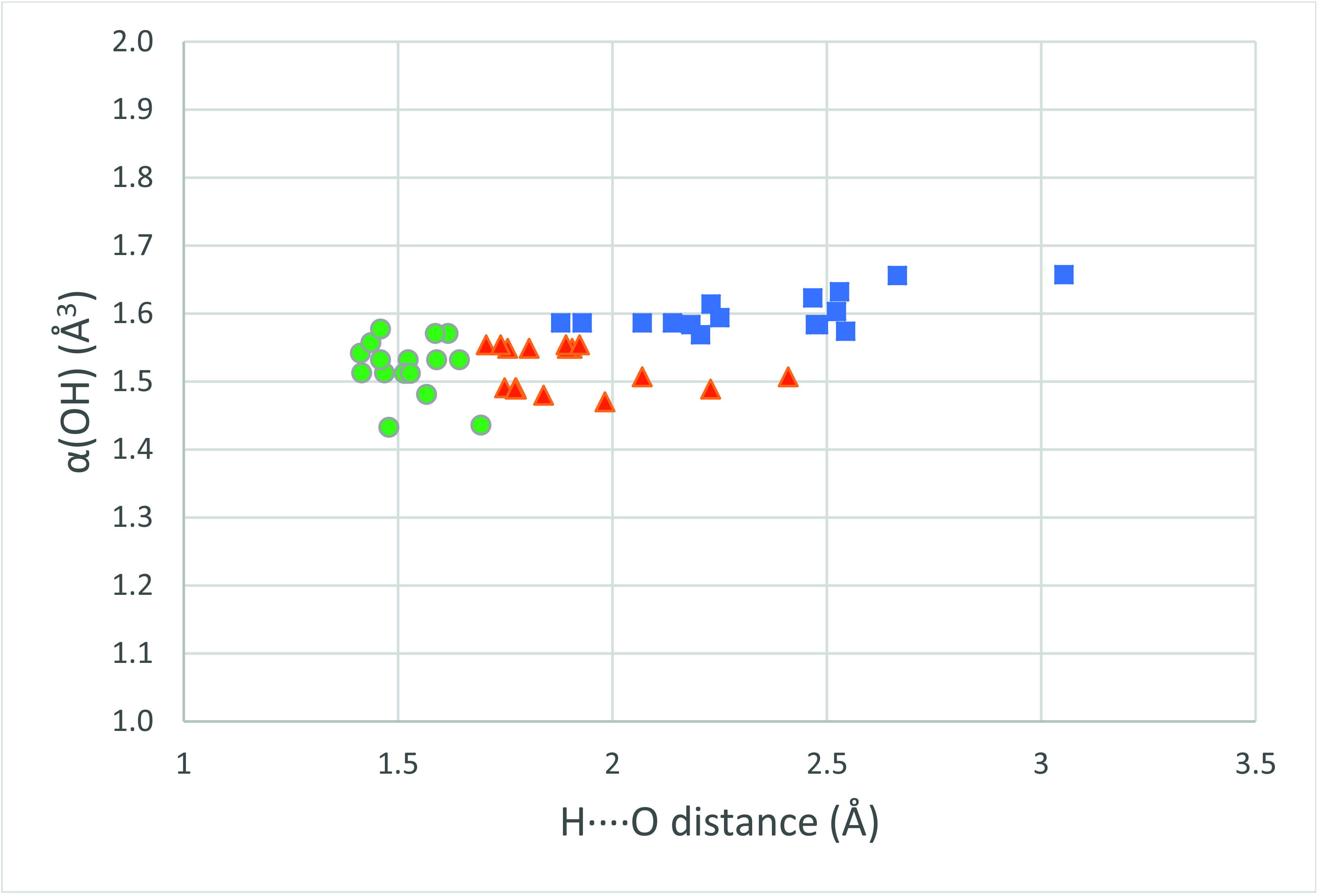
Shannon et al. investigate the relationship between optical properties and the strength of hydrogen bonding in hydroxyl-containing minerals and inorganic compounds. Specifically, they compare the electronic polarizabilities of OH (derived from observed refractive indices) with intrinsic polarizabilities from quantum chemical cluster calculations as a function of the bond length of the OH...O hydrogen bond. It is demonstrated that hydrogen bonding reduces the polarizability of hydroxyl ions, yielding lower refractive indices.
« ‹ 1 … 21 22 23 24 25 … 85 › »ADDITIONAL RESOURCES