

Editor’s Notes
Total Results: 1697
Volume 108 : April 2023 Issue
The NaCl-CaCO3 and NaCl-MgCO3 systems at 6 GPa: Link between saline and carbonatitic diamond forming melts
https://doi.org/10.2138/am-2022-8403
Carbonatitic and saline melts or high-density fluids (HDFs) are the most common among inclusions in natural diamonds. However, a genetic link between saline and carbonatitic endmembers remains controversial and experimentally unresolved. The results obtained by Shatskiy et al. do not support the hypothesis of the formation of chloride and carbonate melts as a result of liquid immiscibility. The continuous trend in composition from carbonatitic to saline HDFs entrapped as microinclusions in natural diamonds can be explained by (1) fractional crystallization of the Cl-bearing carbonatite melt; (2) melting of carbonated mantle domains induced by saline HDF; and (3) reduction of Cl-bearing carbonatitic melt.
Single-crystal elasticity of (Al,Fe)-bearing bridgmanite up to 82 GPa
https://doi.org/10.2138/am-2022-8435
Fu et al. report high-pressure single-crystal elasticity of (Al,Fe)-bearing bridgmanite up to 82 GPa, corresponding to the mid-lower mantle depth. The results are used in thermoelastic modeling to evaluate velocity profiles of lower-mantle mineral aggregates at relevant pressure-temperature conditions and then applied to help better constrain the lower-mantle composition.
Single-crystal X-ray diffraction of fluorapatite to 61 GPa
https://doi.org/10.2138/am-2022-8410
Rucks et al. used synchrotron-based single-crystal X-ray diffraction coupled with diamond anvil cell techniques to probe the structural response of fluorapatite under room temperature compression to 61 GPa. Previous investigations of fluorapatite are limited to relatively low pressures. In this study, the hexagonal fluorapatite structure was examined up to 32.4 GPa, after which point the structure transforms to a triclinic phase. This is the first observation of a pressure-induced triclinic apatite. Additionally, the authors provide Birch-Murnaghan equation of state parameters for both phases.
Iron and aluminum substitution mechanism in the perovskite phase in the system MgSiO3-FeAlO3-MgO
https://doi.org/10.2138/am-2022-8457
From multi-anvil high-pressure experiments, the open access paper (available to all readers) by Ishii et al. found that the A-site vacancy component of Fe2/3SiO3 may exist by 1-2 mol% at 1700-2000 K in FeAlO3-bearing MgSiO3 perovskite phase, whereas 1 mol% of the oxygen vacancy component of MgFeO2.5 appears at higher temperatures. The A-site vacancy component might be more important than the oxygen vacancy component for the defect chemistry of bridgmanite in slabs and for average mantle conditions when the FeAlO3 charge-coupled component is dominant.
Ultrasonic studies of alkali-rich hydrous silicate glasses: Elasticity, density, and implications for water dissolution mechanisms
https://doi.org/10.2138/am-2022-8451
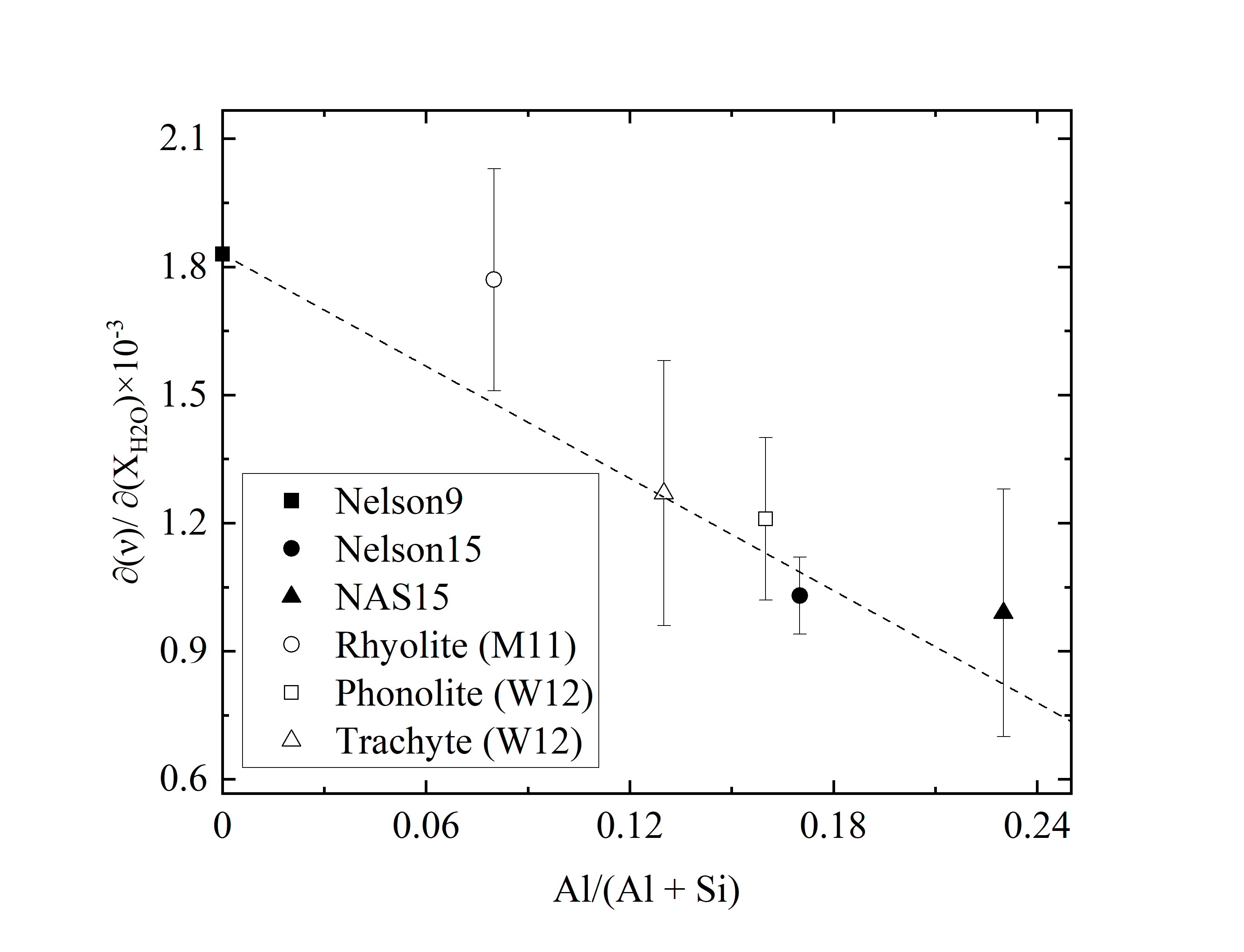
Liu et al. determined the compressional and shear wave velocities of three series of alkali-rich hydrous silicate glasses with up to 5.25 wt% H2O using ultrasonic interferometry at ambient conditions. The results show that the sound velocities and calculated elastic properties are nearly linear functions of dissolved water content. On the other hand, the addition of Na2O content might weaken the effect of water on acoustic velocity. In addition, the similar behavior of Al-free and Al-bearing glasses implies that water depolymerizes melts in both Al-free and Al-bearing systems. The decrease of water content derivatives of the Poisson's ratio &91;∂(v)/∂(XH2O)&93; with increasing Al/(Al + Si) indicates that water interaction with Al-O bonds depolymerizes peralkaline silicate melts less effectively than Si-O bonds with increasing Q4(4Al) abundance. Hence, water may prefer to interact with Si-O bonds rather than Al-O bonds in peralkaline silicate systems.
Gadolinium-dominant monazite and xenotime: Selective hydrothermal enrichment of middle REE during low-temperature alteration of uraninite, brannerite, and fluorapatite (the Zimná Voda REE-U-Au quartz vein, Western Carpathians, Slovakia)
https://doi.org/10.2138/am-2022-8418
Ondrejka et al. investigated a very unusual assemblage of Gd (MREE)-rich minerals formed during the interaction of primary hypogene ore minerals with low-temperature hydrothermal fluids. From detailed microanalytical and spectroscopic data, along with textural observations, they provide evidence for gradual remobilization-fractionation of U and REE in aqueous media. This study also demonstrated the continuous evolution of the W-type tetrad effect during the progressive crystallization of monazite towards Ce→Nd→Sm→Gd rich species and the evolution of xenotime towards Y→Gd species. Moreover, this study shows that low-T hydrothermal alteration and replacement reactions of MREE-selective, but nominally REE-free minerals, e.g., uraninite, brannerite, and fluorapatite, can produce an enhanced MREE signature in chemically-closed systems.
Nucleation of Th-rich cerianite on halloysite surface in a regolith-hosted rare earth elements deposit in South China
https://doi.org/10.2138/am-2022-8391
Cui et al. (1) revealed the effect of halloysite on Ce enrichment and nucleation in a weathering granite profile; (2) characterized aggregates of Th-rich cerianite nano-particles with a preferred orientation on the halloysite surface; and (3) interpreted the selective nucleation of cerianite on basal surface of halloysite based on lattice match analyses.
Volume 108 : March 2023 Issue
Mineralogy and bulk geochemistry of a fumarole at Hverir, Iceland: Analog for acid-sulfate leaching on Mars
https://doi.org/10.2138/am-2022-8363
In this paper by Carson et al., an Icelandic fumarole interacting with basalt produced a pattern of alteration minerals (silica, sulfates, oxides, and clays) that informs their understanding of potential hydrothermal alteration on Mars. The high silica and titanium acid-sulfate leached deposit, coupled with only minor sulfates, could be analogous to silica-rich soils at Gusev crater on Mars, while more distal samples contain varied sulfates and oxides, potentially relevant to the formation of Martian jarosite and hematite.
The crystal structure and chemistry of natural giniite and implications for Mars
https://doi.org/10.2138/am-2022-8138
Giniite is a mineral that may occur on Mars and be important as a resource for future extended human missions to Mars. However, there are little data available on the mineral and the last characterization of the structure was over 40 years ago. Here Adcock et al. revisit the chemistry and crystal structure of natural giniite. Their results improve upon what was previously known and support the potential of giniite as a potential in situ resource for fuel, energy, and water on Mars.
Solid solution of CaSiO3 and MgSiO3 perovskites in the lower mantle: The role of ferrous iron
https://doi.org/10.2138/am-2022-8356
MgSiO3 and CaSiO3 perovskites have near identical chemical and crystal structures and thus at some point must form a single phase in the lower mantle. By using ab-initio calculations Zhang et al. investigated Fe partition coefficients between perovskite phases and the role of iron on their mixture. They found iron increases the miscibility of Ca and Mg perovskite phases and reduces the mixing temperature, but this effect is highly nonlinear. Iron is found not a significant factor in determining the phases of the lower mantle and there is no strong thermodynamic gradient to push iron into a mixed phase.
Secondary ion mass spectrometer analyses for trace elements in glass standards using variably charged silicon ions for normalization
https://doi.org/10.2138/am-2022-8362
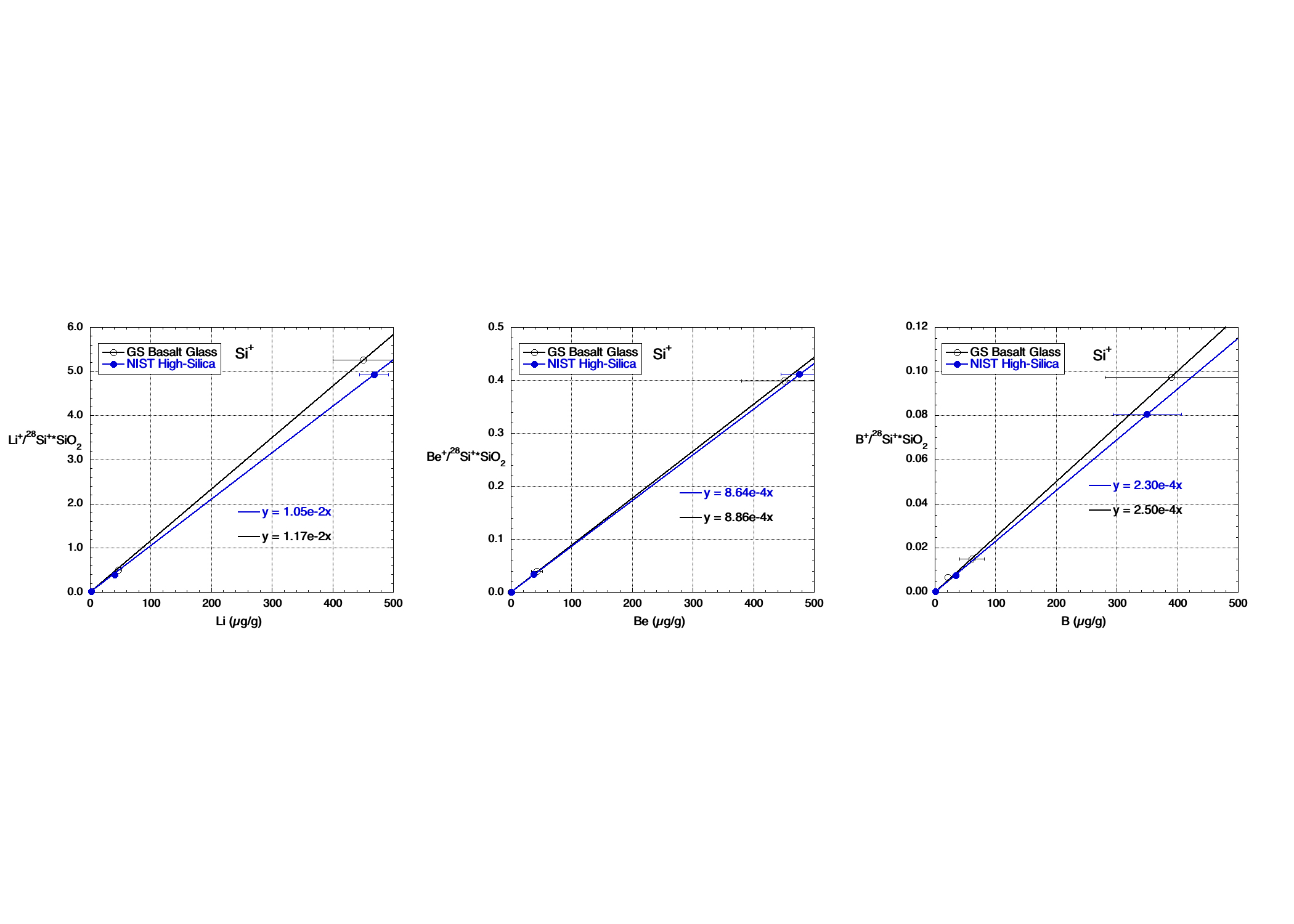
Microanalyses using secondary ion mass spectrometry can detect elements (e.g., Li, Be, B) at low concentrations (e.g., <µg/g). Matrix effects appear to be minimized if (1) the ion signal of interest is normalized to Si+ (as opposed to Si2+ or Si3+) and (2) low-energy (maximum signal) ions are selected. Carlson and Hervig explored the advantages and disadvantages of using multiply charged Si and Al ions, as well as O+ ions, to create calibration curves for application to different matrices.
Raman shifts of c-BN as an ideal P-T sensor for studying water-rock interactions in a diamond-anvil cell
https://doi.org/10.2138/am-2022-8372
Ren et al. report Raman spectra of cubic boron nitride (c-BN) at simultaneous high pressure and high temperature (>700 K) conditions. The Raman shift of the c-BN is shown to be a coupled function of pressure and temperature and cannot be ignored, as was assumed in previous studies. Ren et al. propose that the Raman shift of c-BN is an ideal P-T sensor for diamond anvil cell experiments, especially for studying water-rock interactions in subduction zones.
Resetting of the U-Pb and Th-Pb systems in altered bastnäsite: Insight from the behavior of Pb at nanoscale
https://doi.org/10.2138/am-2022-8318
The study by Zhang et al. highlights that because of the different orders of magnitude between the U and Th contents in bastnasite, the mobilization of radiogenic and non-radiogenic Pb during alteration may have significantly different impacts on the U-Pb and Th-Pb system.
X-ray diffraction reveals two structural transitions in szomolnokite
https://doi.org/10.2138/am-2022-8147
This work by Pardo et al. contributes to high-pressure experimental data on hydrated sulfates relevant to planetary interiors on Earth, Mars, and the icy satellites. They find two crystal structure transitions occurring in szomolnokite (FeSO4.H2O) under 20 GPa. Using equation of state fitting with existing data, they illustrate that the relative structural and elastic properties of szomolnokite and other hydrated sulfate phases have complex chemical and pressure-dependent behaviors.
Contamination of heterogeneous lower crust in Hannuoba tholeiite: Evidence from in situ trace elements and strontium isotopes of plagioclase
https://doi.org/10.2138/am-2022-8254
Su et al. found that 87Sr/86Sr of the studied plagioclase crystals varied from 0.70333 to 0.70557, more significant than the whole rock of Hannuoba alkaline and tholeiitic basalts reported previously and consistent with that of Cenozoic basalts in North China. The compositional heterogeneity of Hannuoba tholeiitic basalt is caused by the mixing of heterogeneous lower crust rather than different mantle-derived melts, which indicates that the contribution of the continental lower crust to continental basalt is more complicated than previously recognized.
Trace element partitioning between anhydrite, sulfate melt, and silicate melt
https://doi.org/10.2138/am-2022-8345
This article by Hutchinson et al. presents experimentally derived trace element partition coefficients between anhydrite, sulfate melt, and silicate melt at conditions typical for arc magmas. Partitioning behavior for 2+ and 3+ cations in anhydrite is controlled by exchange reaction with the anhydrite Ca2+ site and is modeled using a lattice strain approach. Modeled partitioning is then compared to measured strontium concentrations in several examples of natural magmatic anhydrite to assess the conditions of anhydrite crystallization.
Chemical reaction between ferropericlase (Mg,Fe)O and water under high pressure-temperature conditions of the deep lower mantle
https://doi.org/10.2138/am-2022-8390
Ferropericlase (Mg,Fe)O is the second most abundant phase in a pyrolitic lower mantle model. Chemical reaction between ferropericlase and water was investigated by Yang et al. under high pressure-temperature conditions of the deep lower mantle. The pyrite-structured phase FeO2Hx (x≤1, Py-phase) containing a negligible amount of Mg (<1 at%) was formed at the expense of iron in the Fp-phase through the reaction between (Mg,Fe)O and H2O, thus serving as a mechanism of water storage in the deepest lower mantle.
Composition-dependent thermal equation of state of B2 Fe-Sialloys at high pressure
https://doi.org/10.2138/am-2022-8067
Iron-silicon alloys are classically considered to be major components of planetary cores, in particular for planets having formed under reducing conditions. Such conditions are believed to be particularly relevant to the case of Mercury. However, both the phase diagram and thermoelastic properties of Si-rich alloys in the Fe-FeSi system are not well understood under high pressure for a wide range of compositions. This study by Yokoo et al. reports experimental results of pressure-temperature-volume relations in iron-silicon alloys with various silicon contents obtained over a large pressure (up to ~120 GPa) and temperature (up to ~3000 K) range. Based on the collected data, Yokoo et al. constructed an empirical thermal equation of state for the B2 phase. The silicon content of the B2 phase showed that the phase boundary is temperature independent and moves towards the Si-rich side with increasing pressure. The results have been applied to evaluate the buoyancy of crystallizing solids within Mercury's core. While density contrast between solid and liquid is small in alloys with ~10 wt% silicon or less, a Si-rich core can crystallize B2 alloys dense enough to gravitationally sink to form a solid inner core.
Effects of thermal annealing on water content and δ18O in zircon
https://doi.org/10.2138/am-2022-8444
Primary water contents and δ18O in zircon have proved potentially important proxies for magmatic processes and magma source regions. However, the assignment of primary water is not straightforward because secondary water can enter zircon after crystallization, especially in metamict zircons due to U-Th radiation damage. Many established screening criteria for the least metamict zircons may not be applicable to ancient samples, in which nearly all zircons are metamict. This study by Yang et al. shows that annealing at 600°C for >4 hours can effectively recover primary water and oxygen isotopes from metamict zircons and significantly improves the oxygen isotope measurement accuracy by eliminating secondary water and matrix effects from the metamict zircons. The effective recovery of primary water and oxygen isotope information from metamict zircons through thermal annealing extends the application of these proxies to geologically ancient samples.
Tourmaline and zircon trace the nature and timing of magmatichydrothermal episodes in granite-related Sn mineralization: Insights from the Libata Sn ore field
https://doi.org/10.2138/am-2022-8357
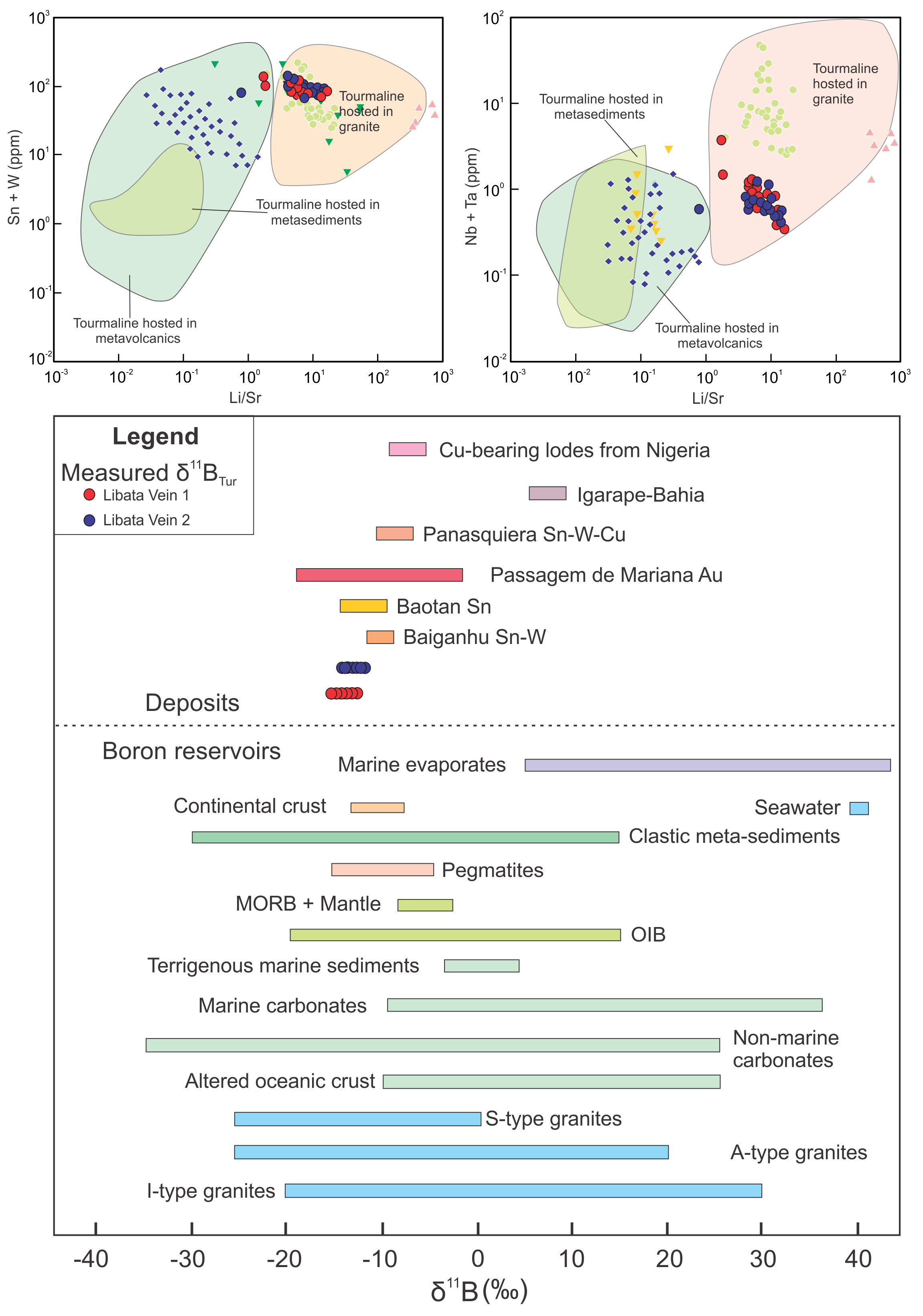
This contribution by Vincent et al. focuses on granite-hosted Sn and associated veins from Northwestern Nigeria, which forms part of an extensive Sn-W-Nb-Ta metallogenic belt across western Nigeria. In this paper, major, trace element, and boron isotopic compositions of tourmaline and in-situ geochronological and Lu-Hf isotopes studies of zircons hosted in granites and wall rocks from the Libata Sn ore field are used to constrain the origin, formation mechanism, and evolution of this ore field. This paper highlights the utility of both tourmaline and zircon as tracers for formation conditions, as well as nature and timing of magmatic-hydrothermal episodes in Sn bearing ore systems. They propose a Pan-African magmatic-hydrothermal event for the ore mineralization in the Libata ore field based on their zircon U-Pb data, which constrained overlapping magmatic and hydrothermal ages of ~650 Ma for the Libata granites. Magmatic and hydrothermal zircon grains from the unmineralized and altered rock suites have overlapping εHf(t) and 176Hf/177Hf but distinct 176Lu/177Hf and 176Yb/177Hf ratios, which suggest a magmatic source for the hydrothermal fluids that are responsible for the mineralization. The tourmalines from the two studied veins in the Libata ore field are of schorls and have high alkali, high Al content, and moderate X-site vacancies as well as Li/Sr and Ca-Fe-Mg ratios that constrain a magmatic source for the Libata tourmalines. T These findings have widespread implications for the genesis for granite-related Sn deposits in other parts of the world with similar geological setting.
« ‹ 1 … 25 26 27 28 29 … 85 › »ADDITIONAL RESOURCES