

Editor’s Notes
Total Results: 1697
Volume 107 : March 2022 Issue
Structure of basaltic glass at pressures up to 18 GPa
https://doi.org/10.2138/am-2021-7742
In situ X-ray and neutron diffraction experiments were conducted by Ohashi et al. to determine the structures of basaltic glass up to 18 GPa. On compression, the mean O-O coordination number (CN_OO) starts to increase at 2-4 GPa. This rise reflects the elastic softening of fourfold-coordinated silicate glass, which may be the origin of anomalies of elastic moduli in basaltic glass at ~2 GPa (Liu and Lin 2014). The mean O-O distance and CN_OO change their compression behaviors along with an increase in the Si(Al)-O coordination number (CN_Si(Al)O) around 10 GPa.. Their results clarified that the oxygen packing fraction (eta_O) exceeds the value for the random close packing, suggesting that the eta_O cannot explain the pressure-induced structural changes of silica and silicate glasses. They also found As predicted by a recent ab initio simulation (Majumdar et al. 2020), the increase in CN_Si(Al)O can trigger the increase of viscosity, which can result in stabilizing basaltic magma in the deep Earth.
Synthesis of calcium orthocarbonate, Ca2CO4-Pnma at P-T conditions of Earth’s transition zone and lower mantle
https://doi.org/10.2138/am-2021-7872
Binck et al. report the crystal structure of calcium orthocarbonate, Ca2CO4-Pnma, synthesized in a diamond anvil cell at 20 and 89 GPa after laser heating to 1830 and 2500 K, respectively. The structure was solved and refined by synchrotron single crystal X-ray diffraction measurements. Raman spectroscopy and DFT calculations confirm the single-crystal results and provide further crystal chemical information, such as bulk and polyhedral compressibilities. The results provide an experimental basis for the recent discussion on the geophysical relevance of orthocarbonates and strengthen the argument that this orthocarbonate needs to be considered in studies of the carbon cycle by showing that at pressures of the transition zone and Earth's upper lower mantle, Ca2CO4 + 2SiO2 is more stable than 2CaSiO3 + CO2.
Melting phase relation of Fe-bearing Phase D up to the uppermost lower mantle
https://doi.org/10.2138/am-2021-7907
Water (H+ or OH-) can be transported into the deep Earth by cold subducting slabs in the form of hydrous phases (DHMSs). Phase D is proposed to be one of the most important water holders in the uppermost lower mantle. Few experiments have been conducted so far to clarify the effect of Fe in DHMSs. Xu et al. investigated the stability of Fe-bearing phase D (PhD) in the AlOOH-FeOOH-PhD system at high temperature and high pressure. Although Fe decreases the stability region of PhD, aluminum- and iron-bearing PhD drastically shift PhD stability to higher temperatures in both MORB and pyrolite compositions compared to pure Mg-PhD. Therefore, Al-, Fe-bearing PhD could act as a water reservoir druing subduction to the deep lower mantle.
Evidence from HP/UHP metasediments for recycling of isotopically heterogeneous potassium into the mantle
https://doi.org/10.2138/am-2021-7923
Stable potassium isotope systematics have great potential for tracing recycled sediments in the mantle due to the stark contrast in K abundance and isotopic ratios between subducting sediment and the mantle. However, whether the distinct K isotopic signatures of sediments could be transported to mantle depths is limited by the lack of knowledge on K isotope behavior during subduction zone metamorphism. Wang et al. investigate the K isotopic composition of a suite of well-characterized metasediments and their protoliths from the western Alps. Their results suggest that prograde metamorphism has limited influence on the K isotopic compositions of subducting sediments and the significant K isotopic variation in metasediments reflects K isotope heterogeneity produced in their protoliths during chemical weathering. These findings provide evidence for the transport of isotopically heterogeneous K from subducting sediments into the mantle.
Effect of sulfur on siderophile element partitioning between olivine and a primary melt from the martian mantle
https://doi.org/10.2138/am-2021-7743
Apparent incompatible behavior of Ni and Co in martian magmas cannot be explained by a chemical effect due to the presence of sulfur. Instead, as described by Usui et al., the anomalous behavior must be due to mixing of magmas, assimilation of Co-rich material into the magma, or a kinetic crystallization effect.
Gold speciation in hydrothermal fluids revealed by in situ high energy resolution X-ray absorption spectroscopy
https://doi.org/10.2138/am-2022-8008
A combination of in situ spectroscopy and molecular modeling reveals the identity, structure, and stability of the major aqueous complexes transporting gold by hydrothermal fluids and highlights an important role of the trisulfur ion in gold transfer and concentration in hydrothermal-magmatic deposits of subduction zones. This approach by Pokrovski et al. opens new perspectives for studies of metals in geological fluids, and potentially silicate melts, inaccessible to direct observation in nature.
Characterization of carbon phases in Yamato 74123 ureilite to constrain the meteorite shock history
https://doi.org/10.2138/am-2021-7856
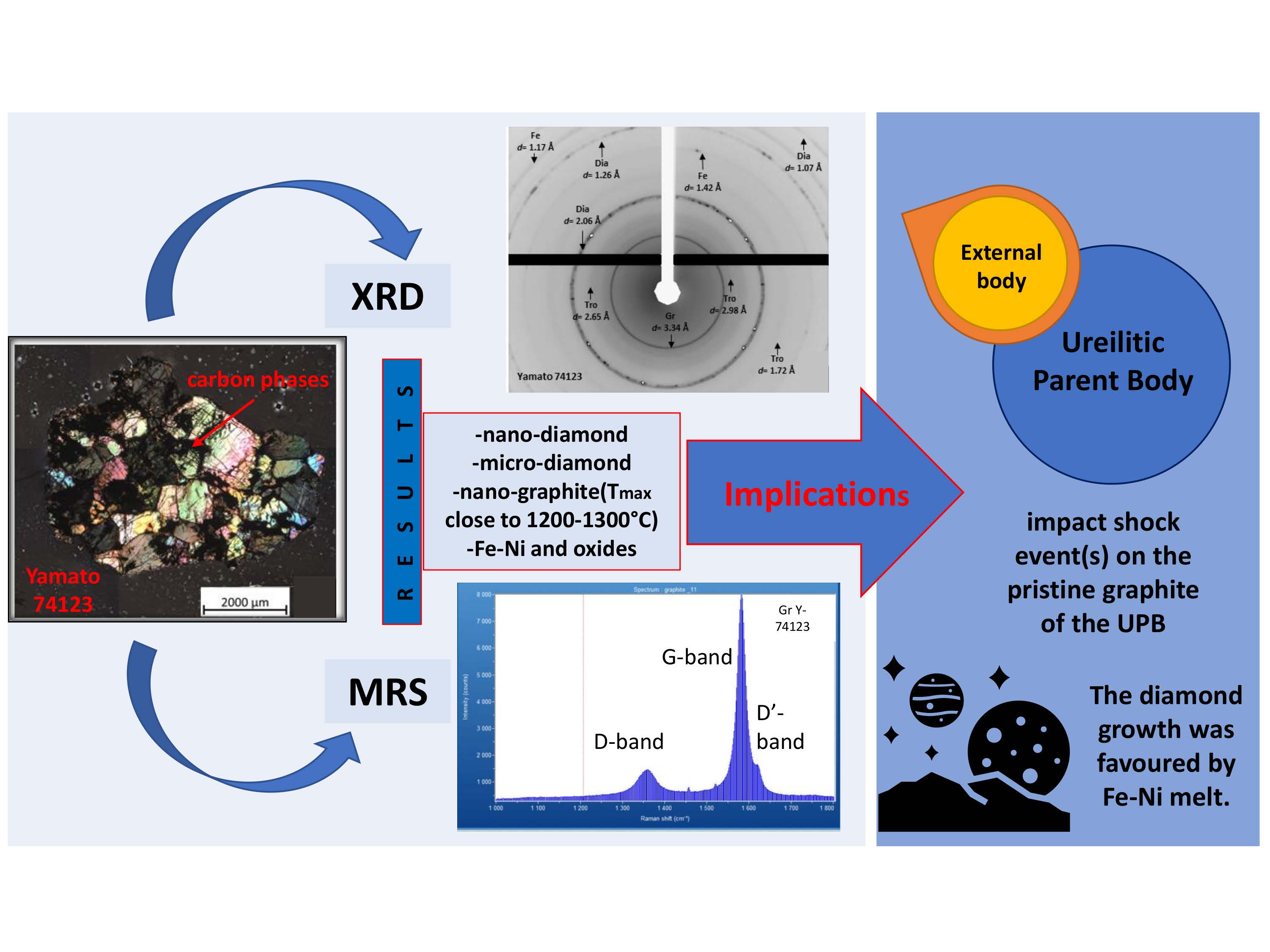
Barbaro et al. investigated a carbon-bearing ureilitic fragment of Yamato 74123 by scanning electron microscopy, micro-Raman spectroscopy, and micro X-ray diffraction, to add further information on diamond and graphite formation in ureilites. Their results show the presence of both microdiamonds and nanodiamonds together with nanographite. The formation process of these phases can be ascribed to impact shock event(s), with the assistance of Fe-Ni melts catalysis during diamond growth.
Pressure-induced structural phase transitions in natural kaolinite investigated by Raman spectroscopy and electrical conductivity
https://doi.org/10.2138/am-2021-7863
Raman scattering and electrical conductivity have been applied to investigate the pressure-induced structural transitions of natural kaolinite occurring at 2.9 and 6.5 GPa, which is characterized by an obvious inflection point in pressure-dependent Raman shifts and electrical conductivity. The influence of temperature on two phase transformations of natural kaolinite were studied by high-temperature and high-pressure electrical conductivity measurements and anticorrelations between the phase transition temperature and pressure found. Hong et al. obtained the stability field of a high-pressure polytype of kaolinite along the cold and hot subduction zones. Along a cold subduction path, the kaolinite I phase remains stable below ~60 km. At depths greater than ~60 km, the kaolinite II phase appears. However, under hot subduction conditions, kaolinite I phase occurs at shallower depth of around 40 km. Above ~40 km, kaolinite II phase forms. Their results indicate that the kaolinite II phase has the potential to enter the mantle via both cold and hot subduction zones and serves as a source of aluminum, silicon, and hydrogen to Earth's interior.
Magnetite-rutile symplectite in ilmenite records magma hydration in layered intrusions
https://doi.org/10.2138/am-2021-7777
Tan et al. integrated electron backscatter diffraction (EBSD) and focused-ion beam - energy dispersive X-ray spectroscopy (FIB-EDS) tomography to investigate the crystallographic orientation and 3-D morphology of magnetite-rutile symplectite in ilmenite. Their results indicate that the symplectite is related to mineral assemblages crystallized from hydrated magmas. The magnetite-rutile symplectite can be considered as a textural indicator of magma hydration during the evolution of terrestrial, martian, and lunar magmas.
Ferromagnesian jeffbenite synthesized at 15 GPa and 1200 °C
https://doi.org/10.2138/am-2021-7852
Smyth et al. describe the first multi-anvil press synthesis and characterization of recently named mineral jeffbenite, which occurs as inclusions in diamonds thought to have formed in the transition zone or lower mantle of the Earth. Because the composition of natural samples appears to overlap that of garnet, previous studies have proposed that the mineral may result from a metastable inversion from bridgmanite, the major mineral of the lower mantle. The synthesis was accomplished with a composition rich in ferric iron rather than aluminum at a pressure of 15 GPa and a temperature of 1200°C. Experiments produced high-quality single crystals up to 200 micrometers in size that allowed characterization by multiple analytical methods, including single-crystal X-ray diffraction, electron microprobe, Raman and infrared spectroscopy, and synchrotron Mossbauer spectroscopy. While natural samples are rich in aluminum, experimental samples are rich in ferric iron that permitted high precision site occupancy refinement by X-ray diffraction, and analysis by synchrotron Mossbauer spectroscopy. Because of significant Fe occupancy in one of the tetrahedral sites, the stoichiometry is sufficiently distinct from garnet that the mineral may be a stable phase in the transition zone of the mantle and does not require (or preclude) an origin as a metastable inversion product from a higher-pressure phase such as bridgmanite.
Electrical conductivity of metasomatized lithology in subcontinental lithosphere
https://doi.org/10.2138/am-2021-7942
Peng et al. explored the electrical conductivity (EC) of a natural metasomatized rock sample and compared those results with magnetotelluric (MT) observations to evaluate mantle metasomatism as a viable mechanism to explain the mid-lithospheric discontinuity (MLD). They found that Na concentrations in amphiboles will enhance the bulk EC of metasomatized rock significantly due to superionic conduction. High EC will cause a positive anomaly in EC profiles at MLD depths that is contrary to MT observations in MLD, so metasomatism is unlikely to explain the seismic and MT observations simultaneously.
Measurements of the Lamb-Mössbauer factor at simultaneous high-pressure-temperature conditions and estimates of the equilibrium isotopic fractionation of iron
https://doi.org/10.2138/am-2021-7884
Zhang et al. present an original study of the Lamb-Mossbauer factor of γ- and ε-Fe at high pressures and high temperatures. The measurements of the Lamb-Mossbauer factor of Fe were carried out by combining laser-heated diamond anvil cells, synchrotron Mossbauer spectroscopy, and a recently developed unique fast temperature readout spectrometer. The vibrational behavior of Fe under these conditions is consistent with quasiharmonicity, therefore the quasiharmonic Debye model was used to calculate the stiffness of the γ- and ε-Fe at elevated pressure-temperature conditions from the Lamb-Mossbauer factor and the atomic mean-square displacement. From the stiffness data, the equilibrium isotopic fractionation β-factor of iron is calculated at high pressures and high temperatures. Calculations based on their experimental data demonstrate that the quasiharmonic correction would lower ln βFe57/54 by 0.1 per mil; compared to the typicallyused harmonic extrapolation of room temperature nuclear resonant inelastic X-ray scattering data. The quasiharmonic correction to the ln βFe57/54 for Fe determined by this method is five times the upper bound of previous estimates and implications of this result to iron isotope fractionation inside the earth is discussed.
Element mobility and oxygen isotope systematics during submarine alteration of basaltic glass
https://doi.org/10.2138/am-2021-7831
He et al. demonstrate that elemental imaging of altered basaltic glass reveals major and trace elements fluxes when basaltic glass altered into palagonite. The palagonite is formed through congruent dissolution of glass and reprecipitation based on elemental distribution and oxygen isotopic investigations. The proposed alteration mechanism (selective leaching, congruent dissolution, initial precipitation, and post-polygonization provides insight into geochemical cycles and oceanic crust alteration.
Dissolved silica-catalyzed disordered dolomite precipitation
https://doi.org/10.2138/am-2021-7474
"Fang and Xu present an abiotic mechanism of dissolved-silica catalyzed dolomite precipitation that provides new insight into the long-lasting ""dolomite problem"". They demonstrate that the presence of 1-2 mM of aqueous Si(OH)4 in high Mg:Ca ratio solutions at room temperature will promote disordered dolomite (with up to 48.7 mol% MgCO3) precipitation and inhibit aragonite precipitation. Dissolved silica in solution also promotes Mg incorporation into Ca-Mg carbonates. Room temperature dolomite synthesis experiments all require the presence of dissolved molecules with low dipole moments such as hydrogen sulfide, dioxane, polysaccharide, and exopolymeric substances (EPS). The molecules with low dipole moment adsorbed on the dolomite surface can lower the dehydration energy of a surface Mg2+-water complex and promote dolomite nucleation and growth. This study provides a new model for abiotic sedimentary dolomite formation that is likely to be responsible for the significant amount of primary dolomite in the Earth history."
Elasticity and high-pressure behavior of Mg2Cr2O5 and CaTi2O4-type phases of magnesiochromite and chromite
https://doi.org/10.2138/am-2021-7853
Shieh et al. synthesized three high-pressure polymorphs of chromite spinels and report the equation of state of the CaTi2O4-type (CT) phase of magnesiochromite, natural chromite, and mLd-type Mg2Cr2O5. Among the three CT phases, FeCr2O4 CT has larger volumes, MgCr2O4 CT has moderate volumes, and natural chromite has the smallest volumes. The appearance of CT and mLd phases can be used as an indicator for shock pressures.
Significance of tridymite distribution during cooling and vapor-phase alteration of ignimbrites
https://doi.org/10.2138/am-2021-7814
Heled et al. investigated the distribution of the silica polymorph tridymite in silicic ignimbrites. Their findings indicate tridymite is formed at the contact between ignimbrite flow packages where the overlying volcanic material seals in gases, allowing prolonged crystallization localized to flow package contacts. Implications of this mineralogical fingerprint of ignimbrite structure include insight to initial cooling and alteration history, and potential geothermal reservoir modeling.
Micropores and mass transfer in the formation of myrmekites
https://doi.org/10.2138/am-2021-7956
This study by Yuguchi et al. expands the existing knowledge of myrmekitization within a granitic pluton and its underlying fluid chemistry. The core objectives of this work include: a quantitative estimate of mass transfer between the reactant and product minerals, and the inflow and outflow of components with consideration of the volume change due to micropore formation; the factors controlling the formation of micropores during myrmekitization; and the sequential variations in the hydrothermal fluid chemistry during sub-solidus conditions.
Mn3+ and the pink color of gem-quality euclase from northeast Brazil
https://doi.org/10.2138/am-2021-7838
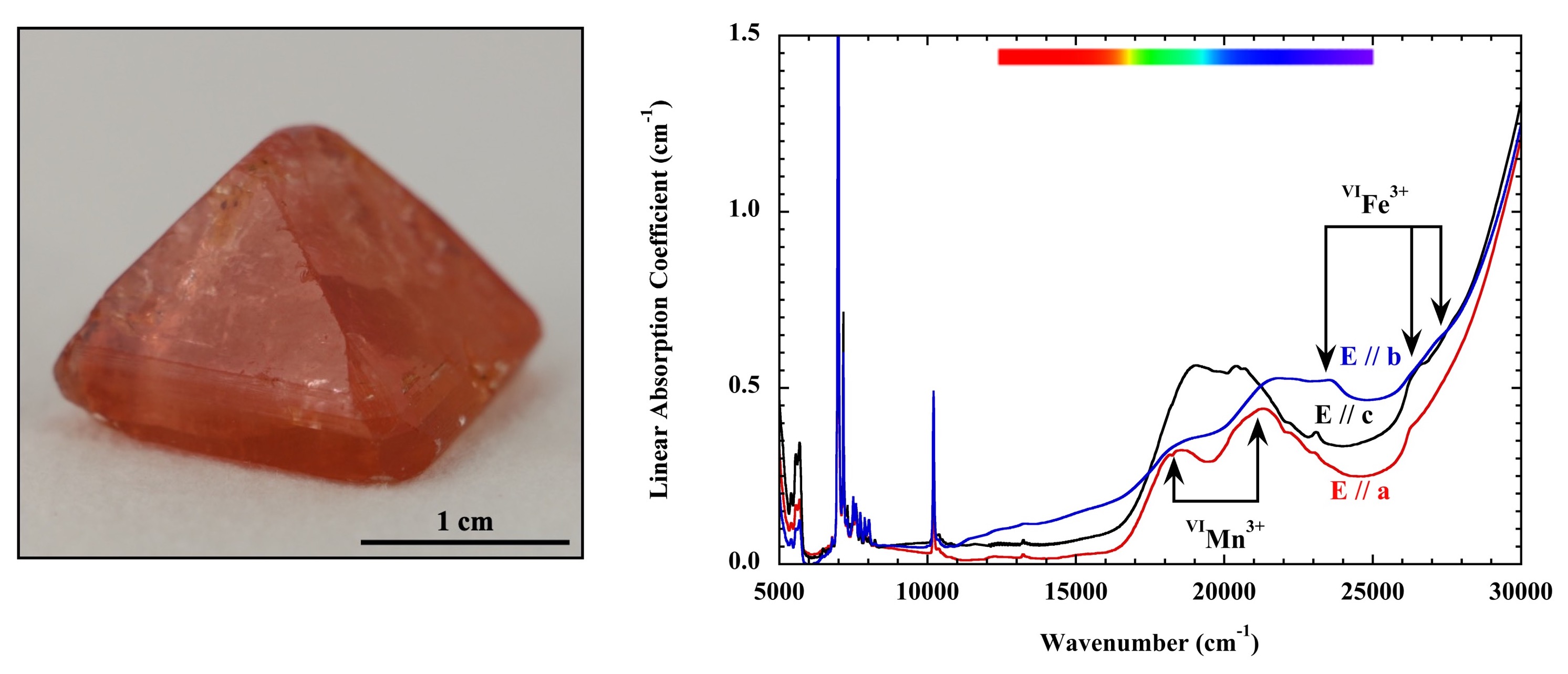
Graphical Abstract in place of words is provided here.
Geochemistry and boron isotope compositions of tourmalines from the granite-greisen-quartz vein system in Dayishan pluton, Southern China: Implications for potential mineralization
https://doi.org/10.2138/am-2021-7591
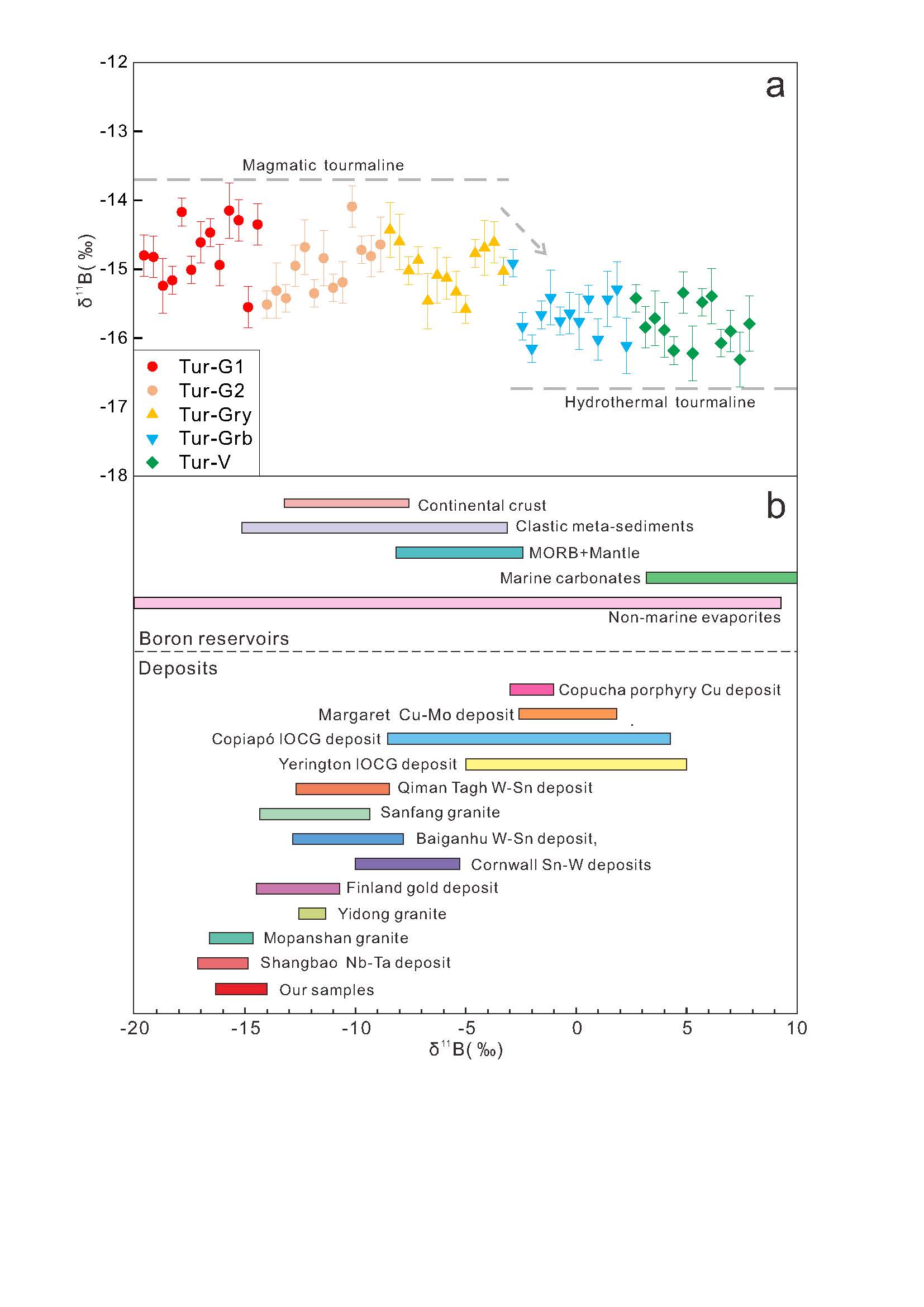
Chemical and boron isotopic compositions of tourmaline in granite, greisen, and quartz veins are reported by Zhao et al. The tourmalines formed from late-magmatic and hydrothermal stage. The slightly lighter B isotopic values of hydrothermal tourmalines are probably caused by fluid mixing. These results indicate that the Sn- and Zn-enriched fluids that created the Dayishan ore deposits may come from the host rock.
Lazaraskeite, Cu(C2H3O3)2, the first organic mineral containing glycolate, from the Santa Catalina Mountains, Tucson, Arizona, U.S.A.
https://doi.org/10.2138/am-2021-7895
Yang et al. demonstrate that lazaraskeite is the first organic mineral found that contains glycolate. Not only does its discovery imply that more glycolate minerals may be found, but it also suggests that glycolate minerals may serve as a potential storage site for biologically fixed carbon.
« ‹ 1 … 36 37 38 39 40 … 85 › »ADDITIONAL RESOURCES