

Editor’s Notes
Total Results: 1697
Volume 107 : April 2022 Issue
Coupled hydrogen and fluorine incorporation in garnet: New constraints from FTIR, ERDA, SIMS, and EPMA
https://doi.org/10.2138/am-2021-7880
Considerable progress has been made in the last three decades in understanding how trace amounts of hydrogen can be incorporated in nominally anhydrous minerals and how this H (most commonly incorporated as structurally bound OH- groups) affects geophysical and petrologic processes in the Earth and other planetary bodies. Recent work has also highlighted the potential importance of trace fluorine (substituting for O2-) in nominally anhydrous minerals. This paper by Mosenfelder et al. improves on previous methods for quantifying H and F in garnet and places new constraints on how these elements are incorporated. This work may be used in the future to place better constraints on the activities of H2O and F-species in fluids that were in equilibrium with garnet, as well as constraining the recycling of H and F into the mantle via study of xenoliths.
Incorporation mechanism of structurally bound gold in pyrite: Insights from an integrated chemical and atomic-scale microstructural study
https://doi.org/10.2138/am-2021-7812
On the basis of Z-contrast HAADF-STEM imaging, Meng et al. document that Au atoms sit at the Fe atom sites in the lattice of arsenian pyrite. Their results, coupled with previous studies, suggest that Au and As occur dominantly as chemically bound Au+ and As-, respectively. It is thus proposed that both Au+ and As- are incorporated into the structure of pyrite through being bonded at the Fe and S atoms sites, respectively. Their results have significant implications for understanding the process by which Au was enriched from ore-forming fluids with low Au and As concentrations into arsenian pyrite and for exploring the role of As in Au mineralization of hydrothermal deposits.
The electrical conductivity of albite feldspar: Implications for oceanic lower crustal sequences and subduction zones
https://doi.org/10.2138/am-2021-7836
Amulele et al. conducted high pressure-temperature (1 GPa & 573–1273 K) electrical conductivity measurements, via impedance spectroscopy, on single-crystal andesine (albite) feldspar from Nuevo Casas Grande, Chihuahua, Mexico. Comparison of the obtained data with previously published results for andesine and associated feldspar reveals the effect of oxygen fugacity on the conduction mechanism. Because of the diverse range of geological settings in which plagioclase feldspars such as labradorite occur, it is important to understand their conduction mechanism at a range of fO2 conditions for consistent and accurate interpretation of magnetotelluric datasets globally. Their measurements indicate that the electrical conductivity of a naturally dry plagioclase feldspar can be high and only drops below 10-4 S/m (the most resistive values for the crust on average) when it is hydrated with as little as 50 ppm wt. H2O. These results would imply a highly dry crust in certain regions of the Earth that may be dominated by plagioclase feldspars.
A high-pressure, clinopyroxene-structured polymorph of albite in highly shocked terrestrial and meteoritic rocks
https://doi.org/10.2138/am-2021-7925
Ma et al. report a new vacancy-stabilized, high-pressure, and high-temperature clinopyroxene, with Si on the M1 site and a composition essentially equivalent to that of albitic plagioclase. This clinopyroxene was formed by shock metamorphism in terrestrial impactites and ordinary chondrites. It has not been previously observed or synthesized and, therefore, provides potential new insights into shock conditions and impact processes.
Water in the crystal structure of CaSiO3 perovskite
https://doi.org/10.2138/am-2022-8009
Shim et al. conducted first-principles calculations for several hydrogen substitution mechanisms in CaSiO3 perovskite. They found that various hydrogen configurations can coexist in CaSiO3 perovskite at mantle-related pressure conditions. The calculated results also support the experimentally observed hydration of CaSiO3 perovskite. The result suggests that CaSiO3 perovskite may be an important mineral phase to consider for the deep storage of water in the mantle.
Release of chromite nanoparticles and their alteration in the presence of Mn-oxides
https://doi.org/10.2138/am-2021-7881
McClenaghan and Schindler demonstrate for the first time that chromite nanoparticles persist through weathering of their host silicates and can be released into the environment. These observations change our understanding of the potential risks of Cr-bearing silicates in mine tailings and soils. The release of chromite nanoparticles, as opposed to Cr3+(aq) species, has a large impact on the fate of Cr in the environment as the behavior of nanoparticles is governed by surface reactions. This study also provides insights into mineralogical processes during the interaction of chromite and Mn-oxides nanoparticles.
The absorption indicatrix as an empirical model to describe anisotropy in X-ray absorption spectra of pyroxenes
https://doi.org/10.2138/am-2021-7950
Anisotropic absorption is routinely observed in X-ray absorption spectroscopy. In many spectroscopic methods, absorption anisotropy complicates the relationship between absorption and absorber concentration. Steven et al. assess the efficacy of a triaxially anisotropic absorption indicatrix model to fit oriented X-ray absorption data.
Atomistic mechanism of cadmium incorporation into hydroxyapatite
https://doi.org/10.2138/am-2020-7560
Hydroxyapatite has been widely used to remove cadmium (Cd) in contaminated water and soils via Cd-Ca substitution. Liu et al. synthesized and characterized a series of Cd-substituted hydroxyapatites. The obtained results indicate that (1) Cd incorporation causes a decrease in the a- and c-lattice parameters due to a slightly smaller radius of Cd2+ than Ca2+; (2) Cd prefers to occupy the Ca2 site, which is located at the hexagonal positions, and is surrounded by seven oxygen atoms with six from five phosphates and one from hydroxyl; and (3) Cd only occupies one Ca2 site at low Cd contents (~10 mol%), while both Ca1 and Ca2 sites are at higher contents.
Copper isotope evidence for a Cu-rich mantle source of the world-class Jinchuan magmatic Ni-Cu deposit
https://doi.org/10.2138/am-2021-7911
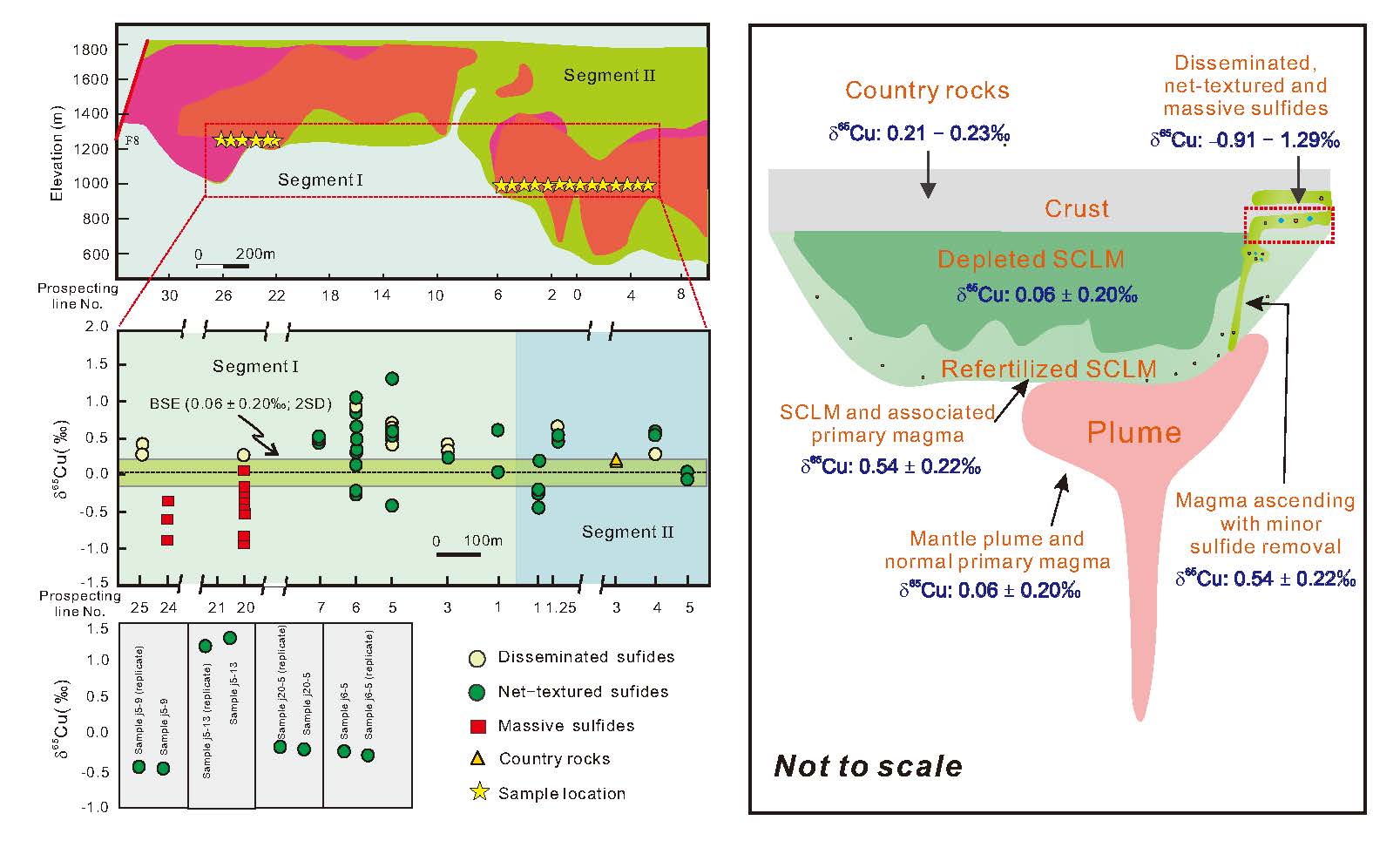
A Cu-rich mantle source may play a key role in generating giant magmatic Ni-Cu deposits worldwide, but evidence for the source's Cu enrichment and its mechanism is still rare. Zhao et al. present a Cu isotopic study on the Jinchuan magmatic Ni-Cu deposit in China. The Cu isotopic composition of parental magmas for the Jinchuan Ni-Cu deposit was calculated to be 0.54 +/- 0.22 per mill, which is much higher than the mantle value of ~0.06 per mill. Copper transportation from oxidized subducted slabs to mantle peridotites or re-dissolution of pre-existing Cu-bearing sulfides in the mantle would cause oxidative breakdown and reprecipitation of sulfides and shift the mantle peridotites toward heavier Cu isotopic compositions. Metal enrichment in mantle source is a key step in generating giant magmatic Ni-Cu deposits worldwide, which significantly enhances our understanding of the Ni-Cu mineralization system and is vital for further mineral exploration.
Gamma radiation effects on quartz Al and Ti center electron spin resonance signal intensity: Implications for quartz provenance discrimination
https://doi.org/10.2138/am-2020-7565
This diversity of quartz crystallization environments is reflected by trace-element compositional variations, which can be used to distinguish between different source sediments. Wei et al. conducted ESR measurements of quartz samples from five present-day fluvial sediments and eight ancient fluvial sand lenses from China. Results indicate that (1) different original quartz could be distinguished by element concentrations, (2) quartz Al and Ti center ESR-SI are closely related to the Al and Ti concentrations in quartz, and (3) the various provenance quartz could be separated by the ratio of quartz Al center and Ti center ESR-SI.
A new high-pressure experimental apparatus to study magmatic processes at precisely controlled redox conditions
https://doi.org/10.2138/am-2022-7977
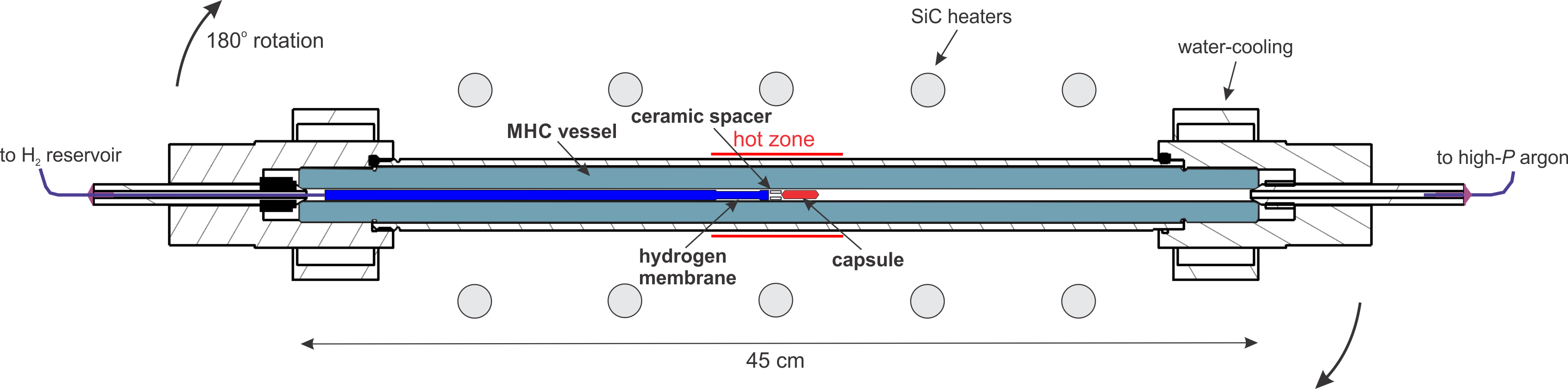
Oxygen fugacity (fO2) is typically controlled in high P-T experiments by using redox buffer assemblages. However, these do not allow fine enough resolution. Semi-permeable hydrogen membranes (Shaw 1963) are often used in internally heated pressure vessels for more flexible fO2 control in hydrous experiments; however, their implementation in more widely available externally-heated pressure vessels has not yet gained space. Alex and Zajacz present a prototype Molybdenum-Hafnium Carbide (MHC) pressure vessel apparatus that simultaneously allows flexible, precise, and accurate redox control via a custom-designed hydrogen membrane and rapid quenching. This new powerful yet cost-effective and low-maintenance apparatus may open up new pathways for studying redox reactions in hydrous magmas and magmatic fluids.
Effect of structural water on the elasticity of orthopyroxene
https://doi.org/10.2138/am-2021-7843
Structural water embedded in nominally anhydrous minerals is a key factor in understanding the seismic signatures of the deep Earth. The effects of structural water on elastic properties of garnet, clinopyroxene, and olivine and its high-pressure polymorphs have been well studied. However, there is no study on the single-crystal elastic properties of hydrous orthopyroxene. Hou et al. report the effect of structural water on the elasticity of orthopyroxene at ambient conditions. Unlike the effects of structural water on elastic properties of olivine, garnet and clinopyroxene, 842-900 ppm structural water would increase C13 by 12.0(7)% and decrease C23 by 8.6(8)%. The effects on C11, C22, C33, C44, C66, KS0, and VP are subtle if not negligible when considering the uncertainties. The C55, C12, G0, and VS are not affected by the presence of structural water.
Cryogenic heat capacity measurements and thermodynamic analysis of lithium aluminum layered double hydroxides (LDHs) with intercalated chloride
https://doi.org/10.2138/am-2021-7935
As lithium-ion batteries become increasingly important for new technology, researchers are finding new ways to extract lithium from different sources, including geothermal brines. Layered double hydroxides (LDHs) containing Li+ and Cl- have been shown to selectively absorb lithium from geothermal brine. Jayanthi et al. conducted heat capacity measurements to examine which factors influence LDH thermodynamic stability, including doping with iron and water/anion ratio.
A theoretical and experimental investigation of hetero- vs. homo-connectivity in barium silicates
https://doi.org/10.2138/am-2021-7910
Minerals are typically formed from a single type of structural unit, the SiO4 tetrahedron. Crystal structures with multiple tetrahedral types, such as in the amphiboles, are rare except when their chemistry is complex. The barium silicates form neso- to phyllo-silicate that contain structures with both singular and multiple structural units. Moulton et al. compare and contrast the signatures of mixed structural units in these phases using XRD, NMR, Raman, and ab initio calculations. The signatures of these phases are similar to those found in liquid and glassy silicates. Their simulations provide the exact structural origin of the vibrational modes, which permits unprecedented clarity of these interesting structures.
Radiation-induced changes in vanadium speciation in basaltic glasses: Implications for oxybarometry measurements using vanadium K-edge X-ray absorption spectroscopy
https://doi.org/10.2138/am-2021-7933
Vanadium valence proxies for magmatic oxygen fugacity, measured using X-ray absorption near-edge spectroscopy (XANES), can provide highly sensitive determinations of the redox conditions in basaltic melts. However, X-ray beam-induced changes in V speciation will introduce uncertainty in the calculated vanadium valence that must be properly evaluated in order to make meaningful interpretations of the igneous evolution of the system. Lanzirotti et al. observed beam-induced modifications in V speciation in silicate glasses that are dependent on the radiation dose rate used during analysis. This study shows that, for most magmatic glasses, beam-induced changes in vanadium speciation can be effectively minimized, within the analytical uncertainty of the XAFS analysis, by limiting flux densities to be +/- 1 x 10^9 ph/s/μm^2.
The crystal structure of Fe2S at 90 GPa based on single-crystal X-ray diffraction techniques
https://doi.org/10.2138/am-2022-7973
The Fe-S system was explored by Zurkowski et al. in a laser-heated diamond-anvil cell at 89(2) GPa, and 2380(120) K, and the structure of Fe2S was determined. The material properties of this Fe2S phase may play a role in the thermodynamics of Earth's core, adding new complexity to our knowledge of Earth's mysterious deep interior. The current results also highlight that single-crystal X-ray diffraction is an effective technique for probing the iron-sulfide phases that stabilize at these extreme conditions.
Hydration-driven stabilization and volume collapse of grain boundaries in Mg2SiO4 forsterite predicted by first-principles simulations
https://doi.org/10.2138/am-2021-7732
Forsterite-water interaction plays a key role in several geochemical processes. However, the water incorporation mechanism at the interfaces and its consequences on stability is unclear. Ghosh et al. performed first-principles calculations and revealed dissociative adsorption (of water) driven volume collapse and stabilization of the material. The preferential incorporation of water at the grain boundary interfaces over the bulk implies greater importance of grain boundaries in mantle processes.
Kinetics of dehydrogenation of riebeckite Na2Fe23+Fe32+Si8O22(OH)2: An HT-FTIR study
https://doi.org/10.2138/am-2022-8021
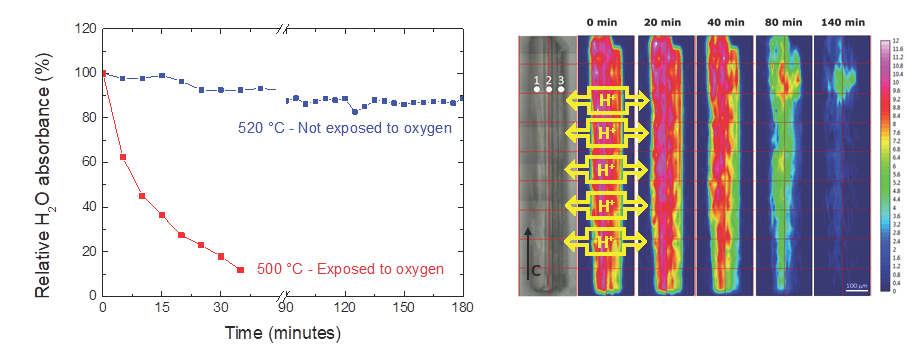
Amphiboles are important water carriers at depth; their dehydroxylation contributes to the lithospheric electrical conductivity. The FTIR study by Della Ventura et al. addresses the kinetics of dehydration in Fe-rich sodium amphiboles and shows that: (1) the H+ diffusion through the crystal is mainly perpendicular to the silicate double chains; (2) external oxygen is necessary for H+ to leave the crystal; and (3) the H+ release occurs at low activation energy, but its diffusion requires extra energy to be effective.
Ferro-tschermakite with polysomatic chain-width disorder identified in silician magnetite from Wirrda Well, South Australia: A HAADF STEM study
https://doi.org/10.2138/am-2022-7975
Scanning transmission electron microscopy using an HAADF detector enables unparalleled direct imaging of minerals and their intergrowths at the nanoscale, providing insights into petrological processes that cannot be otherwise constrained. Biopyriboles form a mineral group that combines T-sheet and -chain silicates and have been used to define polysomatism and derivation of modular series. No prior studies have addressed complex pyribole sequences, their degree of order and disorder, or the diverse range of defects present using HAADF STEM imaging. Ciobanu et al. identify ferro-tschermakite occurring as nanoinclusions in silician magnetite from Wirrda Well, South Australia, visualize the building blocks that define their crystal-structural modularity, characterize the polysomatic disorder, and discuss the petrogenetic significance of such nanoscale inclusions in the context of protracted igneous-metamorphic history.
NEW MINERAL NAMES
https://doi.org/10.2138/am-2022-NMN107411
New Mineral Names
« ‹ 1 … 35 36 37 38 39 … 85 › »ADDITIONAL RESOURCES