
Editor’s Notes
Total Results: 1697
Volume 107 : March 2022 Issue
Textural, fluid inclusion, and in-situ oxygen isotope studies of quartz: Constraints on vein formation, disequilibrium fractionation, and gold precipitation at the Bilihe gold deposit, Inner Mongolia, China
https://doi.org/10.2138/am-2021-7823
By study of quartz CL textures, fluid inclusion microthermometry, and in situ O-isotope analysis, Qiao et al. show the complicated quartz textures and fluctuating δ18O variations in Bilihe deposit, the disequilibrium oxygen isotopic fractionation between quartz and ore-forming fluid, and the influence of meteoric water on the mineralizing processes of porphyry gold deposits.
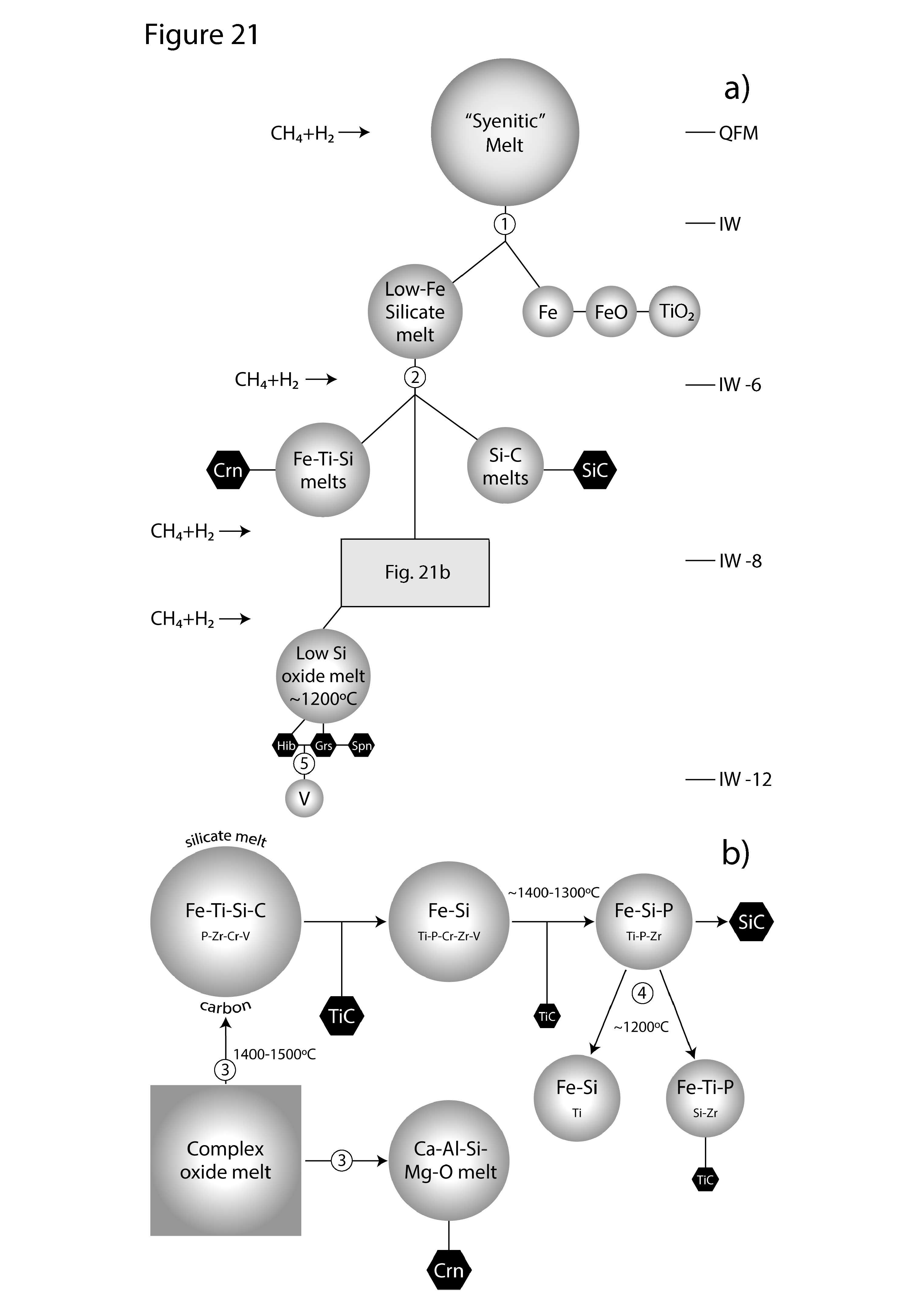
Immiscible metallic melts in the upper mantle beneath Mount Carmel, Israel: Silicides, phosphides, and carbides
https://doi.org/10.2138/am-2021-7934
Griffin et al. found aggregates of skeletal corundum crystals from pyroclastic volcanoes on Mt. Carmel, Israel, and trapped pockets of silicate melt with mineral assemblages that require a coexisting fluid dominated by methane and hydrogen. Balls of Fe-Ti-Zr silicides and phosphides represent immiscible melts that separated from the silicate melt. Microstructures in the silicide-melt inclusions show progressive further exsolution of more evolved melts, rich in Zr, P, and Ti, as temperature and oxygen fugacity decreased until crystallization was ended by explosive eruption.
Volume 107 : February 2022 Issue
Alumino-oxy-rossmanite from pegmatites in Variscan metamorphic rocks from Eibenstein an der Thaya, Lower Austria, Austria: A new tourmaline that represents the most Al-rich end-member composition
https://doi.org/10.2138/am-2022-8047
Ertl et al. investigated the new (pink) tourmaline alumino-oxy-rossmanite, which is the Al-richest known tourmaline. The significant content of tetrahedrally-coordinated Al is an indication for relatively high-temperature conditions (~700 °C) during formation of the pegmatite. Because of the low quantity of associated mica, the silica melt, which formed this pegmatite, may have crystallized under relatively dry conditions, in agreement with the observation that alumino-oxy-rossmanite contains a lower amount of OH than most other tourmalines. The geological unit, which contains the tourmaline-bearing pegmatites, consists of a thick crystalline complex and exposes medium- to high-grade metamorphic rocks with Paleoproterozoic to Devonian protolith ages. Such pegmatites could have formed from chemically simple metasediments during metamorphosis. Alumino-oxy-rossmanite was named because of its chemistry and was also named after Prof. George R. Rossman at the California Institute of Technology.
Fluorine partitioning between quadrilateral clinopyroxenes and melt
https://doi.org/10.2138/am-2021-7868
Baker et al. measured the partitioning of F between clinopyroxene and silicate melt in 13 experiments at a variety of pressures, temperatures, and melt compositions ranging from basaltic to dacitic at hydrous and anhydrous conditions. Additionally, they determined the crystal-melt partitioning of F for 4 experiments with plagioclase, 2 with orthopyroxene, and 1 with olivine. The clinopyroxene/melt partition coefficients of F were linearly dependent upon the concentration of aluminum in the octahedral M1 site of clinopyroxene. Similar relationships were seen in previous measurements of the fluorine partition coefficient between clinopyroxene and melt, but each study's correlation between the F partition coefficient and pyroxene chemistry was unique, apparently due to differing analytical protocols. Nevertheless, the authors conclude that the self-consistency of each study indicates that F partition coefficients determined using one protocol can be applied to minerals or glasses analyzed using the same protocol to better understand the storage and transport of fluorine in magmatic systems.
Multi-stage magma evolution recorded by apatite and zircon of adakite-like rocks: A case study from the Shatanjiao intrusion, Tongling region, Eastern China
https://doi.org/10.2138/am-2021-7871
Cao et al. report LA-ICP-MS zircon U-Pb ages as well as the trace element compositions and Sr isotopes of apatite from the Shatanjiao granites in the Tongling region, South China. Based on the obtained chemical compositions, they found that some specific elements in the apatite, such as Sr, Th, U, and REE, might provide a new insight on the magma evolutionary process from the perspective of apatite.
The physical and chemical evolution of magmatic fluids in near-solidus silicic magma reservoirs: Implications for the formation of pegmatites
https://doi.org/10.2138/am-2021-7915
"Over the past decades, magmas are increasingly recognized as being stored over long timescales in near-solidus crystal-rich ""mush"" systems. This concept provides a physical and mechanical framework for the chemical processes recorded in volcanic and plutonic rocks around the world. Troch et al. assess the implications of this model for the formation of pegmatites. Combining thermomechanical and trace element models suggests that pegmatites may be precipitated from a magmatic volatile phase and mark the magmatic-hydrothermal transition in a continuous crustal distillation column."
Texture, geochemistry, and geochronology of titanite and pyrite: Fingerprint of magmatic-hydrothermal fertile fluids in the Jiaodong Au province
https://doi.org/10.2138/am-2021-7889
Li et al. conducted textural, geochemical (LA-(MC)-ICPMS trace element, Nd and S isotopes) and geochronological (LA-ICPMS U-Pb dating) analyses of titanite and pyrite from monzonite in the Jiaodong Au province, China. Their main results are: (1) Different types of titanite (magmatic Ttn1 and hydrothermal Ttn2, Ttn3) and pyrite (magmatic Py1, Py4 and hydrothermal Py2, Py3) were distinguished; (2) Titanite and monazite U-Pb dating constrains the monzonitic magma and hydrothermal events to ca. 119 Ma; and (3) Fertile hydrothermal fluids were exsolved from the monzonitic magma at ca. 119 Ma, contributing to the gold mineralization.
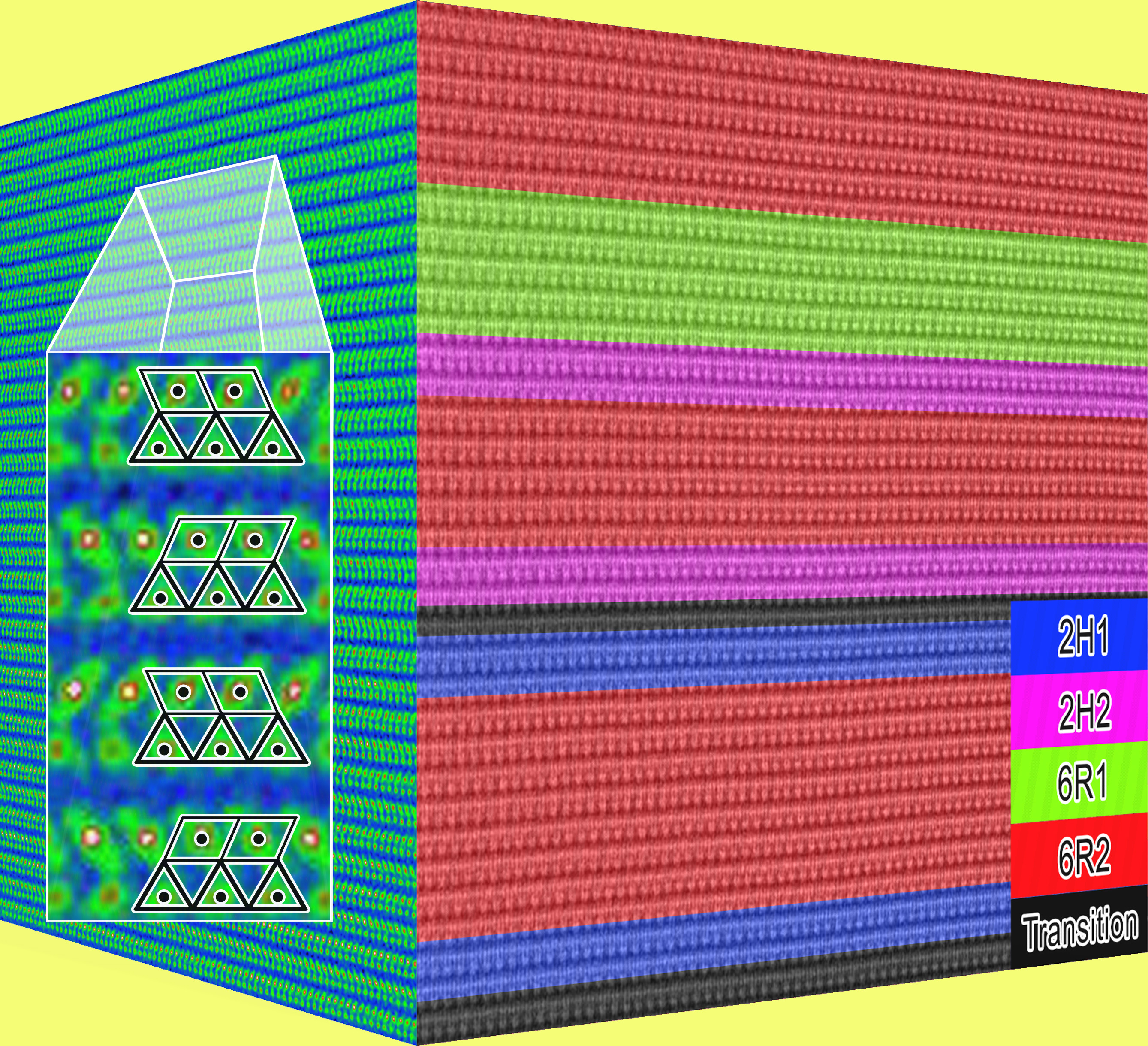
Polytypism in semi-disordered lizardite and amesite by low-dose HAADF-STEM
https://doi.org/10.2138/am-2021-7867
Zang et al. demonstrated the powerful imaging technique, low-dose annular dark-field scanning transmission electron microscopy, with 1-Å resolution of highly beam sensitive clay materials, and unraveled the short-range ordering in semi-disordered serpentine. Using this method, they visualized oxygen atomic columns, revealed within-sheet shifts, determined the prevalence of regular alternating octahedral tilts in lizardite and amesite, and resolved the ordered structure with long-period complex octahedral tilts in lizardite. This research lays the foundation for atomic and nano-scale characterization of the structures and microstructures of a wide variety of clays and other beam sensitive materials.
Peralkalinity in peraluminous granitic pegmatites. I. Evidence from whewellite and hydrogen carbonate in fluid inclusions
https://doi.org/10.2138/am-2021-7790
Carbonates and hydrogen carbonates have fairly often been reported to occur in spodumene-bearing and other peraluminous granitic pegmatites, mostly in fluid inclusions. Their origin is still unclear as these minerals do not form in granites. Liu et al. studied fluid inclusions in several pegmatite minerals (mostly from the Alto Ligonha Province, Mozambique) using Raman spectroscopy to determine the carbon species. Besides the ubiquitous CO2, they detected CH4 in the vapor phase, hydrogen carbonate in the aqueous liquid, a calcite-group mineral and, to their surprise, whewellite. The latter occurs in fluid inclusions in topaz from Khoroshiv (Volodarsk-Volynskii), Ukraine, and is the first report of an oxalate from a peraluminous granitic pegmatite. Whewellite forms in peralkaline pegmatites via reaction of reduced carbonaceus material with an alkaline fluid. Based on the detection of whewellite and hydrogen carbonate, they conclude that peralkaline fluid or melt can locally be present during the evolution of a peraluminous granitic pegmatite.
Peralkalinity in peraluminous granitic pegmatites. II. Evidence from experiments on carbonate formation in spodumene-bearing assemblages
https://doi.org/10.2138/am-2021-7909
Spodumene-hosted aqueous fluid inclusions can contain zabuyelite [Li2(CO3)], and additionally CO2, cookeite, quartz or cristobalite, albite, pollucite or analcime, and calcite. However, their origin is still unclear. Liu et al. used Raman spectroscopy combined with a hydrothermal diamond-anvil cell to study at which conditions carbonate and hydrogen carbonate can be generated from spodumene, CO2, and H2O. The obtained results indicate that the formation of carbonate (as zabuyelite and/or dissolved in the aqueous fluid) in spodumene+H2O+CO2-bearing assemblages requires a peralkaline fluid. They conclude that hydrogen carbonate-rich peralkaline fluid or melt may be involved in the evolution of a peraluminous granitic pegmatite. Note: Supplement added post-publication of pictures of spodumene.
Ab initio study of structural, elastic and thermodynamic properties of Fe3S at high pressure: Implications for planetary cores
https://doi.org/10.2138/am-2021-7268
Sulfur is potentially one of the most favored light elements to be alloyed with iron in terrestrial planetary cores. It is therefore of primary importance to constrain the physical properties of Fe-S alloys under extreme conditions. Valencia et al. present a detail study of several physical properties of the tetragonal phase of Fe3S at high pressure. They discuss variations of the thermodynamic, elastic and magnetic properties of this phase as a function of pressure as well as the behavior of sound velocities with direction of propagation and magnetic effects. They use these results to discuss the possibility of Fe3S being a crystalline phase within Earth's inner core and Mars core. They estimate the amount of sulfur that could be present in the core if this phase is present together with pure Fe.
Removal of barite from zircon using an aqueous solution of diethylenetriaminepentaacetic acid and potassium carbonate
https://doi.org/10.2138/am-2021-7906
In most geologic applications, if barite is present, it must be separated from zircon to enable analysis of the zircon. Current methods of barite removal include mechanical comminution in a ball mill or conversion to barium carbonate by boiling in an aqueous solution of sodium carbonate. Martin and Rocha-Estopier optimized an alternative technique for barite removal. In repeated experiments, boiling for one hour in an aqueous solution of DTPA and potassium carbonate dissolved about 90% of sand-size barite grains. This solution attacked the surfaces of barite crystals and it did not attack the surfaces of zircon crystals at the microscopic level.
Improving grain size analysis using computer vision techniques and implications for grain growth kinetics
https://doi.org/10.2138/am-2021-7797
Ezad et al. has investigated the reliability of grain size analysis from 2D photomicrograph images and find researcher bias in oversampling large grains and entirely missing small ones. This leads to discrepancies in the average grain size of greater than 5%, for multiple expert researchers analyzing the same photomicrograph. To reduce human bias and speed up the laborious process of image analysis, they developed an alternative automated user-friendly workflow to analyze and report grain size, at a fraction of the time required through manual image processing. Their new automated workflow increases the number of grains identified and indexed by 68%, compared to the same images analyzed through old manual techniques. Additionally, they report smaller errors on the estimated average grain size and provide a consistent and transparent method of grain size analysis. Their workflow is available via GitHub for automated, reproduceable grain size analysis from 2D images.
Crystal chemistry of arsenian pyrites: A Raman spectroscopic study
https://doi.org/10.2138/am-2021-7806
Zhang et al. investigated the occurring modes of As within natural arsenian pyrite and presented direct Raman evidence for the As-induced structural variations in pyrite. The key findings are: (1) The wavenumbers of Raman vibrational modes vary approximately linearly with the As content in pyrite, correlating with the change in bond constants with increasing substitution of As for S; and (2) The linewidth of the Raman vibrational mode increases with increasing As content in pyrite, which is attributed to the increase in lattice strain associated with the substitution of As for S. These findings (1) highlight the significance of systematic Raman spectroscopic investigation in interpreting the effects of elemental substitution on the structure; (2) advance the understanding of the enrichment mechanism of valuable metals in sulfides; and (3) provide guidance on controlling the release of toxic heavy ions into the environment.
Formation of the Maoniuping giant REE deposit: Constraints from mineralogy and in situ bastnäsite U-Pb geochronology
https://doi.org/10.2138/am-2021-7778
Weng et al. investigated the time and processes of hydrothermal mineralization in the Maoniuping giant rare earth elements (REE) deposit, China. Major results include: (1) Magmatic and hydrothermal bastnasite from the Maoniuping giant REE deposit has been recognized, with U-Pb ages ranging from 28.2 Ma to 25.8 Ma; (2) Clinopyroxene and apatite compositions provide supporting for the separation of pegmatite dikes from the carbonatite rather than the syenite; (3) A continuous magmatic-hydrothermal mineralization model during the evolution of alkaline-carbonatite complex from the Maoniuping giant REE deposit was proposed; and (4) Bastnasite can be used as a powerful mineral proxy for magmatic-hydrothermal evolution and associated REE mineralization in alkaline-carbonatite complexes.
Amphibole as a witness of chromitite formation and fluid metasomatism in ophiolites
https://doi.org/10.2138/am-2021-7593
Pan et al. present new occurrences of amphibole in a suite of chromitites, dunites and harzburgites from the mantle sequence of the Lycian ophiolite in the Tauride Belt, Turkey. The amphibole occurs both as interstitial grains among the major constituent minerals and as inclusions in chromite grains. A comparison of amphibole inclusions in chromite with interstitial grains provides direct evidence for the involvement of water in chromitite formation and the presence of hydrous melt/fluid metasomatism in the peridotites during initial subduction of Neo-Tethyan oceanic lithosphere. The hydrous melts/fluids were released from the chromitites after being collected on chromite surfaces during crystallization. Considering the wide distribution of podiform chromitites in this ophiolite, the link between chromitite formation and melt/fluid metasomatism may be applicable to other ophiolites worldwide.
Ferro-papikeite, ideally NaFe22+(Fe32+Al2)(Si5Al3)O22(OH)2, a new orthorhombic amphibole from Nordmark (Western Bergslagen), Sweden: Description and crystal structure
https://doi.org/10.2138/am-2021-7877
The orthorhombic Mg-Fe-Mn amphiboles are very common rock-forming minerals in a variety of metamorphic and igneous rocks. Low-Na compositions are extremely common, but high-Na compositions are less common, and have a rather grey and hidden existence in the scientific literature as they have no mineral names. With the characterization of ferro-papikeite as an IMA-approved mineral species by Hawthorne et al., amphiboles of these compositions will become much more visible in the literature and their significance can begin to be understood. In particular, the authors show that the parallels between monoclinic and orthorhombic amphiboles are even stronger than previously realized and provide an understanding of why compositions in the fields of edenite and rootname 1 are of considerable interest, both with regard to the stability of the amphibole structure as a function of chemical composition and the possible relations to the carcinogenic properties of fibrous fluoro-edenite.
HP-PdF2-type FeCl2 as a potential Cl-carrier in the deep Earth
https://doi.org/10.2138/am-2022-8283
Hydrogen and chlorine cycles are closely related via subduction into the Earth's mantle. The actual budget and distribution of H and Cl in the deep Earth remains an open question, partly due to the lack of knowledge on the deep geological processes. Yuan et al. report the discovery of a dense cubic HP-PbF2-type FeCl2 phase, through reactions between Fe-bearing silicate/hydroxide and NaCl in a diamond anvil cell under hydrous deep lower mantle conditions. They present evidence of HP-PbF2-type FeCl2 phase coexisting with a major mineral, Na,Fe-bearing MgSiO3 post-perovskite, in the lowermost mantle. Combining with previous observation of a highly stable hydroxide FeO2Hx with the identical symmetry of Pa-3, they suggest that this topology is an important hosting candidate for storage of both H and Cl. The possible presence of volatiles such as H and Cl could likely change the composition and iron valence state in post-perovskite in the lowermost mantle.
Volume 107 : January 2022 Issue
MSA at 100 and why optical mineralogy still matters: The optical properties of talc
https://doi.org/10.2138/am-2022-8066
This open access paper by Mickey E. Gunter memorializes MSA’s 100th anniversary, reminds us why optical mineralogy still matters and provides original data for the optical properties of talc.
Boron isotope compositions establish the origin of marble from metamorphic complexes: Québec, New York, and Sri Lanka
https://doi.org/10.2138/am-2021-7811
Boron abundances and isotopic signatures, along with other geochemical data, are used in this study by Kuebler et al. to determine the origin of multi-colored marble units found in both the Grenville Province and southwestern Sri Lanka. Samples from the Grenville Province represent marble formed during high-temperature metamorphism of limestone units. Sri Lankan samples were formed from carbonate-rich and B-11-poor fluids derived from a crustal source. This work establishes three isotopically distinct fields for carbonate: mantle-derived, sedimentary, and metasedimentary.
« ‹ 1 … 37 38 39 40 41 … 85 › »ADDITIONAL RESOURCES