
Editor’s Notes
Total Results: 1697
Volume 106 : April 2021 Issue
Effect of cationic substitution on the pressure-induced phase transitions in calcium carbonate
https://doi.org/10.2138/am-2021-7547
Martirosyan et al. studied a member of the (Ca,Sr)CO3 solid solution series using in situ Raman spectroscopy at pressures up to 55 GPa and temperatures up to 1273 K. They observed crystallization of the CaCO3-II-type structure at 1273 K and 2 GPa. A new high-pressure modification, Sr-calcite-IIIc, was detected at 7-14 GPa. Thus, substitution of Ca2+ with Sr2+ promotes the formation of structures with larger cation coordination numbers such as aragonite, CaCO3-VII, and post-aragonite at lower P-T conditions compared to pure CaCO3.
Immiscible-melt inclusions in corundum megacrysts: Microanalyses and geological implications
https://doi.org/10.2138/am-2020-7347
Xu et al. identified two types of inclusions in the corundum megacrysts from Changle, China. Type I inclusion consists of a dark part (DP) and a bright part (BP), which were formed due to liquid immiscibility at ~1200 C; the former is composed of quartz, corundum, and amorphous substance-1, and the latter is composed of baddeleyite and amorphous substance-2. Type II inclusion is composed of zircon, quartz, and amorphous substance-3. The novel inclusions, together with other previously found mineral inclusions in Changle corundum, demonstrate that both the alkaline felsic melt and carbonatitic melt existed, and they derived from metasomatized mantle. The ages of zircon inclusions show that the corundum megacrysts crystallized from syenitic-type differentiated of earlier underplated basalts at the crust-mantle boundary and were brought up by later episodic basalt eruptions.
Water quantification in olivine and wadsleyite by Raman spectroscopy and study of errors and uncertainties
https://doi.org/10.2138/am-2021-7264
Martinek and Balfan-Casanova demonstrate that Raman spectroscopy allows the study of water quantification in different phases of fine polymineralic samples of complex composition, with a wide range of measurable water contents. The water contents of olivine and wadsleyite can be measured using this method with a simple sample preparation. Despite being around 25%, the uncertainties on water concentration are sufficiently low to infer the presence of dehydration that was induced by melting or other geologic processes.
High-pressure and high-temperature vibrational properties and anharmonicity of carbonate minerals up to 6 GPa and 500 °C by Raman spectroscopy
https://doi.org/10.2138/am-2020-7404
Carbonate minerals play a dominant role in the deep carbon cycle. Farsang et al. measured the high-pressure and high-temperature vibrational properties of all aragonite-group and calcite-group carbonate minerals up to 6 GPa and 500 C by Raman spectroscopy in order to understand their anharmonicity under crustal and upper mantle conditions.
Vanadium-induced coloration in grossite (CaAl4O7) and hibonite (CaAl12O19)
https://doi.org/10.2138/am-2020-7544
Ardit et al. studied the unusual coloration in hibonite (purple) and grossite (light violet) crystals, caused by high concentrations of vanadium. Characterization of these specimens by means of single-crystal X-ray diffraction and absorption spectroscopy (aided by EMPA chemical analyses) provides information of both long- and short-range characteristics of their crystal structures.
Incorporation mechanism of tungsten in W-Fe-Cr-V-bearing rutile
https://doi.org/10.2138/am-2021-7653
Majzlan et al. examined the position of tungsten in the structures of two common minerals, rutile and hematite. It is of interest because these and related minerals serve as vehicles that enrich the sediments in the element tungsten. These sediments can be later melted and transformed into fertile magmas that form ore deposits. Tungsten was found to enter the structure of rutile, but in hematite, there exist nanoinclusions of iron-tungsten oxide intergrown with the host mineral. Rutile is a better vehicle for tungsten; hematite can serve as such under specific moderately reducing conditions.
Titanium diffusion profiles and melt inclusion chemistry and morphology in quartz from the Tshirege Member of the Bandelier Tuff
https://doi.org/10.2138/am-2021-7395
Boro et al. describe that melt Inclusions in quartz from the chemically zoned Tshirege Member of the Bandelier Tuff record the compositional evolution of a caldera-forming magma chamber. Variable melt inclusion faceting suggests timescales of millennia for crystal mush generation and crystal storage. Titanium concentration zoning in quartz suggests shorter timescales of decades to centuries for recharge and mobilization of said mush to produce an eruptible, zoned magma body.
Vasilseverginite, Cu9O4(AsO4)2(SO4)2, a new fumarolic mineral with a hybrid structure containing novel anion-centered tetrahedral structural units
https://doi.org/10.2138/am-2020-7611
Pekov et al. describe the unique structure of a new mineral, vasilseverginite Cu9O4(AsO4)2(SO4)2, which can be considered as a hybrid of the structures of popovite Cu5O2(AsO4)2 and dolerophanite Cu2O(SO4). The concept of hybridization of mineral species developed in this study may give new ideas for the preparation of novel structural architectures on the border of stability fields of chemically and structurally simpler compounds. The discovery of vasilseverginite indicates the existence of polynuclear oxocentered copper clusters in a gaseous phase, which may be a form of transport of Cu by volcanic gases.
Priscillagrewite-(Y), (Ca2Y)Zr2Al3O12: A new garnet of the bitikleite group from the Daba-Siwaqa area, the Hatrurim Complex, Jordan
https://doi.org/10.2138/am-2021-7692
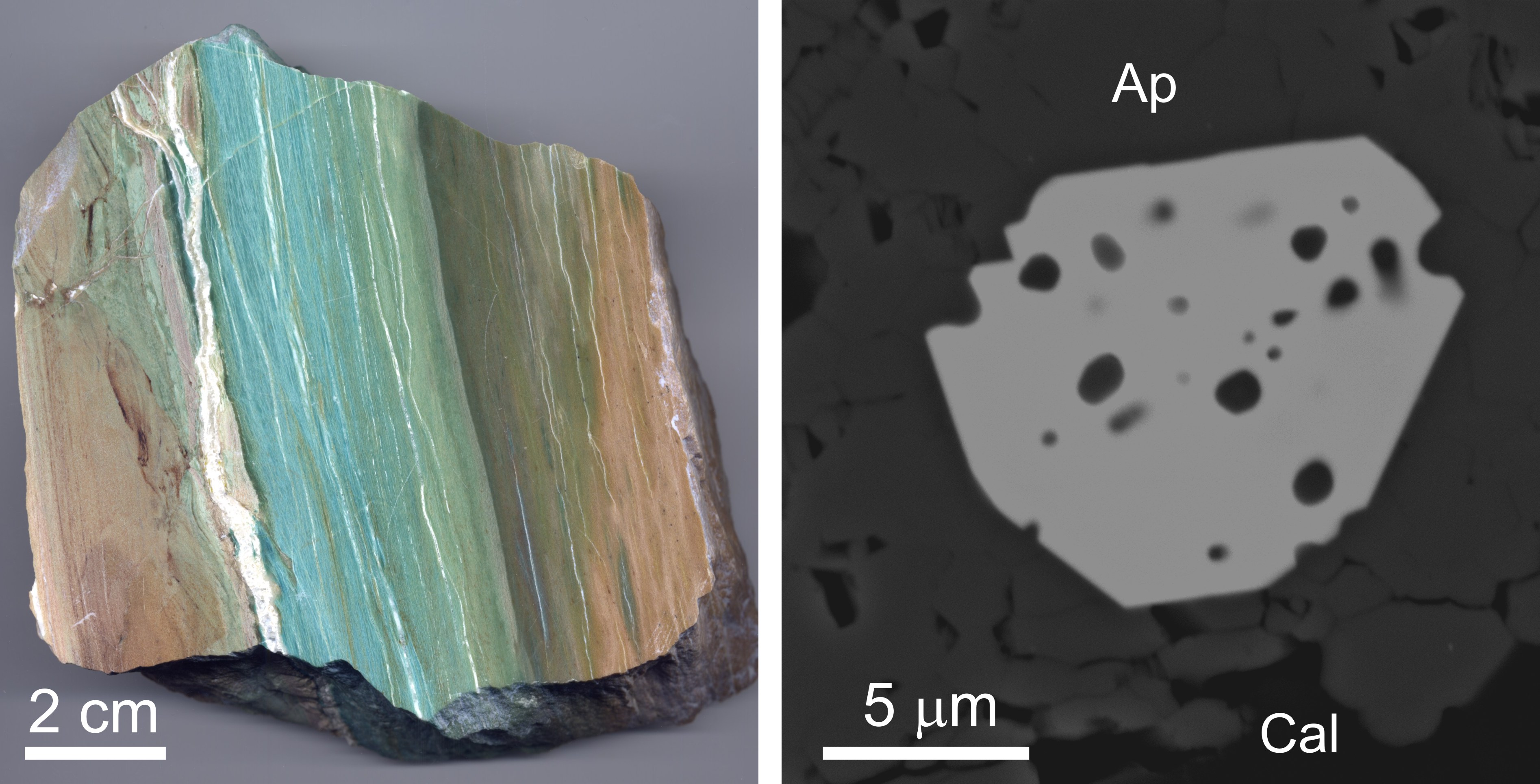
Galuskina et al. report the discovery of a new garnet, priscillagreowte-(Y), belonging to the bitikleite group of the garnet supergroup. The mineral was found in apatite-bearing varicolored spurrite marble in the Daba-Siwaqa area, central Jordan. Priscillagrewite-(Y) is interpreted to be a relic of the high-temperature association formed in the progressive stage of the peak pyrometamorphism conditions, when the temperature could have reached close to 1000 C. The authors suggest that there is a reasonable chance of finding priscillagrewite-(Y) in ultrarefractory calcium-aluminum-rich inclusions from chondrites, then it can be the third garnet species originating in the solar nebula.
Stöfflerite, (Ca,Na)(Si,Al)4O8 in the hollandite structure: A new high-pressure polymorph of anorthite from martian meteorite NWA 856
https://doi.org/10.2138/am-2021-7563
Stoefflerite is the high-pressure polymorph of anorthite. Tschauner et al. show that in Earth's transition zone, it is a component of the important carrier of K, liebermannite. In shock-metamorphic environments, it marks high-pressures at temperatures above the Hugoniot but below formation of stable phases.
Recycled volatiles determine fertility of porphyry deposits in collisional settings
https://doi.org/10.2138/am-2021-7714
There have long been debates about whether copper and gold come from the mantle or crust. Previous hypotheses dominantly relied on the metal concentration, which is lower in both Earth's mantle and crust. The volatile elements Cl and S are the most important factors controlling the transport of ore metals in magma; therefore, their source and evolution can be a key to understanding the genesis of Cu-Au deposits. Xu et al. show that geochemical and Rb-Sr isotopic data on apatite from 12 porphyry systems across Iran, Tibet, and western China, can distinguish fertile magmas from barren magmatic suites and indicate the importance of volatiles, recycled from previous oceanic subduction, in collisional settings. This study is of importance to the Earth's volatile evolution and economic geologists.
Nitrogen diffusion in silicate melts under reducing conditions
https://doi.org/10.2138/am-2021-7799CCBYNCND
Nitrogen and argon are the two most abundant elements in the current atmosphere, but the elemental composition of Earth's interior and surficial reservoirs may have evolved over time. In this study, Boulliung et al. provide the first constraints on nitrogen diffusion in natural-like silicate melt with implications on N/Ar fractionation during reducing magmatic events, such as Earth's magma ocean stage. The result implies a N/Ar fractionation during reducing magmatic events, such as Earth's magma ocean stage.
Volume 106 : March 2021 Issue
An evolutionary system of mineralogy. Part III: Primary chondrule mineralogy (4566 to 4561 Ma)
https://doi.org/10.2138/am-2020-7564
The evolutionary system of mineralogy relies on varied physical and chemical attributes, including trace elements, isotopes, solid and fluid inclusions, and other information-rich characteristics. To understand processes of mineral formation and to place natural condensed phases in the deep-time context of planetary evolution, Hazen et al. add Part III of their evolutionary system that considers the formation of 43 different primary mineral phases in chondrules, which are igneous droplets that formed early in the history of the solar system, more than 4.56 billion years ago.
Raman spectroscopy study of manganese oxides: Layer structures
https://doi.org/10.2138/am-2021-7666
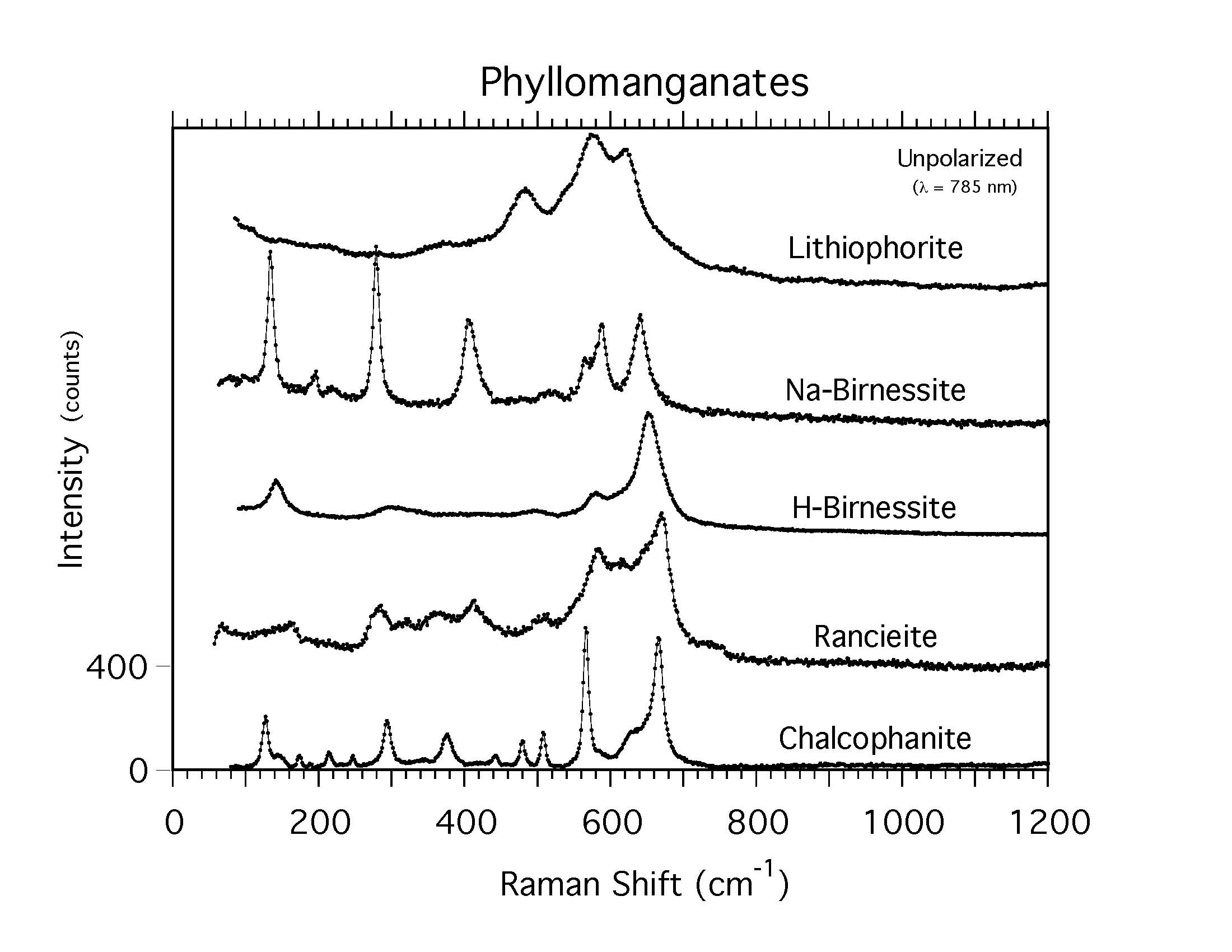
Micro-Raman is a powerful tool for identification and characterization of biotic and abiotic Mn oxide phases from diverse natural settings (including on other planets) and thereby can provide new insights into the roles of these phases in our environment. Post et al. provide results from what they believe is the most comprehensive analysis of the Raman spectra for layer-structure Mn oxide phases to date, collected from a large number and variety of natural and synthetic samples, drawing from the Smithsonian Institution's extensive collection of Mn oxide specimens, and elsewhere. In many cases, the specimens have been characterized in detail using supplementary techniques. Additionally, Post et al. present representative spectra from different specimens, localities, and crystal orientations. A major goal of this study is to provide a comprehensive base of information (a spectral database is provided as supplementary data) that can be used for identifying the various Mn oxide mineral phases, with an emphasis on natural samples. Finally, Post et al. explore spectral trends for some specific phases that provide insights about composition, crystal structure, symmetry, and in some circumstances, Mn oxidation states.
Raman signatures of the distortion and stability of MgCO3 to 75 GPa
https://doi.org/10.2138/am-2020-7490
Zhao et al. report the Raman modes of natural magnesite, MgCO3 , up to 75 GPa at room temperature. They detected abnormal behavior in MgCO3, including the splitting of Raman peaks of T and v4 modes at approximately 30 and 50 GPa, respectively. The phenomena are assigned as MgCO3-Ib and MgCO3-Ic produced by the rotation of MgO6 octahedra. The distorted environment of the chemical bond would greatly improve the stability of magnesite over a large pressure and temperature range in relation to its melting or decomposition. Both experimental and theoretical evidence indicates that the diversity of distorted structural environments, including corner-sharing CO4 tetrahedra forming C3O9 three-membered rings. Compared to the low-pressure threefold coordinated carbonates (CO3)2-triangles in the structure, the tetrahedrally coordinated carbonates are expected to exhibit substantially different reactivity and different chemical properties in the liquid state. These crystallographic characteristics in carbonates may play an important role in deep carbon reservoirs and fluxes in the deep Earth. Furthermore, the bonding strength in MgCO3 changes through lattice distortion and structural transition, likely impacting the distribution of carbon and magnesium isotopes in the deep mantle.
Competitive adsorption geometries for the arsenate As(V) and phosphate P(V) oxyanions on magnetite surfaces: Experiments and theory
https://doi.org/10.2138/am-2020-7350
Adsorption of arsenate and phosphate on magnetite was studied by Liang et al. using in situ ATR and 2D-COS. Monodentate mononuclear and bidentate binuclear complexes dominate in phosphate adsorption. Arsenate forms bidentate binuclear complexes with fewer outer-sphere species. Arsenate displays a higher competitive ability than phosphate. The competitive ability is related to adsorption geometry and the heterogeneity of surface active sites.
Probing the transformation paths from aluminum (oxy)hydroxides (boehmite, bayerite, and gibbsite) to metastable alumina: A view from high-resolution 27Al MAS NMR
https://doi.org/10.2138/am-2020-7481
Kim and Lee investigated the dehydration paths to metastable alumina from various aluminum (oxy)hydroxide precursors (i.e., boehmite, bayerite, and gibbsite) in the low-temperature range (~300 °C) using high-resolution 27Al NMR. The results confirm that the phase transformation paths depend on the type of precursor minerals. The precursor-dependent structural evolution in the low-temperature range helps to understand the geological processes involving metastable phases and their dehydration in the Earth's surface environments.
Crystal structures of K-cymrite and kokchetavite from single-crystal X-ray diffraction
https://doi.org/10.2138/am-2020-7407
Romanenko et al. report their investigation of K-cymrite (KAlSi3O8+H2O) and kokchetavite (KAlSi3O8, IMA-2004-011), which were earlier identified as mineral inclusions in ultra-high pressure metamorphic crustal rocks. However, their crystal structures previously were only guessed on the basis of powder X-ray diffraction patterns. Romanenko et al. present the crystal structures of K-cymrite and kokchetavite by single-crystal X-ray diffraction. For kokchetavite a new space group and unit cell were identified. In addition, the spectroscopic and Thermogravitational data provide important information for the identification and interpretation of these phases in mineral inclusions.
Fluid source and metal precipitation mechanism of sediment-hosted Chang’an orogenic gold deposit, SW China: Constraints from sulfide texture, trace element, S, Pb, and He-Ar isotopes and calcite C-O isotopes
https://doi.org/10.2138/am-2020-7508
Yang et al. highlight that ore metals in sediment-hosted disseminated orogenic gold deposits can be sourced from both deep fluids and local wallrock and that fluid-rock interaction behaved as a key control on ore precipitation.
Iron isotope fractionation in reduced hydrothermal gold deposits: A case study of the Wulong gold deposit, Liaodong Peninsula, East China
https://doi.org/10.2138/am-2020-7534
Pyrite and pyrrhotite are the major Fe-bearing minerals of the quartz-sulfide veins in the Wulong reduced gold deposit. Iron isotope fractionation modeling by Zheng et al. shows that under relatively low oxygen fugacity conditions, pyrrhotite with light δ56Fe crystallized first from the initial ore-forming fluids, resulting in ore-forming fluids with elevated δ56Fe values. Due to an increase of oxygen fugacity, pyrite with heavy δ56Fe started to precipitate later. The iron isotopic compositions provide a new perspective for the initial redox conditions and evolution of the Wulong gold deposit, which are important to trace the source of ore-forming materials and further exploration.
« ‹ 1 … 45 46 47 48 49 … 85 › »ADDITIONAL RESOURCES