

Editor’s Notes
Total Results: 1697
Volume 105 : August 2020 Issue
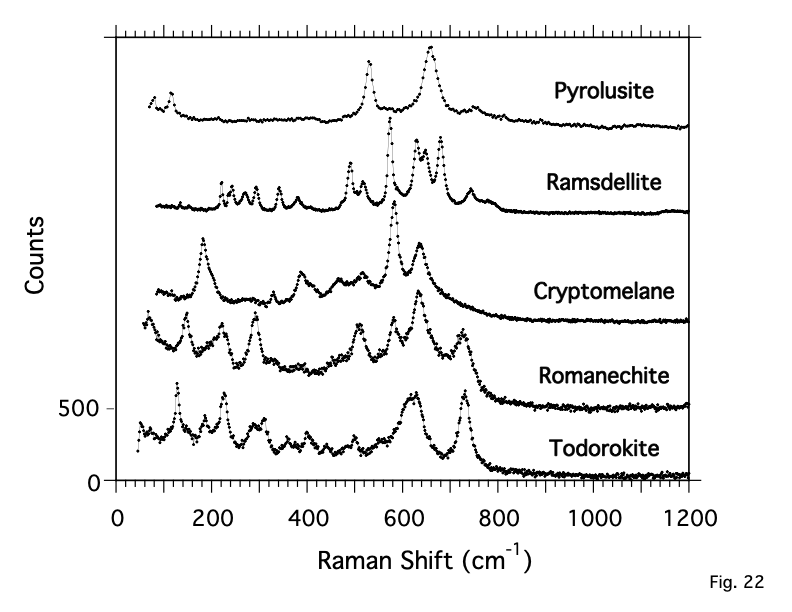
Raman spectroscopy study of manganese oxides: Tunnel structures
https://doi.org/10.2138/am-2020-7390
With the comprehensive Raman database of well-characterized Mn oxide standards, reported here (and as supplementary data) by Post et al., and use of appropriate data collection conditions, micro-Raman is a powerful tool for identification and characterization of biotic and abiotic Mn oxide phases from diverse natural settings (including on other planets) and thereby can provide new insights into the roles of these phases in our environment.
Experimental constraints on the partial melting of sediment-metasomatized lithospheric mantle in subduction zones
https://doi.org/10.2138/am-2020-7403
Zhang et al. performed high-pressure experiments in sediment-harzburgite systems at 1.5-2.5 GPa and 800-1300 °C to investigate the partial melting behavior of mixed sediment-harzburgite. The results demonstrate that bulk sediment diapirs, in addition to sediment melt, may be another possible mechanism to transfer material from a subducting slab to an upper mantle wedge or lithospheric mantle. On the other hand, the breakdown of phlogopite may play an important role in the mantle source that produces potassium-rich arc lavas in subduction zones.
Interlayer energy of pyrophyllite: Implications for macroscopic friction
https://doi.org/10.2138/am-2020-7333
The origin of macroscopic friction of clay minerals is one of the most crucial problems to be solved in the geoscience to understand the fault behavior in the crust. Low frictional strength of clay minerals seems to originate from the crystal structure; however, the underlying physics remains unclear. Here, Sakuma et al. succeed in bridging the gap by conducting the ab initio calculations and developing a simple model of randomly oriented pyrophyllite particles. This result would be a basis for future studies on the frictional properties of clay minerals in natural faults.
Thermodynamic and thermoelastic properties of wurtzite-ZnS by density functional theory
https://doi.org/10.2138/am-2020-7330
Since wurtzite is an important mineral in scientific and technological fields spanning from geology/mineralogy to materials science, this work by Ulian et al. aims at providing deep insights into its thermodynamic, thermomechanic, and electronic properties at pressures up to 20 GPa and temperatures between 0 to 2000 K for various applications. Several properties, such as phonon dispersion relations, elastic and piezoelectric constants, thermodynamic and thermoelastic behaviors were calculated and reported.
The nature of Zn-phyllosilicates in the nonsulfide Mina Grande and Cristal zinc deposits (Bongará District, Northern Peru): The TEM-HRTEM and AEM perspective
https://doi.org/10.2138/am-2020-7140
Balassone et al. conducted a detailed TEM-HRTEM and AEM study of Zn-phyllosilicates in Mina Grande and Cristal Zn-sulfide and nonsulfide deposits of Bongara district, Amazonas region, Peru. They determined the amount/mode of metal incorporation in the lattices of Zn-phyllosilicates and the relationships of natural occurring clay-rich complex associations, which can act as models for possible synthetic counterparts.
Orthovanadate wakefieldite-(Ce) in symplectites replacing vanadium-bearing omphacite in the ultra-oxidized manganese deposit of Praborna (Aosta Valley, Western Italian Alps)
https://doi.org/10.2138/am-2020-7219
This study by Tumiati et al. focuses on the occurrence of Ca-bearing REE orthovanadate wakefieldite in the Italian Western Alps. The authors identified wakefieldite and refined its structure following a cutting-edge approach, using a single ~10 micrometer-sized crystal and synchrotron X-ray microdiffraction on a fragment of thin section. In addition, they performed WDS-microprobe analyses, micro-Raman spectroscopy, and thermodynamic modeling.
A simple and effective capsule sealing technique for hydrothermal experiments
https://doi.org/10.2138/am-2020-7230
Capsule sealing has always been a key procedure in hydrothermal experiments to explore the composition and properties of geo-fluids and their influence on various geological processes. Previously reported capsule sealing techniques have primarily focused on either weld-sealing or cold-sealing methods, which have some disadvantages and limitations. Here, Li et al. report on a newly developed, simple, and effective capsule sealing technique incorporating operations from the cold-sealing and weld-sealing techniques. The sealed capsules are suitable not only for piston cylinders but also for multi-anvil presses and other gas-media or hydrothermal-media apparatuses, such as autoclaves and pressure vessels.
Metamorphic amphiboles in the Ironwood Iron-Formation, Gogebic Iron Range, Wisconsin: Implications for potential resource development
https://doi.org/10.2138/am-2020-7211
This paper by Green et al. characterizes the metamorphic amphiboles in the Ironwood Iron-Formation in northern Wisconsin. The Ironwood is one of the largest iron ore resources in the U.S., but the lack of definitive, unbiased information regarding the presence of amphiboles and their potential human-health impacts has been a source of great controversy. The authors present data that will allow further mineralogical, medical, and biological work to aid in understanding the potential impacts of developing iron resources affected by metamorphism.
The chlorine-isotopic composition of lunar KREEP from magnesian-suite troctolite 76535
https://doi.org/10.2138/am-2020-7467
To characterize the isotopic composition of KREEP, a primordial geochemical reservoir enriched in incompatible lithophile elements, McCubbin and Barnes conducted in-situ Cl isotopic measurements of apatite within intercumulus regions and within a holocrystalline olivine-hosted melt inclusion in magnesian-suite troctolite 76535 from Apollo 17. The isotopic composition of Cl from this reservoir indicates volatile-loss from the Moon occurred prior to 4.31 Ga.
NEW MINERAL NAMES
https://doi.org/10.2138/am-2020-NMN105819
New Mineral Names
Volume 105 : July 2020 Issue
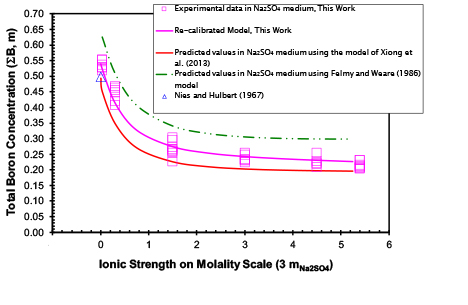
Experimental determination of the solubility constant of kurnakovite, MgB3O3(OH)5·5H2O
https://doi.org/10.2138/am-2020-7212
Xiong et al. first highlight that the solubility constant for Kurnakovite has been experimentally determined. Second, they note that a precise model describing the interactions between borate and sulfate is established.
Elastic properties of majoritic garnet inclusions in diamonds and the seismic signature of pyroxenites in the Earth’s upper mantle
https://doi.org/10.2138/am-2020-7136CCBY
Koemets et al. report seismic velocities of natural majoritie garnets and use this information to evaluate the seismic signature of a possible pyroxenitic garnet layer in Earth’s mantle.
Establishing a protocol for the selection of zircon inclusions in garnet for Raman thermobarometry
https://doi.org/10.2138/am-2020-7246
Campomenosi et al. present a systematic study of zircon inclusions coupling structural and chemical information by combining a wide range of analytical techniques (Raman spectroscopy, CC-imaging, and LA-ICP-MS) to define how the degree of metamictization, their inherent structural heterogeneity, chemical zonation, and metamorphic recrystallization processes can influence the Raman spectra of zircon. The experimental results allowed them to establish a protocol devoted to the selection of reliable buried zircon inclusions to use for elastic barometry applications relying only on Raman spectroscopic measurements.
Reversely zoned plagioclase in lower crustal meta-anorthosites: An indicator of multistage fracturing and metamorphism in the lower crust
https://doi.org/10.2138/am-2020-7284
Soda et al. describe the formation mechanism of reversely zoned plagioclase, which has been observed frequently in lower crustal shear zones, by studying the microstructural and chemical characteristics of plagioclase from the Eidsfjord shear zone, northern Norway. The reversely zoned plagioclase is an indicator of multistage, brittle fracturing and subsequent hydration metamorphism during exhumation, providing information relevant to understanding the deep rupture process caused by repeated seismicity alternating with aseismic creep below the seismogenic zone.
High-pressure silica phase transitions: Implications for deep mantle dynamics and silica crystallization in the protocore
https://doi.org/10.2138/am-2020-7299
Das et al. improved the constraints on the pressure-temperature locations and slopes by first-principles atomistic computations of two silica phase transitions occurring at the lowermost mantle and outer core conditions: (1) beta-stishovite (CaCl2-structure) to seifertite and (2) seifertite to pyrite-structured silica. Seifertite has a wide stability range, covering the lowermost 470 km of the mantle. The resulting incremental density increase for recycled oceanic crust might help to segregate and stabilize basaltic materials in the two thermochemical piles beneath Africa and the Pacific.
The Cr-Zr-Ca armalcolite in lunar rocks is loveringite: Constraints from electron backscatter diffraction measurements
https://doi.org/10.2138/am-2020-7260
The compositional and EBSD study by Zhang et al. reveals that Cr-Zr-Ca armalcolite in lunar rocks should be loveringite, which could be an important mineral indicator and REE carrier of lunar Mg-suite rocks.
Effects of composition and pressure on electronic states of iron in bridgmanite
https://doi.org/10.2138/am-2020-7309
The amount, valence, spin state, and site occupancy of iron in Earth’s most abundant mineral, bridgmanite, potentially controls dynamics and physical properties of heterogeneities in the lower mantle. Electronic states of iron in bridgmanite were probed by Dorfman et al. via Mossbauer spectroscopy for a wide range of compositions. The results provide constraints on the effects of pressure and composition on spin state, valence state, and charge transfer in bridgmanite in Earth’s mantle.
Ti diffusion in feldspar
https://doi.org/10.2138/am-2020-7272
These data by Cherniak and Watson indicate that Ti diffuses more slowly than most other impurities in feldspar, including Sr. For plagioclase, there is a dependence of Ti diffusion on feldspar An content, with more anorthitic feldspars having slower Ti diffusivities. Characterization of diffusivities for this trace impurity, which is relatively slow-diffusing and ubiquitous in feldspars, has the potential to expand the scope and applicability of modeling of time-temperature conditions for crustal rocks.
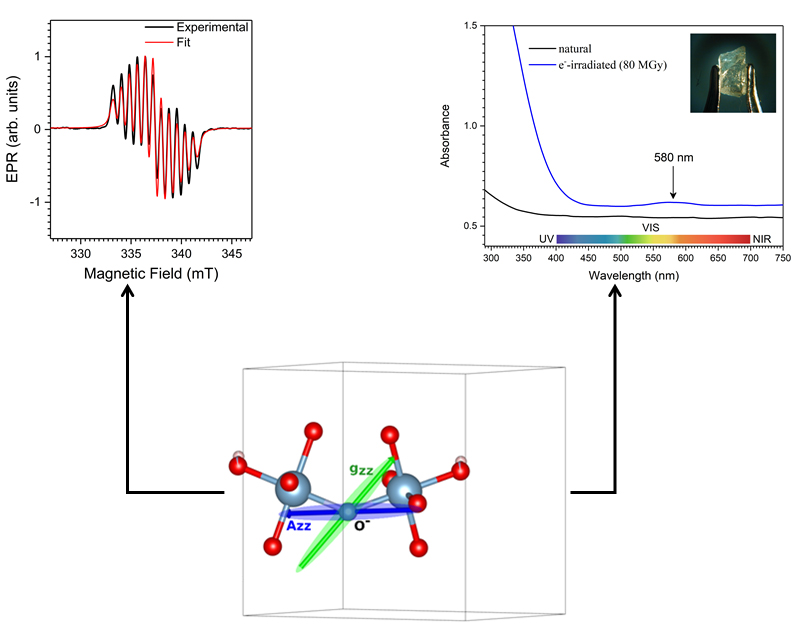
Radiation-induced defects in montebrasite: An electron paramagnetic resonance study of O– hole and Ti3+ electron centers
https://doi.org/10.2138/am-2020-7168
Toledo et al. detail color improvements of the rare gemstone montebrasite and related minerals that contain hydroxyl ions in their crystalline structure. From detailed analysis of the EPR angular rotation patterns, microscopic models for the O− hole and Ti3+ electron centers are presented, as well as their role in the formation of color centers is discussed and compared to other minerals.
New IR spectroscopic data for determination of water abundances in hydrous pantelleritic glasses
https://doi.org/10.2138/am-2020-7363
In view of the scarcity of data on peralkaline rhyolitic compositions compared with metaluminous rhyolites, new experimental data are provided by Stabile et al. that allow the use of IR spectroscopy to measure water abundance in melt inclusions in natural glasses and water content in hydrous experimental glasses of pantelleritic composition. Such compositions, once thought to be relatively H2O-poor, may have water contents as high as 5-6 wt% H2O, which needs to be considered to better gain insights into pantelleritic origins and eruption dynamics. This is of importance for such compositions because, despite the low viscosity, they can experience vastly different eruptive styles, including Plinian events involving large magma volumes; this study can also help in eruptive process modeling.
« ‹ 1 … 51 52 53 54 55 … 85 › »ADDITIONAL RESOURCES