
Editor’s Notes
Total Results: 1697
Volume 105 : June 2020 Issue
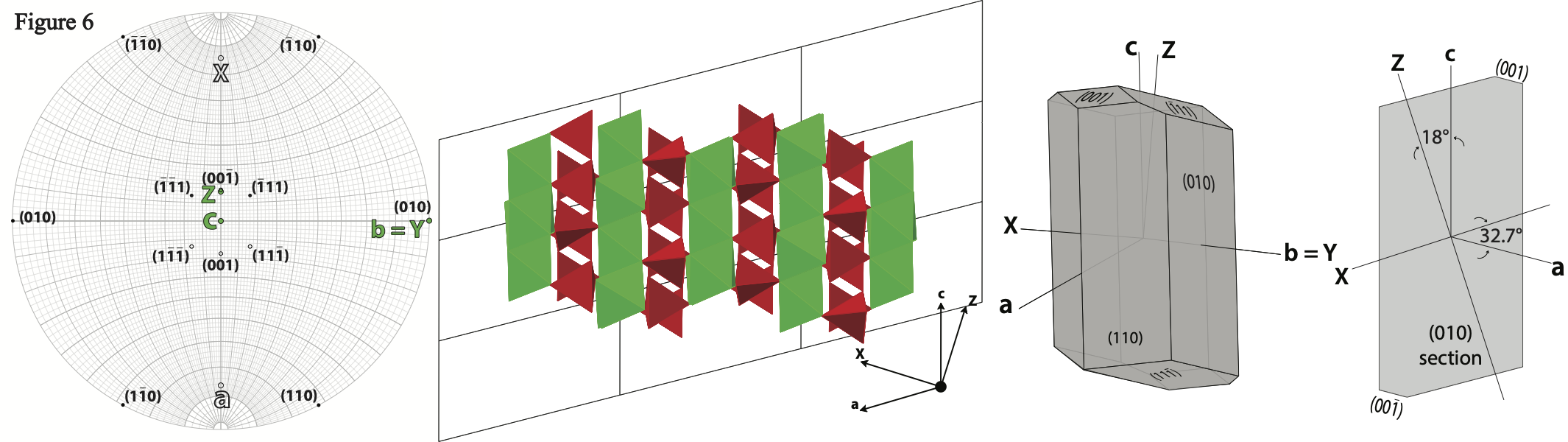
EXCALIBR to EXCELIBR and the optical orientation of minerals: Correcting the optical orientation of clinoamphiboles
https://doi.org/10.2138/am-2020-7336CCBYNCND
Steven and Gunter revise the crystallographic setting depicted in crystal form drawings of clinoamphiboles. The crystal form drawings were originally made for a body-centered setting for clinoamphiboles in contrast with the standard C-centered lattice. They also present a methodology for relating the optical geometry of a crystal with its crystallographic setting for orientation-dependent analytical methods, and for future characterization of minerals.0
A refined zirconium-in-rutile thermometer
https://doi.org/10.2138/am-2020-7091
The zirconium-in-rutile thermometer is widely applied to natural metamorphic rocks, but its accuracy has not been evaluated. Here, Kohn refined the thermometer using a combination of experimental data and data from natural rocks whose pressures and temperatures of formation are well known. The new calibration reduces thermometer uncertainty by a factor of 2-3, and improves retrieval of thermodynamic properties, but also points to as-yet poorly understood causes of compositional variability in natural rocks.
NEW MINERAL NAMES
https://doi.org/10.2138/am-2020-NMN105612
New Mineral Names
BOOK REVIEW
https://doi.org/10.2138/am-2020-B105615
Book Review: High Temperature Gas-Solid Reactions in Earth and Planetary Processes
Volume 105 : May 2020 Issue
Texture constraints on crystal size distribution methodology: An application to the Laki fissure eruption
https://doi.org/10.2138/am-2020-7007
Crystal size distributions (CSDs) in igneous rocks are used to tease out evolving environments of crystallization. Kinetic information, such as residence times and average crystal sizes in a sample, is extracted from CSDs. However CSDs are produced from assessments of crystal length measurements, which Cone et al. find vary based on the method and type of image used. They use a combination of techniques ranging from traditional manual approaches and polarized optical microscopy to high-resolution automated mineralogy (automated scanning electron microscopy that relies on elemental information in a mineral) to demonstrate that the resulting CSDs do indeed differ. Even localized fabric can affect the interpretation of crystal lengths. A protocol should be developed that focuses on the textural effects on crystal length determinations, as each image type has the potential to skew measurements.
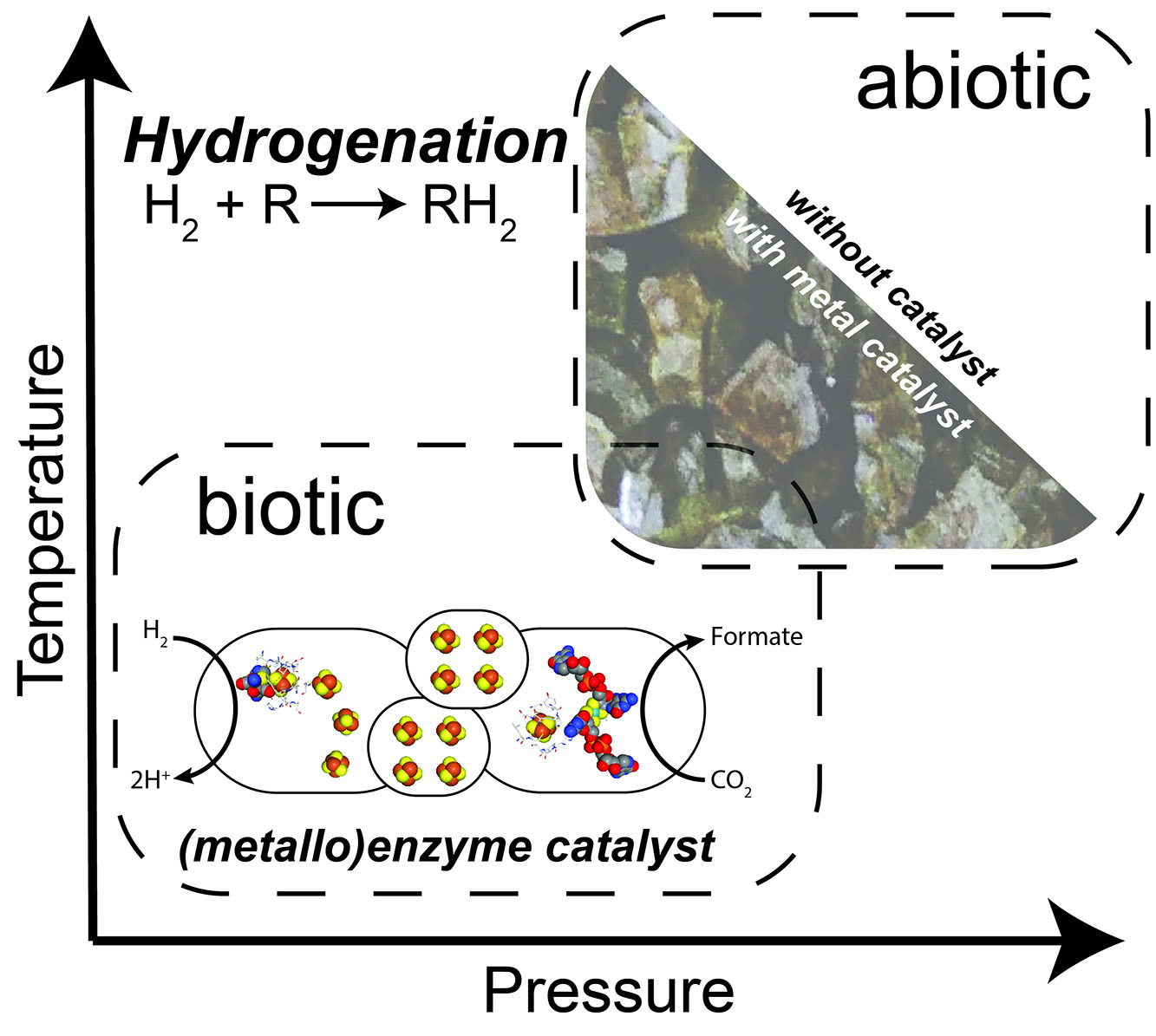
Hydrogenation reactions of carbon on Earth: Linking methane, margarine, and life
https://doi.org/10.2138/am-2020-6928CCBYNCND
Hydrogenation reactions involve the coupled movement of protons and electrons. These reactions are responsible for numerous molecular transformations deep in the Earth, in biological systems, and also in the atmosphere. Here McGlynn et al., in this open-access paper, survey hydrogenation reactions with a focus on those involving carbon.
Abiotic and biotic processes that drive carboxylation and decarboxylation reactions
https://doi.org/10.2138/am-2020-7166CCBYNCND
Sheik et al., in their open-access paper, explain that carboxylation and decarboxylation are an important class of chemical reactions that have helped shape life on the surface of Earth for billions of years. These reactions can be driven through biotic and abiotic processes at different locations in and on Earth’s crust. It is likely that prebiotic synthesis of carboxylic acids was critical for the origin and development of life, which has been using this class of reactions for energy generation and reproduction for billions of years. It is apparent that the location of where these processes are occurring in/on the crust (i.e., subduction zone vs. coal deposit vs. aerobic water column vs. tropical forest) will greatly dictate the rates of reaction and the diversity of carboxylic acids that may be produced. Whether produced biotically or abiotically, these individually mundane reactions are at the heart of complex and even elegant pathways that are extremely important on Earth and potentially on extraterrestrial planets.
In-situ measurements of magmatic volatile elements, F, S, and Cl, by electron microprobe, secondary ion mass spectrometry, and heavy ion elastic recoil detection analysis
https://doi.org/10.2138/am-2020-7221
F and Cl measurements by EPMA and SIMS have a generally good agreement on standard glasses available to the scientific community (MPI-DING, Jochum et al. 2006). These are the two most common instruments for in situ halogen measurements and their performance has now been analyzed and compared by Rose-Koga et al. Elastic Recoil Detection Analysis (ERDA) of F and Cl on three standards independently anchors the EPMA-SIMS comparison curves and gives absolute F and Cl concentrations for these standards. The ERDA results also highlight the fact that there is a matrix effect on SIMS measurements of F and Cl in the high-SiO2 standard. Rose-Koga et al. propose a new equation to correct this matrix effect in the SIMS F and Cl data of high-SiO2 samples. We can now use, and rely upon, EPMA or SIMS for F and Cl measurements of glasses on a large SiO2 range covering most of the geological samples.
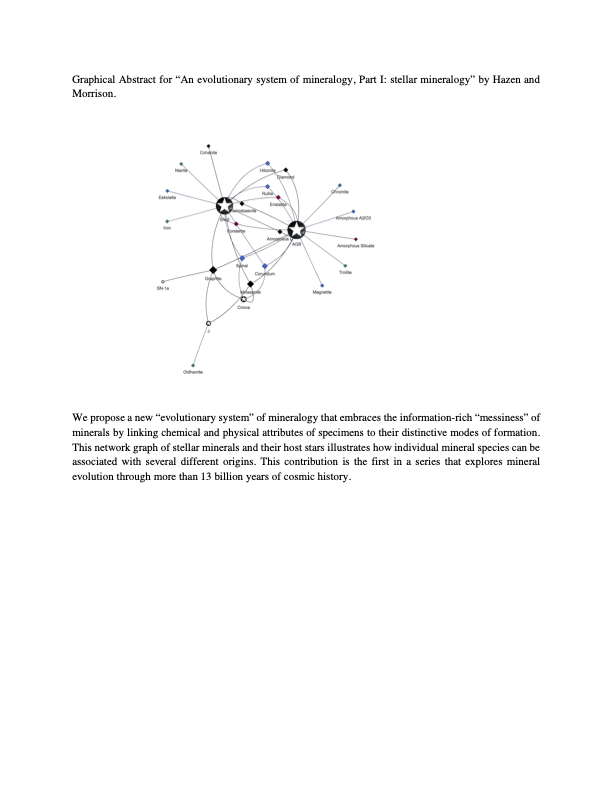
An evolutionary system of mineralogy. Part I: Stellar mineralogy (>13 to 4.6 Ga)
https://doi.org/10.2138/am-2020-7173
Hazen and Morrison introduce an “evolutionary system of mineralogy” — an approach to classification that links mineral species to their sources and modes of origin. Part I of this system examines stardust, including 41 kinds of minerals that originate in three very different types of stars: classic novae, Type II supernovae, and asymptotic giant branch stars, each of which forms stellar mineral grains under different physical conditions and contributes distinctive isotopic signatures to those grains. They construct a “bipartite network graph” that displays 41 links between these three types of stars (the three larger star-shaped symbols) and 27 different kinds of condensed phases (the smaller diamond-shaped symbols).
A structural study of size-dependent lattice variation: In situ X-ray diffraction of the growth of goethite nanoparticles from 2-line ferrihydrite
https://doi.org/10.2138/am-2020-7217
Heaney et al. explore an important but poorly understood nanoparticle behavior — that lattice parameters change systematically for a given metal oxide when crystal diameters fall below 100 nm. This paper documents nanoscale-induced lattice expansion in goethite (FeOOH) through synchrotron X-ray diffraction of ferrihydrite gels that transform to nanogoethite. They demonstrate that the crystallographic changes that accompany expansion due to nanodimensionality in goethite are identical to those operative during heating of goethite.
Cassiterite crystallization experiments in alkali carbonate aqueous solutions using a hydrothermal diamond-anvil cell
https://doi.org/10.2138/am-2020-7118
This paper by Liu et al. demonstrates that alkali carbonate can enhance the solubility of SnO2 in aqueous solutions and investigates cassiterite crystallization conditions and the tin-transport species in alkali carbonate aqueous solutions. They find that alkali carbonate-rich aqueous solution or hydrous melt can be a favorable transport medium for tin, and that carbonate or CO2 could be fluxes that promote the formation of rare metal pegmatites.
New insights into the nature of glauconite
https://doi.org/10.2138/am-2020-7341
The work by Lopez-Quiros et al. shows that “glauconite” must be assessed as a mica-rich, mica-smectite (R3 ordered), interstratified mineral. Furthermore, they argue that the 100%-mica extreme term (i.e., the glauconitic mica) should not have been described in nature (at least in the usual glauconitic genetic contexts) and that its K+ content would be ~0.8 a.p.f.u. In addition, their new findings give insights into the glauconitization process and, at the same time, investigate the K-deficient character of the dioctahedral mica glauconite.
Kaolinization of 2:1 type clay minerals with different swelling properties
https://doi.org/10.2138/am-2020-7339
Li et al. demonstrate that montmorillonite, illite, and rectorite in acidic Al3+-containing solutions can be transformed into kaolinite. Interstratified kaolinite-smectite (K-S), kaolinite-illite (K-I), and kaolinite-rectorite (K-R) form as the intermediate phases during the transformations. The kaolinization of 2:1 type swelling and non-swelling clay minerals is most likely via a local dissolution-crystallization mechanism, mainly from the layer edges rather than from the swelling interlayers. Sizes and stacking order of the newly formed kaolinite strongly depend on those of the precursor minerals. The findings in the present study by Li et al. provide new insights for understanding mineral-water interactions that are central to all geochemical processes.
The quintet completed: The partitioning of sulfur between nominally volatile-free minerals and silicate melts
https://doi.org/10.2138/am-2020-7188
Sulfur partitioning between clinopyroxene crystals and melts of compositions from basaltic to dacitic was measured by Callegaro et al. using synchrotron X-ray fluorescence. Crystal chemistry, oxygen fugacity, and meltwater concentration influence the partitioning. These measurements can be applied to natural crystals to determine sulfur concentrations in coexisting melts and estimate sulfur concentrations in magmatic systems in the absence of melt inclusions.
222Rn and 220Rn emanations from powdered samples of samarskite as a function of annealing temperature
https://doi.org/10.2138/am-2020-6988
Malczewski and Dziurowicz measured variations in the 222Rn and 220Rn emanation coefficients with a temperature of fully metamict samarskite-(Y) ground to a five-micrometer grain size fraction and annealed from 473 to 1373 K, which cross the structural conversion from the low- to high-temperature samarskite phase. The same mineral species showed noticeably different emanation coefficients of radon and thoron depending on the crystallographic system induced by annealing in an argon atmosphere. The 222Rn emanation coefficients obtained both for 1 h and 24 h annealing were significantly lower than the values reported in the literature for comparable metamict minerals. The results indicate that samarskite-(Y) behaves as a closed system for radon retention across a very broad temperature range, from an untreated sample to a sample annealed at 1373 K, despite high concentrations of uranium and unusual structural complexity.
Polymerization during melting of ortho- and meta-silicates: Effects on Q species stability, heats of fusion, and redox state of mid-ocean range basalts (MORBs)
https://doi.org/10.2138/am-2020-6841
The fusion of crystalline orthosilicates and metasilicates produces melts more polymerized than their precursor crystals, as discussed by Nesbitt et al. in this paper. Polymerization during melting can be rationalized from an energetics perspective. Si-NBO-M moieties are more subject to librational, rotational, and vibrational modes than Si-O-Si moieties. Conversion of the former moieties to the latter results in stabilization of melts subject to strong thermal agitation.
Formation of native arsenic in hydrothermal base metal deposits and related supergene U6+ enrichment: The Michael vein near Lahr, SW Germany
https://doi.org/10.2138/am-2020-7062
Arsenic is a common constituent of upper crustal fluids, but native arsenic is a rare commodity in natural systems. Understanding the thermodynamically constrained formation conditions of native arsenic for base metal hydrothermal mineralization, as an example, also sheds light on the formation of other As-minerals in other types of hydrothermal deposits. Furthermore, as shown by Scharrer et al., the presence of native arsenic in combination with base metal sulfides produces a unique uranium trap under oxidized weathering conditions.
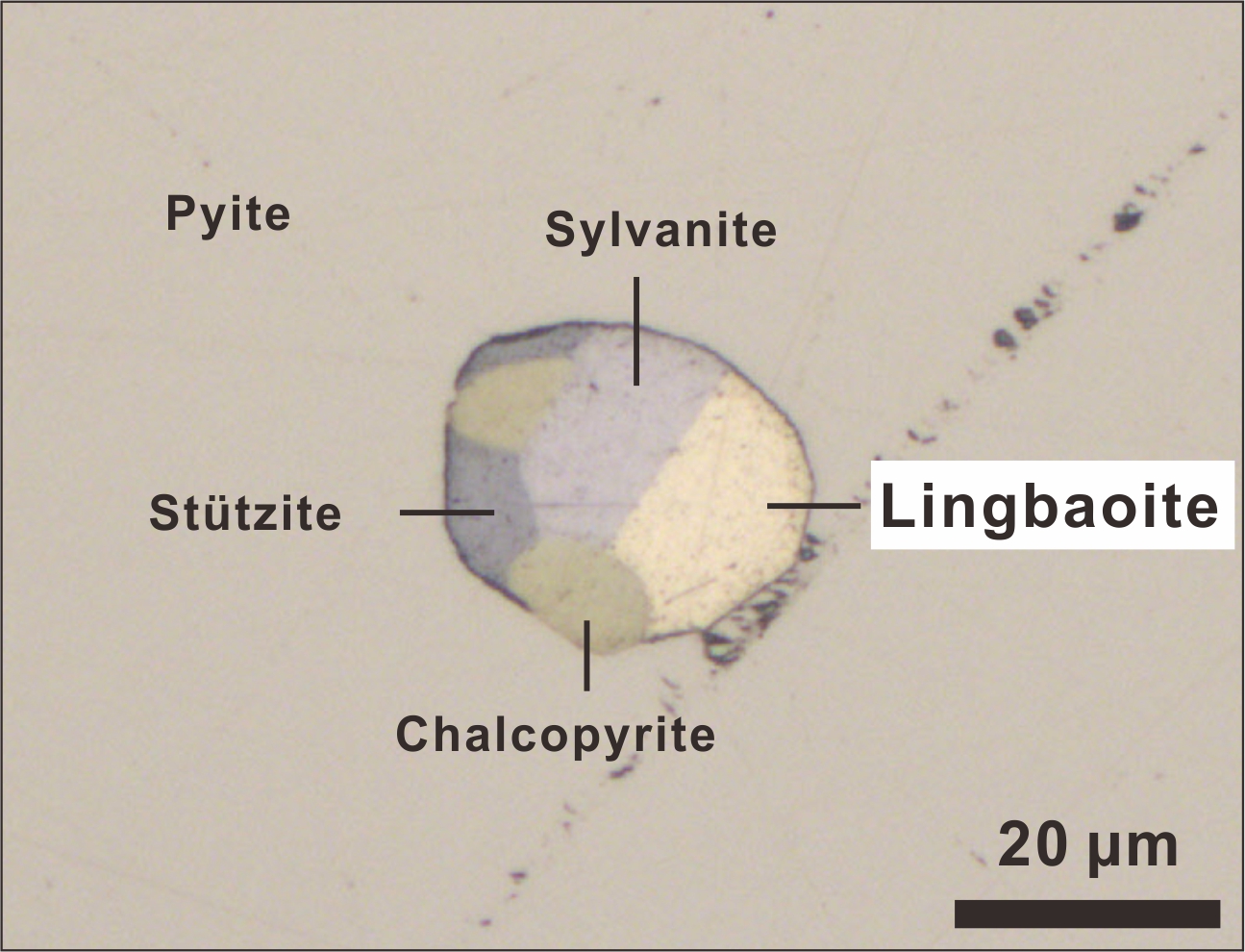
Lingbaoite, AgTe3, a new silver telluride from the Xiaoqinling gold district, central China
https://doi.org/10.2138/am-2020-7167
Lingbaoite (AgTe3) is a new silver telluride discovered in Xiaoqinling gold district of central China. Full details of this new telluride by Jian et al. are in the paper. Lingbaoite probably formed through the cooling of polymetallic melts. Lingbaoite and associated minerals reveal a previously unrecognized magmatic-hydrothermal process, suggesting gold mineralization in the Xiaoqinling gold district involves multiple superimposed processes of gold enrichment.
Oxygen isotope fractionation between gypsum and its formation waters: Implications for past chemistry of the Kawah Ijen volcanic lake, Indonesia
https://doi.org/10.2138/am-2020-7298
Utami et al. determined the fractionation of oxygen isotopes between gypsum and its formation water for both water and sulfate, and applied these to gypsum from the Kawah Ijen volcanic lake in Indonesia to reconstruct the oxygen isotopic composition of the lake water during passive degassing and before the last eruption in 1817. Their study shows that gypsum can provide a historical isotopic record of water chemistry for volcanic lakes and other environments where gypsum forms.
Presentation of the 2018 MSA Award of the Mineralogical Society of America to Laura Nielsen Lammers
https://doi.org/10.2138/am-2020-AP10552
2019 MSA Awards
« ‹ 1 … 53 54 55 56 57 … 85 › »ADDITIONAL RESOURCES