

Editor’s Notes
Total Results: 1697
Volume 105 : April 2020 Issue
Memorial of Edward J. Olsen 1927–2020
https://doi.org/10.2138/am-2020-m697
The issue ends with a memorial of Edward J. Olsen (1927-2020) by Ian Steele and Nancy Hutcheon
Volume 105 : March 2020 Issue
Heavy halogen geochemistry of martian shergottite meteorites and implications for the halogen composition of the depleted shergottite mantle source
https://doi.org/10.2138/am-2020-7237
Volatile elements (e.g., H, C, N) influence the physical and chemical properties of planets. The halogen group elements, Cl, Br, and I can provide insight into volatile distribution and transport processes due to their ability to track with water. By measuring halogens in shergottites, martian meteorites that are derived from volcanic processes, Clay et al. show that the halogen geochemistry of different shergottites indicates distinct mantle sources. They calculate that the halogen composition of bulk silicate Mars is very similar to that of bulk silicate Earth, suggesting common volatile source(s) or delivery mechanism(s) to the terrestrial planets.
The distribution and abundance of halogens in eclogites: An in situ SIMS perspective of the Raspas Complex (Ecuador)
https://doi.org/10.2138/am-2020-6994
Subduction of oceanic crust cycles F and Cl from surface reservoirs to the mantle, however the minerals responsible for hosting these halogens, and the bulk halogen content of deeply subducted oceanic crust, remains poorly understood. Urann et al. analyze halogen abundances of individual minerals and bulk rocks to better quantify the halogen content of high pressure metamorphic altered oceanic crust during subduction.
Pressure dependence of Si diffusion in γ-Fe
https://doi.org/10.2138/am-2020-7197
Tsujino et al. investigate the pressure dependence of Si diffusion in gamma-Fe at pressures of 5-15 GPa and temperatures of 1473-1673 K using a Kawai-type multi-anvil apparatus. Even after 1 billion years, maximum of Si diffusion length at planetary and satellites' core conditions is less than ~1.2 km. On the other hand, the estimated strain of plastic deformation by Harper-Dorn creep based on Si diffusivity in gamma-Fe reaches more than 103 at a stress level of 103-104 Pa.
Seismic detectability of carbonates in the deep Earth: A nuclear inelastic scattering study
https://doi.org/10.2138/am-2020-6901
Elastic property measurements of two synthetic iron-containing carbonates reveal the extent to which carbonates are seismically detectable using geophysical methods. Chariton et al. confirm that nuclear inelastic scattering is a reliable method for the in situ study of the elastic properties of Fe-bearing systems at high pressures and temperatures, and reveals that seismic detectability of carbonates requires a high concentration of carbon in subducted slabs. Such contents may be reached in several present-day subduction trenches, which are potential targets for geophysical studies investigating carbonates in the deep Earth.
Equations of state, phase relations, and oxygen fugacity of the Ru-RuO2buffer at high pressures and temperatures
https://doi.org/10.2138/am-2020-7060
Oxygen fugacity (fO2) is a critical variable in magmatic systems, affecting phase relations and element partitioning. At present, large uncertainties in fO2 exist in high-pressure experimental work. Armstrong et al. report in situ X-ray diffraction measurements of Ru and RuO2, from which they have calculate the absolute oxygen fugacity of the reaction at P/T conditions up to the top of the lower mantle. This allows utilization of this buffer to impose a known fO2 on experiments, reducing uncertainty in the exploration of mantle processes.
Experimental determination of the phase relations of Pt and Pd antimonides and bismuthinides in the Fe-Ni-Cu sulfide systems between and °C
https://doi.org/10.2138/am-2020-7154
Helmy and Botcharnikov present phase relations in the Pt-Sb and Pt-Bi sulfide systems in the temperature range 1100 to 750 °C and in the Pd-Sb and Pd-Bi sulfide systems in the temperature range 1100 to 700 °C. Partitioning behavior of Pt, Pd, Ni, and Cu between monosulfide solid solution and Sb-bearing and Bi-bearing sulfide melts is discussed, as well as Sb and Bi behavior in Pt and Pd-bearing sulfide systems. These results are used to investigate the behavior of Sb and Bi during mantle melting processes.
Layer stacking disorder in Mg-Fe chlorites based on powder X-ray diffraction data
https://doi.org/10.2138/am-2020-6982
Luberda-Durnas et al. investigate the effects of semi-random stacking in chlorites on powder X-ray diffraction patterns of bulk powder samples. A complete set of information about the stacking sequences in chlorite structures was determined based on XRD pattern simulation and study of a suite of natural samples. A detailed study of semi-random stacking sequences shows that simple consideration of the proportion of IIb-2 and IIb-4/6 polytypes, assuming equal content of IIb-4 and Iib-6, is not sufficient to fully model the stacking structure in chlorites. Several, more general, possible models were therefore considered. In the first approach, a parameter describing a shift into one of the ±1/3b directions (thus, the proportion of IIb-4 and IIb-6 polytypes) was refined. In the second approach, for samples with slightly distinguishable hkl reflections with k≠3n, some kind of segregation of individual polytypes (IIb-2/4/6) was considered. In the third approach, a model with rotations of 2:1 layers about 0°, 120°, 240° were shown to have the lowest number of parameters to be optimized and therefore, giving the most reliable fits.
Elasticity of single-crystal Fe-enriched diopside at high-pressure conditions: Implications for the origin of upper mantle low-velocity zones
https://doi.org/10.2138/am-2020-7075
Fan et al. report the acoustic wave velocities and density of a single-crystal Fe-enriched diopside by Brillouin light scattering combined with in situ synchrotron X-ray diffraction in a diamond anvil cell up to ~18.5 GPa at room temperature. Based on a comparison of the obtained elastic moduli of Fe-enriched diopside with those of Fe-free diopside (CaAlSi2O6) and hedenbergite (CaFeSi2O6) reported in the literature, the authors evaluate the Fe composition effect on the elasticity and seismic parameters of diopside at the upper mantle P-T conditions. The comparison shows systematic linear correlations between the Fe composition and single-crystal elastic moduli of diopside, while the modeling indicates that substitution of 20 mol% Fe in diopside can reduce VP and VS by ~1.8% and ~3.5%, respectively, along both the expected normal mantle geotherm and a representative cold subducted slab geotherm. Furthermore, modeling also shows that the VP and VS profiles of Fe-enriched pyroxenite along the cold subducted slab geotherm are ~3.2% and ~2.5% lower than AK135 model at 400 km depth, respectively. These results lead to the conclusion that the presence of Fe-enriched pyroxenite (including Fe-enriched clinopyroxene, Fe-enriched orthopyroxene, and Fe-enriched olivine) can be an effective mechanism for causing low-velocity anomalies in the upper mantle regions atop the 410 km discontinuity at cold subducted slab conditions.
XANES spectroscopy of sulfides stable under reducing conditions
https://doi.org/10.2138/am-2020-7146
Anzures et al. detail new S K-edge XANES spectra for sulfides stable under reducing conditions for comparison to potential extraterrestrial analogs. This information can be used to determine the coordination chemistry and oxidation state of S species in geologic materials. These new sulfide standards should improve studies of sulfur speciation in reduced silicate glasses and minerals with applications for the early Earth, Moon, Mercury, and enstatite chondrites.
Zircon and apatite geochemical constraints on the formation of the Huojihe porphyry Mo deposit in the Lesser Xing’an Range, NE China
https://doi.org/10.2138/am-2020-7226
Northeastern China is an important Mo resource region, with more than 80 Mo deposits and occurrences. However, the major factors controlling large-scale porphyry Mo mineralization in this region are still unclear, and whether there is any inherent Mo enrichment of the source region and/or any pre-degassing magmatic processes leading to high-Mo melts remains enigmatic. Xing et al. use a combination of geochemistry and isotopic analyses of zircon and apatite from the Huojihe porphyry Mo deposit in NE China to provide insights into the characteristics of the parental magma and ore-forming mechanisms responsible for the porphyry Mo mineralization. The results suggest that pre-degassing enrichment of Mo and S in the original magma is not necessarily important in the formation of the Huojihe Mo deposit and that factors other than melt composition, including (but not limited to) a large magma chamber, may be more critical in forming a porphyry Mo deposit. The conclusions from this study might also apply to other porphyry Mo deposits worldwide.
Textural and compositional evolution of iron oxides at Mina Justa (Peru): Implications for mushketovite and formation of IOCG deposits
https://doi.org/10.2138/am-2020-7024
Hu et al. provide mineralogical evidence to support that the platy magnetite in IOCG systems is mushketovite. The textural and compositional data on magnetite from the Mina Justa deposit provide new insights into evolutionary mechanisms of iron oxides in IOCG deposits, which are dominated by oxygen fugacity and temperature changes and lead to the formation of multiple generations of magnetite at Mina Justa. The primary hematite transformed into TM1-1 magnetite due to a decline in fO2 and then was replaced by TM1-2 magnetite with increased temperature. Meanwhile, granular TM2-1 magnetite directly precipitated from hydrothermal fluids. With the decrease of temperature, TM1-2 and TM2-1 magnetite were replaced by TM1-3 and TM2-2 magnetite, respectively.
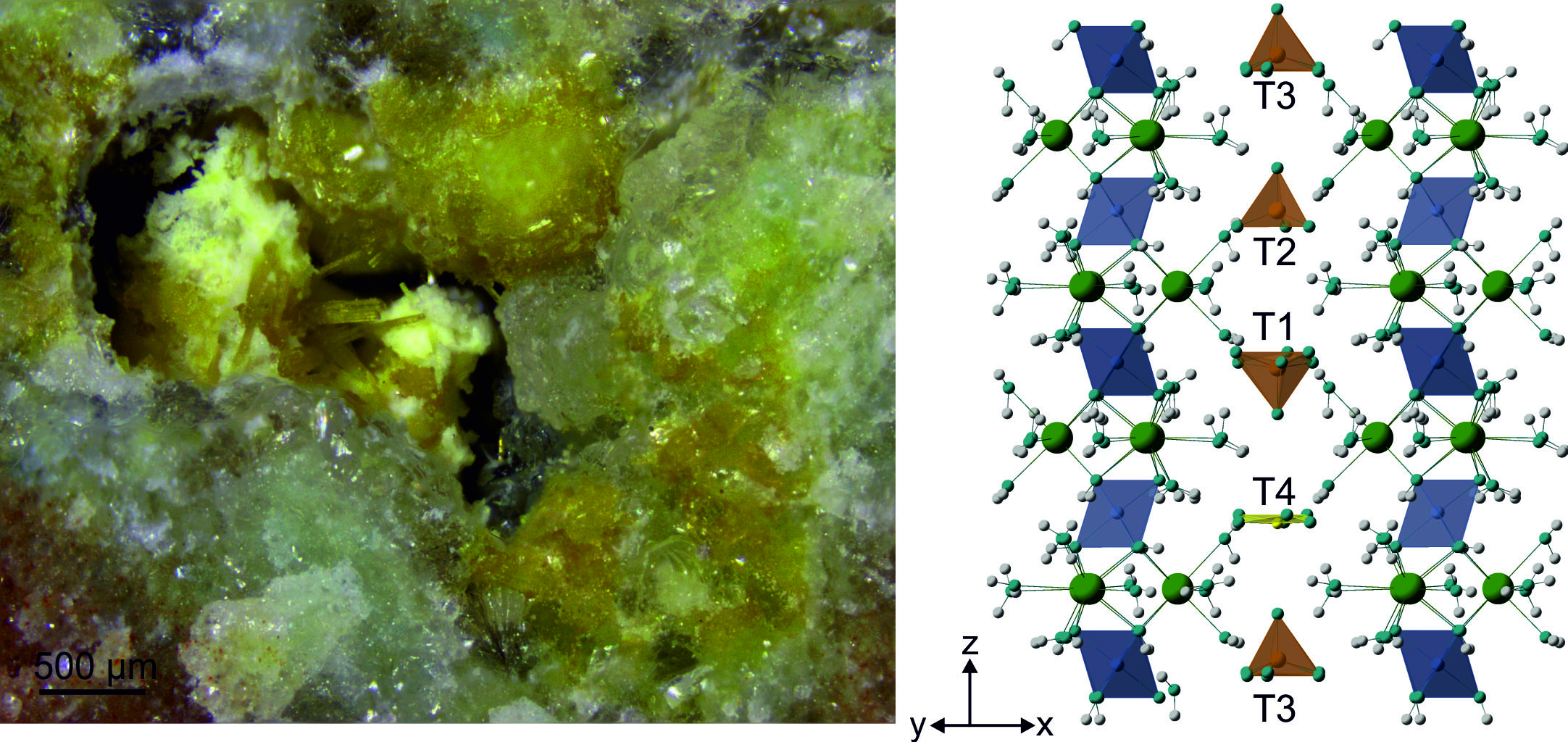
Siwaqaite, Ca6Al2(CrO4)3(OH)12·26H2O, a new mineral of the ettringite group from the pyrometamorphic Daba-Siwaqa complex, Jordan
https://doi.org/10.2138/am-2020-7208
Juroszek et al. focus on a new mineral, siwaqaite, from the pyrometamorphic Daba-Siwaqa complex in Jordan, which is a Cr6+-analog of ettringite. They provide a detailed description of physical properties, structural parameters and spectroscopic results for siwaqaite, as well as comparisons with other members of the ettringite group. Siwaqaite is an interesting phase because it contains Cr, a redox-sensitive transition element. Wide usage of Cr in the industry, such as the production of stainless steel, metal finishing, wood preservatives, and refractory products, causes release of high concentrations of chromates in surface water. Due to the high solubility and oxidizing potential, hexavalent Cr is a toxic, teratogenic, carcinogenic, and mutagenic element in biological systems, which can damage kidney and other tissue structures. Juroszek et al. suggest that siwaqaite, in analogy to ettringite, can be used for immobilization of toxic cations and oxyanions because the structure of ettringite has a wide ability to ions exchange. Moreover, slight changes of the chemical composition do not modify the structure. Therefore, minerals form ettringite group could be used for selected contaminant removal by incorporating toxic ions into their structures
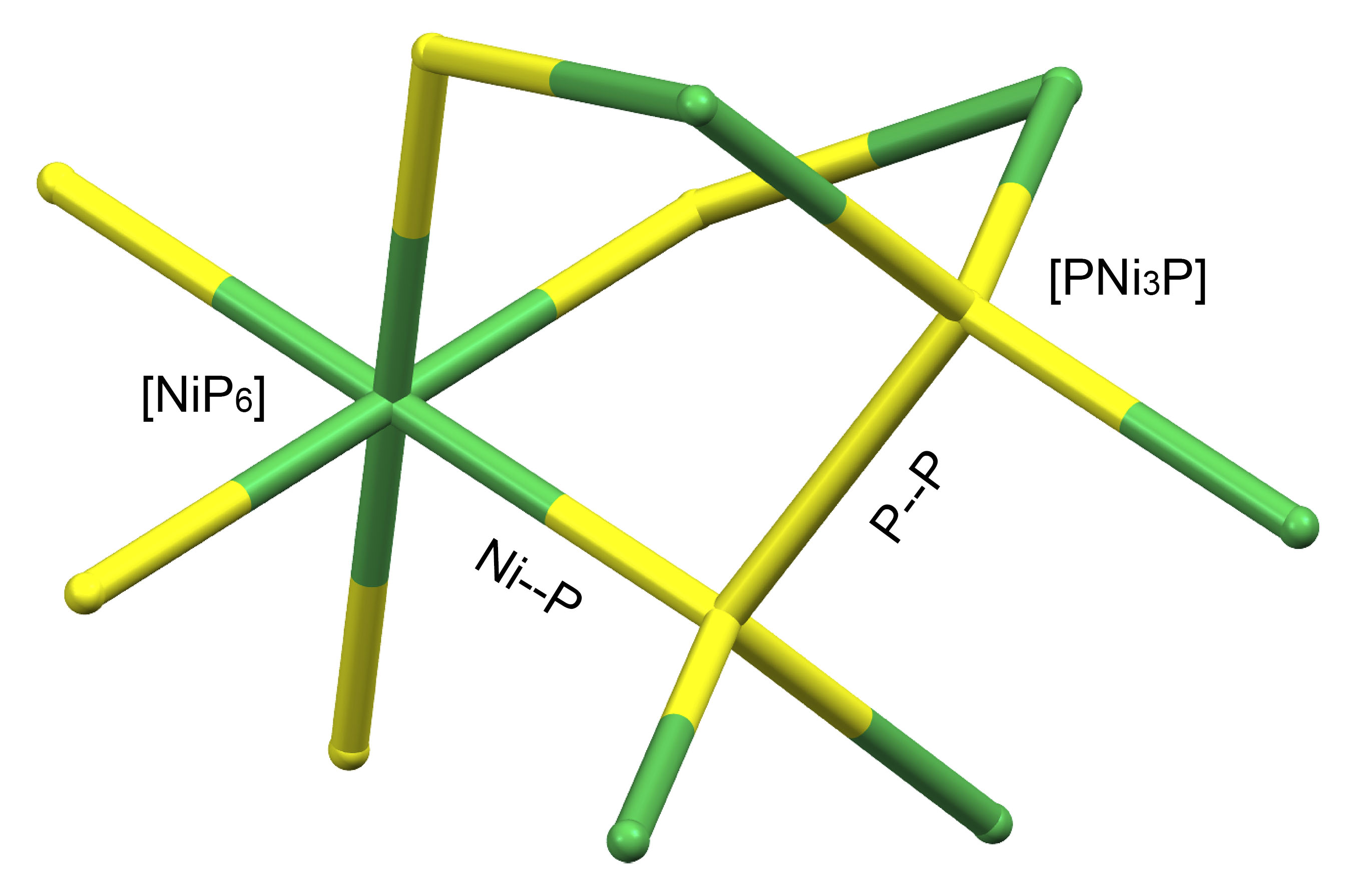
Negevite, the pyrite-type NiP2, a new terrestrial phosphide
https://doi.org/10.2138/am-2020-7192
Britvin et al. report the discovery of negevite, natural pyrite-type NiP2, that might open new insights into the role of phosphides as a source of phosphorus in prebiotic phosphorylation processes. They discuss the aquatic oxidation of meteoritic phosphides leading to formation of diverse phosphorus compounds, which could serve as prebiotic phosphorylation agents at the early stages of Earth's evolution. In that respect, the unique catalytic and electrochemical properties of NiP2 could provide new routes for further exploration of phosphorylation pathways.
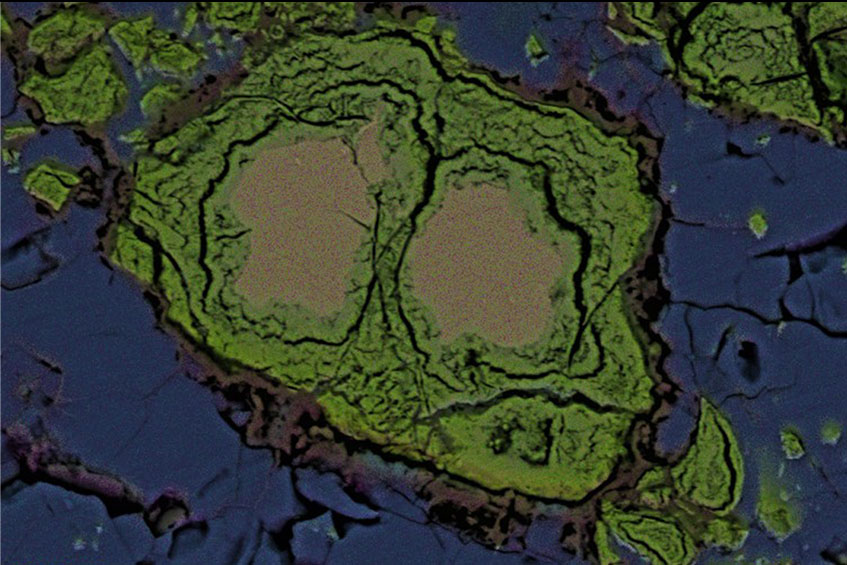
Transjordanite, Ni2P, a new terrestrial and meteoritic phosphide, and natural solid solutions barringerite-transjordanite (hexagonal Fe2P–Ni2P)
https://doi.org/10.2138/am-2020-7275
Britvin et al. report the presence of natural hexagonal solid solutions along the join Fe2P-Ni2P. These Fe2P-Ni2P solid solutions are related to the Fe-Ni-P system that, along with the Fe-Ni-S and Fe-Ni-C ternaries, are the most significant reduced cosmochemical systems. They discuss how knowledge of phase relationships and compositional variations of Fe-Ni phosphide minerals has a broad range of implications, including the origin of the solar system, composition of deep planetary interiors, meteoritics, terrestrial processes in super-reduced environments, and processes of prebiotic phosphorylation on early Earth.
Volume 105 : February 2020 Issue
Dissolution of poorly soluble uranyl phosphate phases in the Metaautunite Subgroup under uranyl peroxide cage cluster forming conditions
https://doi.org/10.2138/am-2020-7106
Uranyl phosphate minerals of the meta-autunite group are sparingly soluble in water under most conditions and have been targeted in remediation strategies for contaminated sites. Here Lobeck et al. demonstrated that under some aqueous peroxide-bearing conditions these minerals dissolve readily to form complex cage clusters built of uranyl hexagonal bipyramids that persist in solution as complex macro-anions.
Quartz crystals in Toba rhyolites show textures symptomatic of rapid crystallization
https://doi.org/10.2138/am-2020-6947
Barbee et al. studied quartz crystals in rhyolites erupted from Toba caldera (Indonesia) that show abundant textural signs of rapid crystallization. This study is the first to document diverse quartz textures as consequences of rapid, disequilibrium crystal growth in a caldera-forming rhyolite. Studies that seek to extract time information from the crystal record have found that trace element diffusion in quartz indicates crystallization, or residence, timescales that are much shorter than previously thought for large silicic magma systems. This work provides at least some physical, textural evidence that dynamic processes must operate on short geologic timescales in these systems. The documentation of skeletal to dendritic quartz textures is expected to provide vital context to interpreting the chemical stratigraphy of quartz and may impact the application of quartz as a petrologic tool.
Constraints on non-isothermal diffusion modeling: An experimental analysis and error assessment using halogen diffusion in melts
https://doi.org/10.2138/am-2020-7193
This study by Rout et al., through a series of diffusion experiments, evaluates the non-isothermal diffusion model, which gives more realistic estimates of diffusion time in natural samples, assesses the errors, and provides a simpler and more accurate approach to better implement the model.
Machiite, Al2Ti3O9, a new oxide mineral from the Murchison carbonaceous chondrite: A new ultra-refractory phase from the solar nebula
https://doi.org/10.2138/am-2020-7185
Krot et al. report on a discovery of a new ultra-refractory mineral, machiite, found in the CM carbonaceous chondrite Murchison. Machiite is intergrown with corundum and most likely formed by gas-solid condensation from a gas of solar composition at the very beginning of the protoplanetary disk evolution. Machiite is in O-isotope disequilibrium with corundum. They suggest that both minerals condensed from an 16O-rich solar nebula gas. Subsequently, machiite experienced O-isotope exchange with an aqueous fluid on the CM chondrite parent body.
Partitioning of V and 19 other trace elements between rutile and silicate melt as a function of oxygen fugacity and melt composition: Implications for subduction zones
https://doi.org/10.2138/am-2020-7013
Holycross and Cottrell detail the results of 16 experiments to measure the partitioning of 20 trace elements between the mineral rutile (TiO2) and silicate melt as a function of redox state and melt composition. Special attention is given to the behavior of the multivalent trace element vanadium (V), which may speciate as V2+, V3+, V4+, or V5+ in the silicate Earth. The distribution of V between rutile and melt is a direct function of both oxidation state and melt composition. Vanadium is strongly compatible in rutile when V4+ is the dominant species, and when melt compositions are highly polymerized and contain low concentrations of TiO2. Their new data indicate that rutile may be a significant sink for V in the solid Earth. The flux of V will be coupled to Ti during mass transfer through the subduction system when rutile is present and will change as a function of the oxidation state of the subducting slab.
« ‹ 1 … 55 56 57 58 59 … 85 › »ADDITIONAL RESOURCES