

Editor’s Notes
Total Results: 1697
Volume 110 : May 2025 Issue
Atomic-scale visualization and quantification of lithium in lepidolite by AC-TEM-EELS: Implications for pegmatite genesis and advancing lithium extraction techniques
https://doi.org/10.2138/am-2024-9436
This study presents an analytical solution to determining lithium contents in lepidolite, which has potential to unlock otherwise overlooked lithium sources. Specifically, the authors use a novel approach that combines spherical aberration-corrected transmission electron microscopy (AC-TEM) in conjunction with electron energy loss spectroscopy (EELS) to visualize and quantify lithium in lepidolite. This approach analyzes the spatial distribution and concentration of lithium in mica, thereby characterizing the economic potential of the mineral. The analytical approach provides a significant advantage over traditional methods, such as electron microprobe and LA-ICP-MS analyses, which rely on empirical formula calculations and are susceptible to inaccuracies due to fluid or minor mineral inclusions. The findings have the potential to significantly advance the understanding of cation ordering in lepidolite, its polytypes, chemical compositions, and economic potential, as well as refining lithium extraction techniques.
The use of X-ray micro-computed tomography to visualize and quantify lithium-bearing silicate minerals in pegmatites: Examples from the Tanco Pegmatite, Manitoba, Canada
https://doi.org/10.2138/am-2024-9439
This paper investigates X-ray micro-computed tomography (micro-CT) as a technique for visualization and quantification of spodumene in pegmatite samples in a three-dimensional and non-destructive way. This technique can capture 3D spatial information and quantify the minerals present in samples. Spodumene is a critical mineral and the main source of hard-rock lithium. Understanding the textures and proportions of spodumene helps with understanding deposit formation and in developing efficient mining and metallurgical processing strategies.
Single- and multi-mineral classification using dual-band Raman spectroscopy for planetary surface missions
https://doi.org/10.2138/am-2023-9072
This paper presents the use of a dual-band co-registered Raman spectrometer for improved mineralogical and scientific yield. The authors developed a classifier with novel multimodal machine-learning methods to discriminate the mineral groups: pyroxene, olivine, potassium feldspar, quartz, mica, gypsum, and plagioclase. The classifier discriminated those minerals between homogeneous samples with 0.997 AUC and detected them in heterogeneous samples with 0.733 AUC (a measurement of accuracy used for multi-classification problems). This research has broad impacts on planetary surface missions.
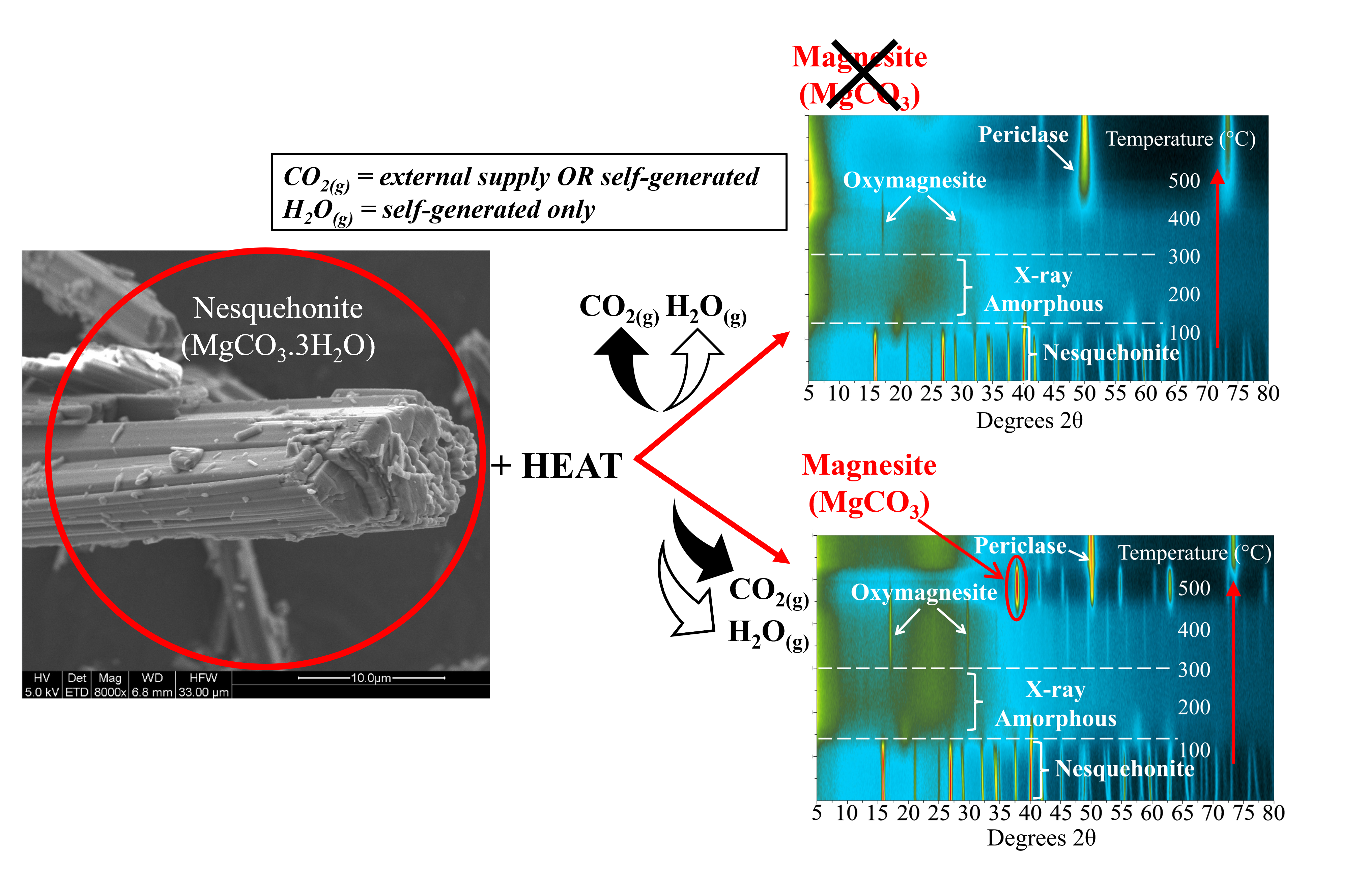
Magnesite formation during nesquehonite decomposition in the presence and absence of retained self-generated gases and the role of X-ray amorphous materials as essential stores for CO2O
https://doi.org/10.2138/am-2023-9202
Magnesite formation mechanisms via crystalline and amorphous phases and the implications for CO2 storage security are poorly resolved. Morgan et al. find that more magnesite forms from nesquehonite when self-generated gases are retained or external CO2 is supplied. The data suggest dehydration-crystallization likely drives magnesite formation; however, solid-gas reactions may also be important in closed-system experiments. The authors propose a novel method to quantify amorphous phases in the system, which are dominant CO2 stores that are often not considered in carbon accounting.
Formation of bonanza Au-Ag-telluride ores in epithermal systems: Constraints from Cu-O isotopes and modeling
https://doi.org/10.2138/am-2023-9278
This study demonstrates that modeling Cu-O isotope data, can advance understanding of fluid sources and the processes of mineral precipitation in epithermal systems. The results provide new insights into the formation of bonanza Au-Ag-telluride ores in the Te-rich Sandaowanzi deposit, NE China. The results confirm that input of a (300 ¡C) magmatic fluid containing Au, Ag, Te, and Cu into shallow meteoric water can produce bonanza-grade Au-Ag telluride ores, as proposed previously. The research indicates that the precipitation of Au-Ag telluride takes place at the mixing interface and may occur at greater depths compared to Au-Ag mineralization in adularia-sericite epithermal systems. The Cu-O isotopes and newly developed modeling techniques have potential applications in epithermal and possibly other hydrothermal systems.
Reexamination of the structure of nanomineral opal-CT using synchrotron X-ray diffraction, transmission electron microscopy, X-ray scattering structure factor, and pair distribution function analyses
https://doi.org/10.2138/am-2024-9333
Previous studies have reported different structures for opal-CT: the interstratification model and the paracrystalline model. The paracrystalline model suggests that the predominant tridymite-like structure is packed in amorphous silica networks, while the interstratification model is related to disordered interlayering and stacking of cristobalite and tridymite domains. This article has identified additional coupled 4-membered and 8-membered rings of [SiO4] tetrahedra formed through twinning and stacking faults. The coupled 4- and 8-membered rings decrease as the crystallinity of opal-CT increases. More broadly, this study demonstrated that the combined approach of synchrotron XRD/PDF (pair distribution function) is a powerful tool for determining the structures of poorly crystallized minerals. The combined method will provide detailed crystallographic information on the phase transformation of natural opal. The new information about the opal-CT structures will help better understand and quantify the transformation from opal-A (diatomaceous clay) to opal-CT during diagenesis (such as the Miocene Monterey Formation in California).
Titanium substitutions in garnet at magmatic, granulite facies, and high-pressure granulite facies conditions
https://doi.org/10.2138/am-2024-9442
An analysis of existing experimental results shows that Ti entry into garnet is complex and governed by multiple substitutions. A comparison of experimental and natural garnet compositions indicates that garnets likely lose substantial Ti (and alkalis) during cooling by processes such as diffusion or interface-coupled dissolution-reprecipitation. This Ti can be sequestered locally in precipitates of rutile and/or ilmenite within the host garnet or lost to the rock matrix.
Mechanistic understanding of the dehydroxylation reaction of smectites: Insights from reactive force field (ReaxFF) molecular dynamics simulation
https://doi.org/10.2138/am-2024-9445
Reactive molecular dynamics simulations reveal thermal reaction mechanisms and high-temperature transformations of smectites. The findings provide a theoretical basis for distinguishing cv (cis-vacant) and tv (trans-vacant) smectites using thermogravimetric analysis. The data collected indicate that montmorillonites have cv structure, and almost all smectites from China are cv.
Estimating the iron oxidation state of serpentinite using X-ray absorption fine structure spectroscopy
https://doi.org/10.2138/am-2024-9571
Iron in serpentinite, found in various oxidation states, plays a vital role in geologic processes. X-ray absorption near-edge structural spectroscopy is a powerful tool for characterizing its redox state. However, a general scheme for estimating the oxidation state of Fe in multiple Fe-bearing minerals in serpentinite has not been established. The method used in this study effectively estimates iron oxidation state, even in complex mixtures, and provides insight into the redox state evolution of serpentinization.
Episodic magmatism contributes to sub-seafloor copper mineralization: Insights from textures and geochemistry of zoned pyrite in the Ashele VMS deposit
https://doi.org/10.2138/am-2023-9250
The question of whether magmatic fluids play an important role in the mineralization processes of ancient VMS deposits affects our understanding of this type of mineralization. The detailed documentation of pyrite textures allowed systematic in situ SIMS sulfur isotope analyses and LA-ICP-MS elemental mapping of zoned pyrite grains to provide significant new insights into the source and evolution of ore-forming fluids in the Early to Middle Devonian Ashele VMS deposit, NW China. The occurrences of alternating Cu-rich and Cu-poor growth zones in pyrite suggest that Cu mineralization of the Ashele VMS deposit is episodic rather than continuous. The study also documented distinct textural patterns and contrasting trace-element compositions and sulfur isotopic signatures in pyrite between the massive sulfide zone and chlorite-quartz-chalcopyrite-pyrite zones. The advantages of pyrite over most other minerals are its ubiquitous occurrences, local high abundances, close spatial-temporal associations with mineralization in VMS deposits, and its complex, pronounced, and robust textural and chemical variations that are readily documented by modern analytical techniques. Textural and geochemical features of zoned pyrite record fluid boiling and magmatic volatile influx in the VMS Cu system, which indicate an incongruous mineralization process. The episodic magmatic-hydrothermal activities could promote mineralization for higher Cu concentration.
Development of oxy-symplectites in a slow-spreading lower oceanic crust: Insights from the Atlantis Bank Gabbro Massif, Southwest Indian Ridge
https://doi.org/10.2138/am-2024-9350
This paper provides a detailed account of the formation of oxy-symplectites in the lower oceanic gabbros recovered from Hole U1473A in Atlantis Bank oceanic core complex, Southwest Indian Ridge. The study sheds light on detecting the oxidation agent and how the entire process controls the textural and mineralogical modifications of lower oceanic crust during subsolidus cooling.
Heterogeneous distribution of Al-hematite regulated by hydrologic regime in a basaltic laterite of Hainan Island, South China: Implications for the aqueous history of Mars
https://doi.org/10.2138/am-2024-9374
This study investigates the effects of aqueous environments on the formation and preservation of Al-hematite in a basaltic weathering profile from a 48 m long drill hole from Hainan Island in South China. The results demonstrate a genetic link between the Al content of hematite and environment of formation and highlight the influence of hydrodynamic conditions on the formation and preservation of Al-hematite. Comparative study suggests that the high abundance of Al-hematite found in certain martian outcrops may suggest the presence of transient liquid water with a slightly higher flow rate, e.g., episodic floods and intense precipitation, which would imply short-term warmer and wetter conditions on Mars.
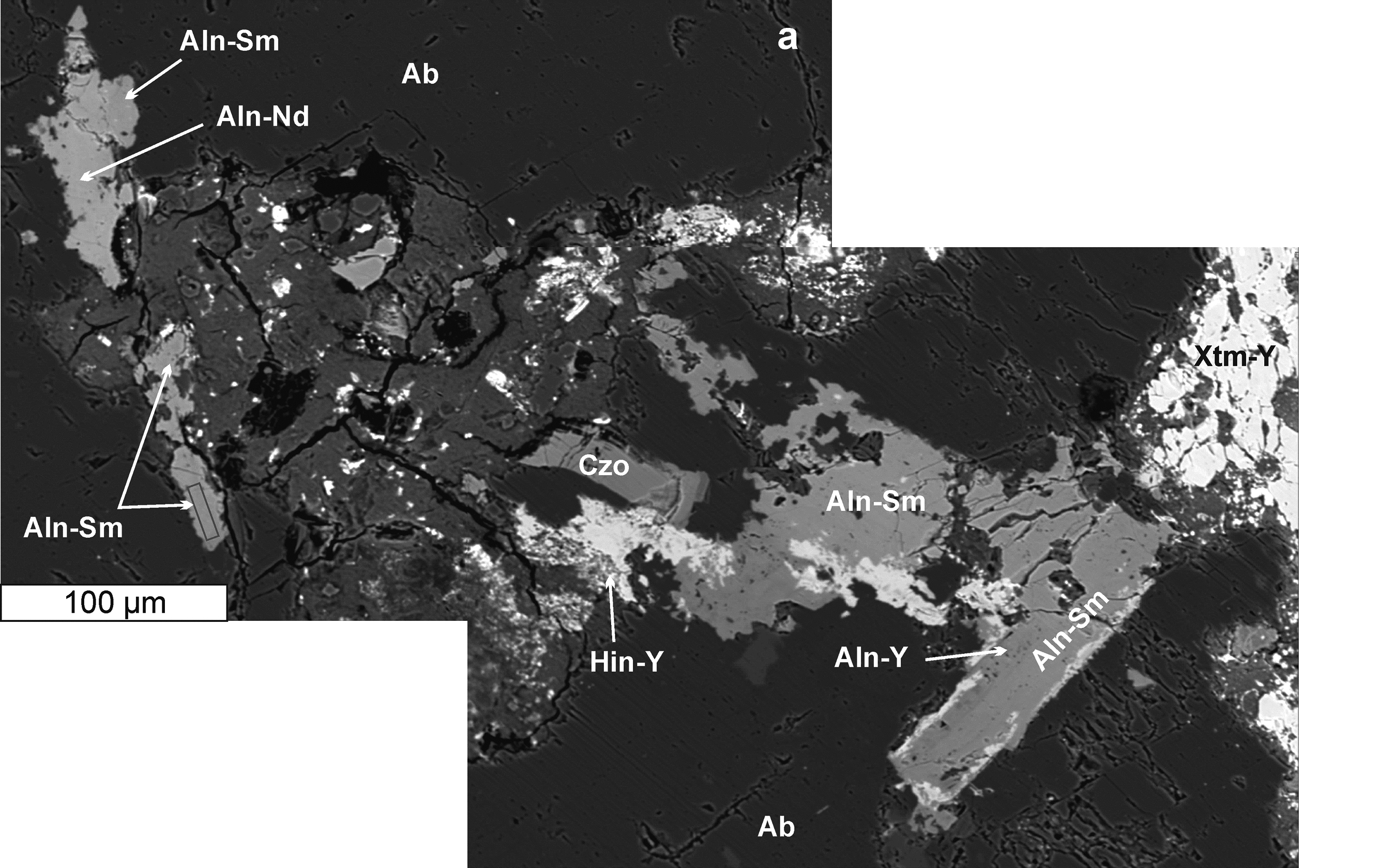
Allanite-(Sm), CaSm(Al2Fe2+)(Si2O7)(SiO4)O(OH), the third samarium mineral from Jordanów Śląski, Lower Silesia, Poland
https://doi.org/10.2138/am-2024-9453
The authors document allanite-(Sm), ideally CaSm(Al2Sc)(Si2O7)(SiO4)O(OH), the third recognized mineral of samarium. It was discovered in a granitic pegmatite in contact with rodingite-like calc-silicate rocks in a serpentinite quarry at the locality in Poland. Pieczka et al. show crystallochemical and structural data for this new mineral as well as approximate formation conditions that could favor the crystallization of this epidote-supergroup mineral.
The “breathing” Earth at Solfatara-Pisciarelli, Campi Flegrei, southern Italy (2005—2024): Nature's attenuation of the effects of bradyseism
https://doi.org/10.2138/am-2024-9516
This Letter addresses an issue of societal relevance. Campi Flegrei (CF) is a vast volcanic area west of Naples, home to approximately 1.5 million people. It represents one of the highest risk areas in Italy for continuing slow ground deformation (bradyseism) currently ongoing. Understanding the causes of unrest allows the authors to propose geoengineering approaches to reduce the impact of bradyseism, in particular the volcanic and seismic activity that arises from fluid pressure build-up at CF.
Volume 110 : April 2025 Issue
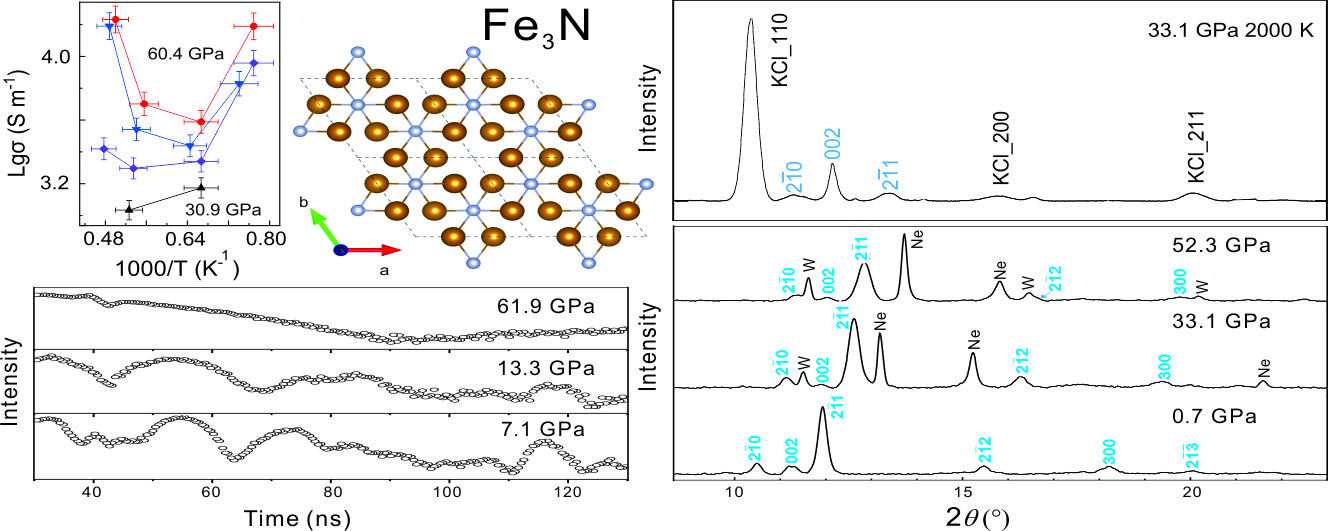
Magnetic collapse and low conductivity of Fe3N in the deep interiors of Earth-like planets
https://doi.org/10.2138/am-2023-9251
Nitrogen is an abundant element in the solar system and recent studies have indicated that its content in the deep Earth may be higher than previously believed. This is due to its affinity for iron and its association with carbon and nickel. Understanding the Fe-N system under high pressure has, therefore, become a topic of great interest, especially for Fe3N. Recent natural observations demonstrated that Fe3N is a kind of inclusion in lower-mantle diamond from Rio Soriso, Brazil. Zhuang et al. investigated the physical and chemical properties of Fe3N, including its magnetic, structural, electrical, and thermal properties, for the first time at pressures up to 62 GPa and temperatures up to 2100 K. The results show that Fe3N is stable along the geotherm, and its distinct thermal properties would impact the thermal state and dynamics of the deep interior of Earth and other terrestrial planets.
RamanCrystalHunter: A new program and database for processing, analysis, and identification of Raman spectra
https://doi.org/10.2138/am-2024-9457
RamanCrystalHunter is a new software program for processing, analyzing, and identifying the Raman spectra of minerals and other geologic materials. Users can perform baseline corrections, spectrum addition and subtraction, and fitting operations. RCH includes a new database (RCHDB) of high-quality mineral spectra that allows efficient and accurate mineral identification.
Quantifying the potential for mineral carbonation of processed kimberlite with the Rietveld-PONKCS method
https://doi.org/10.2138/am-2023-9103
This paper describes conditions under which X-ray diffraction (XRD) data and PONKCS models can and cannot be used to accurately quantify mineral phases and carbon sequestration potential in ultramafic landscapes. Wang et al. created lizardite and montmorillonite PONKCS models using XRD patterns collected with three different X-ray diffractometers. Five synthetic samples of processed kimberlite with known compositions were used to test the results of instrument-specific PONKCS models and data collected from each instrument. The results show that even small differences in instrument parameters can lead to inconsistent and inaccurate quantitative phase analysis (QPA) results using PONKCS (i.e., 9.8-32.5 wt% total bias). However, the results provide a total bias ranging from 4.2-14.1 wt% using correctly calibrated, instrument-specific PONKCS models. This work represents the first direct comparison of PONKCS models calibrated to different X-ray diffractometers, providing a useful test of the accuracy and portability of this method for quantifying crystallographically disordered minerals.
Ferric vs. ferrous arsenate amorphous precursors: Properties and controls on scorodite mineralization
https://doi.org/10.2138/am-2024-9326
Chang et al. investigate the chemical and structural properties of amorphous ferrous arsenate (AFeII) formed in Fe(II)-As(V) systems and compare these properties and related scorodite mineralization processes to those of amorphous ferric arsenate (AFeIII). Amorphous iron-arsenate precipitates are significant As sinks in natural and industrial settings, often serving as precursors to the crystallization of ferric arsenate minerals. The authors determined the chemical formulae and local structure of synthesized AFeIII and AFeII using a range of techniques, including XRD, FTIR, synchrotron-based XAFS, SEM, and TEM. The results revealed that the presence of Fe(II) in AFeII increases the Fe-O bond distance and hinders its crystallization to scorodite under both atmospheric and aqueous conditions. These findings shed light on the role of AFeII during the amorphous-scorodite phase transition, ultimately enhancing our understanding of the iron arsenate system.
Two modes of terrestrial phosphide formation
https://doi.org/10.2138/am-2024-9315
Galuskin et al. conducted a study of terrestrial phosphides from the large tridymite-anorthite-diopside paralava body of the Hatrurim Complex, Jordan, where several new phosphides and phosphates were previously discovered. Phosphides enrich the contact facies of the paralava and occur in small nodules in the central part of the paralava body. In one of these nodules, nickelphosphide was discovered for the first time on Earth. The authors discuss two formation modes of phosphides in terrestrial rocks.
Late-stage microstructures in Chang’E-5 basalt and implications for the evolution of lunar ferrobasalt
https://doi.org/10.2138/am-2024-9448
Jin et al. investigated silicate liquid immiscibility (SLI) microstructures in the Chang’E-5 (CE-5) lunar ferrobasalt sample, the youngest recovered mare basalt (ca. ~2.0 Ga). Using high-resolution imaging techniques and chemical analysis, they examined a subophitic fragment, revealing stable and metastable SLI microstructures indicative of multi-stage SLI events. Metastable SLI has both chemical and physical impacts on the late-stage evolution of lunar ferrobasalt.
« ‹ 1 … 6 7 8 9 10 … 85 › »ADDITIONAL RESOURCES